
A lean, reliable kit can help you launch a landscaping business. If you’re asking, “What tools do I need to start a landscaping business?”, begin with a mower, string trimmer, rake, essential hand tools, protective gear, and a way to transport your equipment. A push mower and rake may cover basic lawn care, while a string trimmer handles edges and spots a mower can’t reach.
You don’t need every specialized tool on day one. The right starting setup depends on the properties you plan to maintain, the work you’ll offer, how often you’ll use each tool, and whether you choose gas or battery power. This guide breaks down the core equipment, useful hand tools, safety gear, and transport and storage considerations, so you can build a practical kit and add equipment as your customer base and services grow.
Key Takeaways
- Build your starting kit around the properties you plan to maintain, how often you’ll use each tool, and the power source that suits the work.
- Choose hand tools for durability and comfortable handling, then add specialized equipment as your services grow.
- Match your mower to the lawn’s size and terrain, and consider how the equipment will fit into your transport and storage setup.
- Use trimmers and edgers to reach borders and tight spaces that a mower can’t handle efficiently.
- When a project calls for equipment you don’t own, Pahrump Rentals & Hardware offers tool and industrial equipment rentals.
1. Choosing equipment based on power source, property size, frequency of use, and ergonomics
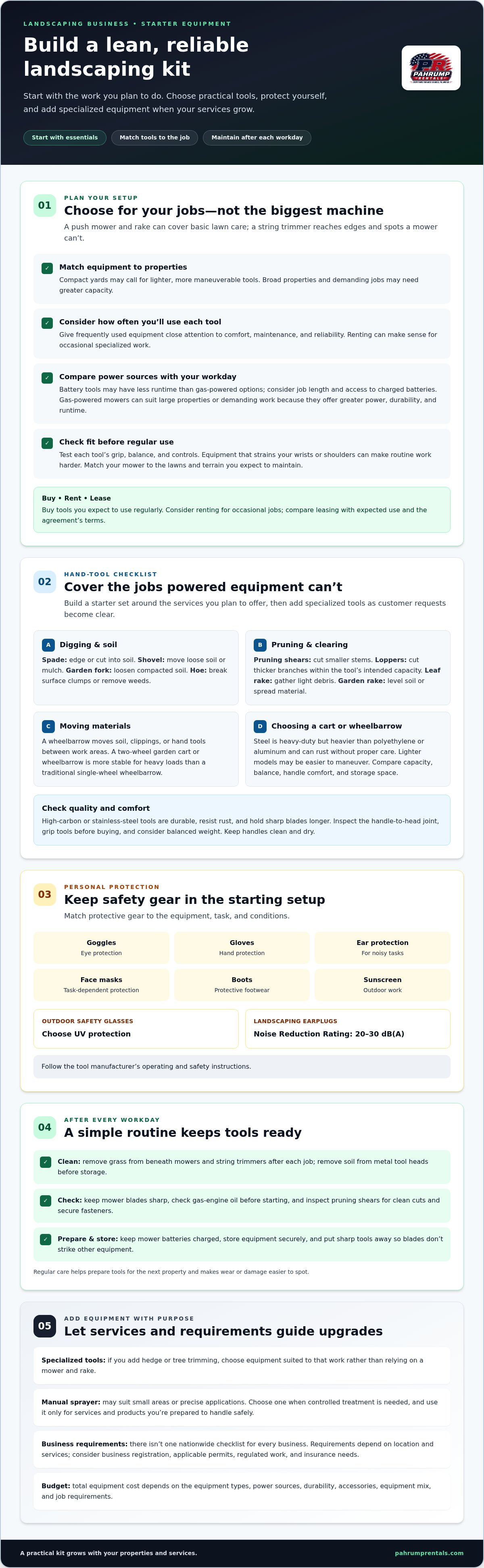
A push mower and rake can form a simple kit for basic lawn care. Add a string trimmer for fence lines, tree bases, and edges a mower can’t reach. Choose tools for the properties on your schedule, not the largest machine available. Compact yards may call for lighter, more maneuverable equipment, while broad properties and demanding jobs may need greater capacity. Test each tool’s grip, balance, and controls before regular use. Equipment that strains your wrists or shoulders can make routine work harder.
Power source affects how equipment fits your workday. Battery-powered tools may have less runtime than gas-powered options, so consider job length and access to charged batteries. Gas-powered mowers can suit large properties or demanding work because they offer greater power, durability, and runtime. Also consider frequency of use: equipment needed on nearly every job deserves close attention to comfort, maintenance, and reliability. For occasional specialized work, renting can help you avoid buying a tool that spends most of its time in storage.
Should a new landscaping business buy, rent, or lease equipment? Buy tools you expect to use regularly, and consider renting equipment for occasional jobs. Leasing is another option to compare with your expected use and the agreement’s terms.
Include protective equipment in your starting setup, not as an afterthought. Keep goggles, gloves, ear protection, face masks, boots, and sunscreen on hand for different tasks and conditions. Outdoor safety glasses should provide UV protection. Landscaping earplugs generally have a Noise Reduction Rating between 20 and 30 dB(A). Match protective gear to the equipment and task, and follow the tool manufacturer’s operating and safety instructions.
Let your service list guide upgrades. If you add hedge or tree trimming, choose equipment suited to that work rather than relying on a mower and rake. If you decide to offer boundary repairs or perimeter projects, trade suppliers such as Romford Fencing Ltd can provide the necessary materials to complement your post-hole diggers and setting tools. A manual sprayer may suit small areas or precise applications. Choose one when the job calls for controlled treatment, rather than buying larger equipment without a clear use.
Build maintenance into the end of each workday. Keep mower blades sharp, check gas-engine oil before starting, and store equipment securely between jobs. Clean grass from beneath mowers and string trimmers after each job, and keep mower batteries charged. These steps prepare tools for the next property and make wear or damage easier to spot.
How much does it cost to buy landscaping tools and equipment? The total depends on the equipment types, power sources, durability, and accessories you need. For a specific equipment list, the cost depends on the equipment mix and job requirements and is provided after a quote request.
2. Essential hand tools and selection criteria
Hand tools fill the gaps left by mowers and powered equipment. A starter set can include a digging spade, garden fork, hand trowel, pruning shears, rake, and wheelbarrow. Each has a clear purpose: a spade turns soil, shears cut small stems, and a rake gathers clippings or levels loose material. If your services expand into planting hedges, trees, or shrubs from specialists like Buds Nursery Cavan, reliable digging and pruning tools will be indispensable. Choose tools for the work you plan to offer, then add specialized pieces as customer requests become clear.
Material and fit affect how hand tools hold up through repeated jobs. High-carbon or stainless-steel landscaping tools are durable, resist rust, and hold sharp blades longer. Inspect the joint between the handle and tool head, since a loose connection can make digging or cutting harder. Grip a shovel or rake before buying: a comfortable handle and balanced weight matter when you repeat the same movements. Keep handles clean and dry to help preserve them.
- Spade and shovel: Use a spade for edging or cutting into soil, and a shovel for moving loose soil or mulch.
- Garden fork and hoe: Loosen compacted soil with a fork, then use a hoe to break up surface clumps or remove weeds.
- Pruning shears and loppers: Use shears for smaller stems and loppers for thicker branches within the tool’s intended capacity.
- Rake: A leaf rake gathers light debris, while a sturdier garden rake can level soil or spread material.
- Wheelbarrow: Move soil, clippings, or hand tools between work areas. Steel models are heavy-duty, but heavier than polyethylene or aluminum models and can rust without proper care.
Match the load to the cart. A two-wheel garden cart or wheelbarrow provides more stability for heavy loads than a traditional single-wheel wheelbarrow. Steel can handle demanding work, while a lighter polyethylene or aluminum model may be easier to maneuver. Compare capacity, balance, handle comfort, and storage space together. A cart that’s difficult to steer when loaded can slow you down on narrow paths or around planted beds.
Manual sprayers can be a cost-effective choice for small areas or precise applications. Use them only for services and products you’re prepared to handle safely. What licenses, permits, and insurance are required for a landscaping business in the United States? There isn’t one nationwide checklist for every business; requirements depend on location and services. Build a checklist covering business registration, applicable permits, regulated work, and insurance needs for your operations.
Keep your kit organized between jobs. Store sharp tools so blades don’t strike other equipment, and remove soil from metal heads before putting them away. Inspect pruning shears for clean cuts and secure fasteners. A simple post-job routine helps catch wear early and keeps each tool ready for its next task.
3. Lawn mower selection for different property sizes and terrain
Choose a mower for the lawns you expect to maintain, not just the first property you book. A push mower can be a practical starting point for basic lawn care and smaller properties. Larger lawns and demanding jobs may call for a gas-powered mower, which can offer greater power, durability, and runtime. Match the machine to your regular workload: a mower that’s difficult to maneuver can make even a simple job more demanding.
Walk each property before choosing a mower. Note the lawn’s size, slope, surface, gates, planted beds, and tight turns. A level, open yard presents different demands from one with uneven ground, narrow passages, or obstacles around trees. Consider the route between the work area and the place where you’ll load or store the mower, too. These details help you decide whether a larger machine is practical or a push mower offers better access.
- Small, open lawn: A push mower can provide a straightforward option for routine grass cutting.
- Large or demanding lawn: Consider whether a gas-powered mower’s greater power and runtime suit the workload.
- Sloped or obstructed yard: Prioritize control and maneuverability around changes in terrain, trees, and garden beds.
- Several property types: Choose for the jobs you expect most often, then adapt your equipment as your customer base changes.
Terrain affects how a mower moves and how much attention you need to give each pass. On a lawn with tight corners, consider how easily it turns without clipping borders or planted areas. On uneven ground, pay attention to stability and control as you move across the surface. Don’t choose based on size or power alone. A machine that can’t pass through a gate or work comfortably around obstacles may not suit the property.
Before buying or committing to a mower, map the properties you plan to serve. Record which lawns are broad and open, which have restricted access, and which include slopes or irregular ground. Compare those needs with the mower’s intended use, handling, and transport requirements. A practical choice balances cutting capacity with access and ease of control. If your jobs vary, renting can help you use a mower suited to a particular property without making that specialized machine part of your permanent setup.
After each job, clean grass from beneath the mower deck so it doesn’t carry over to the next property. Keep the blade sharp for a clean cut, and check gas-engine oil before starting a gas mower. Store the machine securely between jobs. A brief inspection before loading can also reveal loose parts or visible damage before the next customer’s lawn is on the schedule.
4. Transportation and storage
Reliable transportation is essential for moving a mower, trimmer, hand tools, and supplies between jobs. A truck with a large bed or a trailer can carry equipment and provide storage during work. Choose a setup based on the tools you use regularly and the properties you serve. A push mower and hand tools, for example, take up less room than a larger mower and several powered tools. Plan the vehicle and storage space together before adding bulky equipment.
A trailer can carry a larger load, but it affects daily travel. Hauling lawn care equipment in a trailer can increase fuel use and make tight driveways harder to navigate. Consider the routes and parking conditions at the properties on your schedule. A truck bed may suit a smaller kit and restricted access, while a trailer can provide room for more equipment. The right choice depends on your load and the places you need to reach.
- Group tools by task: Keep mowing equipment together, with rakes and hand tools arranged separately for quick access.
- Secure equipment: Use tie-downs or compartments to keep a mower and loose tools from shifting during a trip.
- Leave access space: Position frequently used items near the opening, so you can unload a trimmer without moving other tools.
- Keep a simple inventory: Record the equipment loaded before leaving and put it back in its assigned place afterward.
A planned loading order reduces unnecessary handling. Place heavier equipment low and stable, then arrange smaller items around it. Keep sharp hand tools contained instead of loose beside a mower or trimmer. If a job needs a rake, pruning shears, and a sprayer, group them in one accessible area. A consistent layout also makes it easier to spot a missing tool before driving to the next property.
Plan for the last stop of the day, not just the first. Remove grass and soil from equipment before storing it, and keep tools in a secure, organized space. Store sharp blades so they don’t contact other items, and leave enough room to reach the mower without shifting every tool. Give charged mower batteries a designated place, separate from dirty equipment, so they’re ready for the next workday.
Moving soil, clippings, or supplies across a property requires a separate transport plan. A two-wheel garden cart or wheelbarrow provides more stability for heavy loads than a traditional single-wheel wheelbarrow. Choose a cart for the paths you’ll use, including gates and narrow sections. Make sure the load is manageable over the ground you encounter, and clear the route before moving materials. The right cart and an organized vehicle setup help move tools and materials efficiently from storage to the work area.
5. Trimmers and edgers for borders and hard-to-reach areas
A string trimmer cuts grass around fences, tree trunks, posts, and garden beds where a mower can’t reach. An edger serves a different purpose: it creates a defined line where turf meets a sidewalk, driveway, or planting bed. For example, use a trimmer to clear grass around a mailbox, then edge the sidewalk for a sharper boundary. Keeping these tasks distinct helps you choose the right tool for each finish.
Walk the property before starting. Note fences, corners, trees, garden borders, and hard surfaces that need clean edges. A narrow strip along a fence calls for careful trimming, while a long driveway border may benefit from dedicated edging. Check for stones, exposed roots, and other obstacles along the route. Mark the areas to trim or edge to organize the work and avoid missed patches.
Choose equipment based on the shape of the work and how well you can control it. A trimmer with a comfortable grip and balanced feel can be easier to guide around beds and posts. An edger should suit the boundary you need to maintain. Keep these practical distinctions in mind:
- Fence lines and tree bases: Trim carefully around obstacles without striking bark, posts, or fencing.
- Sidewalks and driveways: Edge along the hard surface for a clear transition between turf and pavement.
- Curved garden beds: Follow the bed’s outline gradually rather than forcing a straight cut.
- Open lawn borders: Use the tool that creates the finish the property requires, not both by default.
Work in a deliberate pattern. Start at one boundary and follow it consistently, keeping the tool steady around corners. For a curved bed, make controlled passes that follow the contour. Along a sidewalk, keep the edging line aligned with the pavement instead of cutting into the turf. Pause at gates or changes in surface, then continue when you can see the boundary clearly.
After trimming, inspect the result from the sidewalk or another clear viewpoint. Look for missed grass around posts, uneven sections beside a driveway, or damaged plants near a bed. Clean grass and debris from the equipment after the job, and inspect the cutting area for wear before storing the tool. A consistent end-of-job routine helps prepare equipment for the next property.
As you build your equipment setup, explore landscaping tools suited to the jobs you plan to take on.
Pahrump Rentals & Hardware: Industrial Equipment Rentals
Pahrump Rentals & Hardware offers industrial equipment and tool rentals for landscaping projects that call for equipment beyond your regular kit. Renting can make sense when a particular job needs a tool you use infrequently, or when you’re building your customer base before investing in additional equipment.
For recurring work, professional hardware solutions can support your equipment and job needs. Landscaping contractors can also use the Contractor Portal to manage rentals and hardware procurement. Consider the property, task, and frequency of use when deciding whether a tool belongs in your regular setup or is better suited to a specific project.
For equipment rentals and professional hardware solutions, contact Pahrump Rentals & Hardware or visit pahrumprentals.com.
Build a Setup That Grows With Your Work
As you decide what tools you need to start a landscaping business, treat your equipment plan as a working document. After each job, note which tools you used, what slowed the work, and what customers requested. Over time, those notes can help you separate regular needs from occasional equipment demands. That makes future purchases more deliberate and keeps your setup aligned with the services you actually perform.
For equipment needs that vary by project, Pahrump Rentals & Hardware offers industrial equipment and tool rentals, along with professional hardware solutions. These options can support your next step as your workload develops. Choose an approach that fits the work ahead, then refine your plan as your business grows.
Explore equipment rentals and hardware solutions at Pahrump Rentals & Hardware, and take your next landscaping project forward with confidence.
Frequently Asked Questions
What basic hand tools are needed to start a landscaping business?
A useful hand-tool kit includes a spade, pruning shears, hand trowel, garden fork, rake, and wheelbarrow. Add a hand weeder for small beds and a measuring tape when laying out planting areas or checking borders. Keep cutting tools in a separate holder so blades don’t damage other equipment. Before each job, select only the tools its tasks require, then return them to the same storage place afterward.
What power equipment is essential for a landscaping business?
A mower and string trimmer cover routine grass cutting and detail work around obstacles. A blower can help clear clippings from paved areas, while a hedge trimmer makes sense if hedge maintenance is part of your services. A practical answer to what tools do I need to start a landscaping business begins with equipment for the jobs you plan to accept. Rent tools you’ll use only occasionally rather than adding every machine to your regular storage.
What vehicle and trailer are needed to transport landscaping equipment?
A truck with a large bed or a truck and trailer can transport lawn equipment; the right setup depends on your equipment and typical job sites. Before choosing, map how the mower, trimmer, and hand tools will fit, then consider access at customers’ driveways and gates. A trailer can carry more but may be harder to maneuver in tight spaces. Leave room to load and unload tools without repeatedly shifting heavy equipment.
What safety gear and personal protective equipment do landscapers need?
Keep safety glasses, gloves, ear protection, a face mask, boots, and sunscreen available, choosing gear for the task and conditions. For outdoor work, safety glasses should provide UV protection. Before starting a mower or trimmer, inspect protective gear for damage and make sure it fits securely. Clear loose debris before trimming, then use eye and hearing protection while operating powered equipment.
What tools are needed for lawn mowing, garden maintenance, and hardscaping?
Lawn mowing calls for a suitable mower and tools for finishing edges. Garden maintenance may require pruners, a spade, rake, and wheelbarrow. Hardscaping needs a different setup, such as a shovel, level, and hand tamper for preparing and setting materials. Choose tools for the specific work you offer. For a planting-bed refresh, for example, hand tools and a cart may be more useful than hardscaping equipment.
What landscaping equipment should a beginner buy first on a limited budget?
Start with equipment for services you can perform consistently, such as a mower, rake, and string trimmer for basic lawn care. Deciding what tools I need to start a landscaping business is easier when you track the equipment each job requires. Add tools for recurring needs, and rent occasional or specialized equipment. For landscaping projects around Pahrump, Beaty, Goldfield, and Tonopah, plan purchases around the properties and services you expect to handle.


