
A roadside plan is only as useful as the help it covers. If your RV breaks down in Nevada, slow down and move to the safest available place off the road, then stay inside once stopped. Knowing what to do when your RV breaks down in Nevada also means calling 911 if the situation needs emergency help and using your plan’s terms to understand whether towing or service for a slideout or generator is covered.
It makes sense to hope roadside assistance can do more than tow your RV. Help with a slideout or generator depends on your plan’s coverage, so review the terms before you travel. Note warning signs and symptoms, and give the provider a clear location, such as a nearby exit or mile marker, when you call.
This guide covers what to do when your RV breaks down in Nevada: immediate roadside safety, basic checks for fluids, tires, electrical systems, and the battery, plus how to review towing, repair, and accommodation coverage. You’ll also learn what details to record for a technician and how routine maintenance can help you prepare for Nevada roads.
Key Takeaways
- Learn which fluid, tire, battery, and electrical checks can help you narrow down a problem safely.
- Recognize warning signs that call for professional help rather than roadside troubleshooting.
- Find out what to clarify in your roadside plan for slideout or generator trouble, towing, and repairs.
- Consider how accommodation coverage may fit into your plan if repairs keep you off the road.
Checking fluids, tires, electrical systems, and the battery
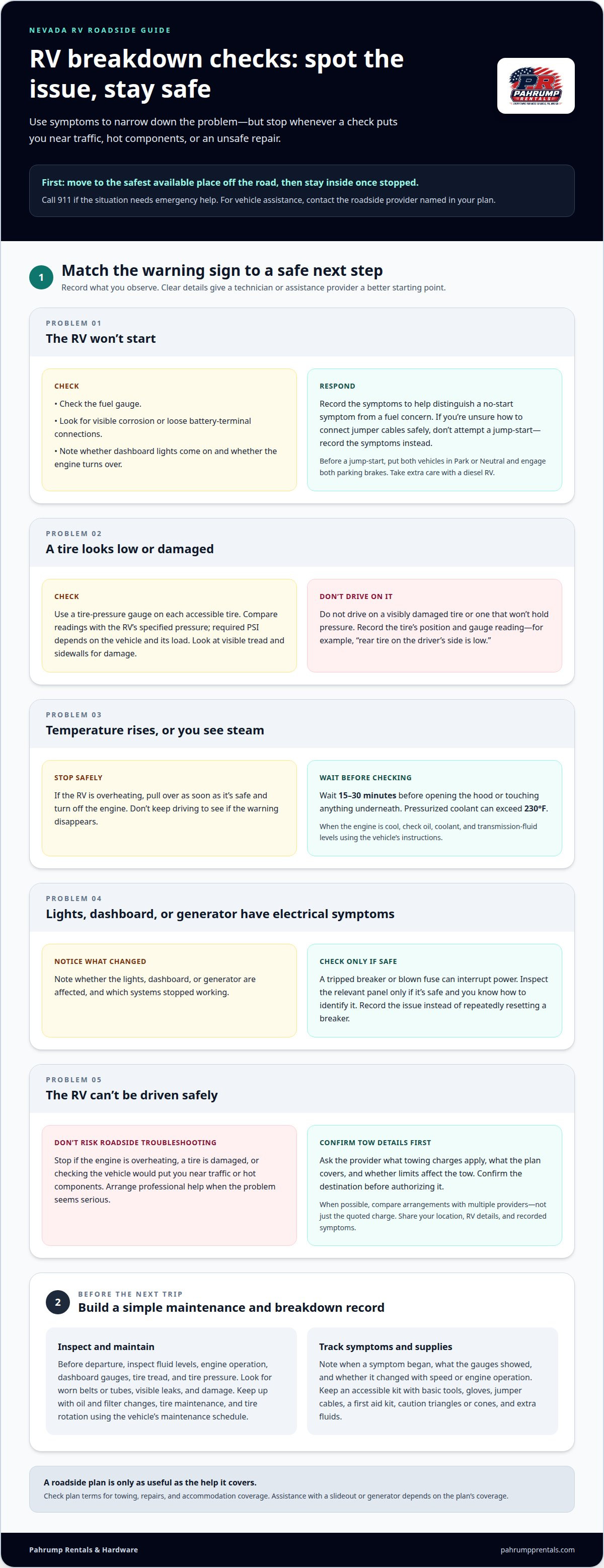
Use these checks to narrow down the problem before deciding whether the RV can move safely. Stop if the engine is overheating, a tire is damaged, or checking the vehicle would put you near traffic or hot components.
-
Check Fuel and Battery Connections
Check the fuel gauge first, then look for visible corrosion or loose connections at the battery terminals. A dead battery or corroded terminals can prevent the RV from starting, while an empty tank can seem like an engine fault. Note whether the dashboard lights come on and whether the engine turns over. These details help distinguish a no-start symptom from a fuel concern.
If you try a jump-start, put both vehicles in Park or Neutral and engage both parking brakes before connecting the cables. Take care when jump-starting a diesel RV. Don’t proceed if you’re unsure how to connect the cables safely. Record the symptoms instead.
-
Inspect Tire Pressure and Condition
Use a tire pressure gauge to check each accessible tire’s PSI against the RV’s specified pressure. Compare the readings rather than assuming all tires should match: the required PSI depends on the vehicle and its load. Check the visible tread and sidewalls for damage, and note which tire appears low or compromised.
Don’t drive on a visibly damaged tire or one that won’t hold pressure. Before arranging help, record the tire’s position and gauge reading. For example, report that the rear tire on the driver’s side is low. This gives a technician or assistance provider a clearer starting point than simply saying there’s “a tire problem.”
-
Check Fluids and Electrical Systems
When the engine is cool, check the oil, coolant, and transmission fluid levels using the vehicle’s instructions. Low levels can affect engine performance. If the RV is overheating, pull over as soon as it’s safe and turn off the engine. Wait 15-30 minutes before opening the hood or touching anything underneath; pressurized coolant can exceed 230°F.
For electrical symptoms, note whether the lights, dashboard, or generator are affected. A tripped breaker or blown fuse can interrupt power, so inspect the relevant panel only if it’s safe and you know how to identify it. Record which systems stopped working instead of repeatedly resetting a breaker. For those looking to safeguard critical equipment such as HVAC units and pumps, remote alert systems from intouchrandb.com offer continuous monitoring to catch potential failures early.
-
Clarify Towing Charges Before Arranging a Tow
If the RV can’t be driven safely, ask the roadside assistance provider what towing charges apply and what the plan covers. Confirm the destination and any limits that affect the tow before authorizing it. When possible, contact multiple service providers to compare the arrangements, not just the quoted charge. Give each provider your location, RV details, and the symptoms you recorded during the checks.
Preventive maintenance and basic troubleshooting
Before each Nevada trip, follow a simple maintenance routine and use symptoms to guide safe troubleshooting. A dashboard warning, unusual sound, or visible leak can help you decide whether to stop or continue.
- Before departure, inspect fluid levels, engine operation, dashboard gauges, tire tread, and tire pressure. Look under the hood for worn belts or tubes, and check for visible leaks or damage. A walk-around can reveal a developing issue before it interrupts travel. If something looks different from your last inspection, address it before starting the trip.
- Keep up with oil and filter changes, tire maintenance, and tire rotation. Use the vehicle’s maintenance schedule to plan service instead of relying on memory. Record completed work and recurring concerns, such as a warning light that returns after servicing. These notes build a useful maintenance history and can reveal patterns across trips.
- While driving, monitor the temperature, oil, and fuel gauges. Pay attention to unusual engine or tire noises, smoke, and steam. For example, rising temperature with steam is a reason to pull over as soon as it’s safe and turn off the engine. Don’t keep driving to see if a warning disappears. A changing gauge or new sound can signal a worsening problem.
- Use the symptoms to narrow down the issue without attempting unsafe repairs. A warning light can point to overheating, while a burning odor or loud clunk can indicate a serious mechanical problem. Note when the symptom began, what the gauges showed, and whether it changed with speed or engine operation. Clear observations help a technician diagnose the vehicle more efficiently.
- Limit roadside troubleshooting to checks you can perform safely. From a safe position, a visual inspection may reveal smoke, a loose exterior part, or visible tire damage. Don’t reach near hot components, work beside moving traffic, or attempt a repair beyond your ability. If the problem seems serious, stop troubleshooting and arrange professional help.
- Prepare for a breakdown by keeping basic supplies together before you leave. An RV emergency kit can include basic tools, gloves, jumper cables, a first aid kit, caution triangles or cones, and extra fluids. Store items where they’re accessible without unloading the vehicle. Review the kit before each trip, replace used supplies, and make sure the tools suit your RV.
Can roadside assistance help with things like a broken slideout or generator?
Roadside assistance may arrange towing or service, but help with a slideout or generator depends on the plan’s coverage. For an RV breakdown requiring emergency help, call 911; contact your roadside plan for assistance with the vehicle.
-
Contact RV-Specific Roadside Assistance
Call the RV-specific roadside assistance provider named in your plan and describe what stopped working. Explain whether the engine runs, whether the RV can move safely, and whether the issue involves a slideout, generator, or another system. RV-specific service can help direct your call to relevant support. If the engine still runs, describe a slideout or generator fault accurately rather than calling it an engine failure.
-
Understand Assistance Coverage
Review your plan’s coverage before departure, then refer to its terms during a breakdown. Check whether it includes towing, roadside service, or help with onboard equipment. A plan may treat a generator or slideout issue differently from a disabled engine, so describe the exact fault. Note any service limits, required steps, or contact instructions in the plan materials.
-
Find Nevada Assistance Phone Numbers
Use 911 for an RV breakdown that requires emergency help. For roadside service, call the number provided by your assistance plan or insurance company. Keep those contacts accessible in the RV and on your phone, so you can reach the appropriate service without searching through stored paperwork. Don’t use an emergency call for a routine coverage question or service request.
- Give the dispatcher a clear Nevada location, using the nearest exit, mile marker, or recognizable road reference. State your direction of travel and whether the RV is fully off the road. Share the vehicle type and describe the problem plainly, such as “the generator stopped” or “the slideout won’t retract.” Clear details help the provider locate you and understand what assistance is needed.
- Record the symptoms before and during the call. Note when the fault began, which systems still work, and any warning lights, sounds, or visible changes. For a slideout, say whether it’s stuck open or closed; for a generator, report whether it starts or shuts down. These observations give technicians a useful starting point and help distinguish a service call from a towing need.
- After reporting the breakdown, ask what happens next. Confirm whether the provider is arranging a tow, roadside service, or another response, and follow your plan’s instructions. If the RV can’t be moved safely, say so clearly. Update the provider if your location or symptoms change while you wait.
Choosing towing, repair, and accommodation coverage
Choose coverage by checking which stages of a breakdown it addresses: towing, repairs, and accommodation. If your RV can’t be driven, arrange a tow to a repair shop.
- Review your plan’s towing terms before traveling, including applicable charges, distance limits, and destination rules. Confirm whether towing applies when the RV is disabled or only under particular circumstances. If a breakdown happens, describe the RV’s condition and intended destination before authorizing the tow. Ask about charges and, when possible, compare arrangements from multiple service providers.
- Use your roadside assistance contact or insurer to identify repair options near your Nevada route. On a highway or in a rural area, give the provider your nearest exit, mile marker, or road reference, then ask which repair shops or mobile mechanics can address the problem. The nearest suitable option depends on your location and whether the fault needs shop or roadside service.
- Match repair coverage to the help you may need. A tow to a shop is different from diagnosing or repairing a fault at the roadside. Ask what your plan covers in each situation, and note any limits or required steps. For example, confirm whether assistance covers transportation to a repair facility rather than assuming it includes every mechanical repair.
- Plan accommodation around the repair location and how long the RV may be unavailable. Ask your assistance provider or repair shop about nearby campgrounds or safe places to stay that suit your vehicle and circumstances. Check whether your coverage includes lodging or another accommodation benefit, and understand the conditions before relying on it during a trip.
- If you’re considering a Nevada rest area, use only designated areas for overnight parking. The allowed limit is 18 hours in any two-week period. A rest area may not suit an extended repair wait, so consider whether you need a campground or other safe place instead. Keep your repair destination and overnight plan coordinated.
- Keep key plan details and contact information accessible in the RV and on your phone. Record the assistance provider’s instructions, the tow destination, and the repair shop’s name. If the shop expects a delay, ask how the RV can be kept safely during repairs and whether it can be moved to a campground. Clear arrangements help coordinate towing, repairs, and accommodation without confusing one benefit for another.
What should you do first if your RV breaks down on a Nevada highway?
What to do when your RV breaks down in Nevada starts with controlling the vehicle and protecting its occupants. Follow these steps in order, adjusting your actions to traffic and the safest available place to stop.
- Reduce speed and move the RV to the safest available place off the roadway. Whenever possible, choose a spot away from moving traffic and avoid stopping in a travel lane. If the RV loses power or steering, focus on reaching a safe stopping position rather than troubleshooting while moving. Once stopped, secure the vehicle and assess your surroundings before anyone exits.
- After stopping safely, keep everyone inside the RV. Staying in the vehicle helps occupants avoid walking beside passing traffic while you assess the situation. Check whether anyone needs urgent medical attention, and look for immediate hazards such as smoke or fire from inside when possible. If the RV’s position creates immediate danger, prioritize emergency help over a mechanical inspection.
- Call 911 if the breakdown requires emergency assistance. Explain that an RV is stopped on a Nevada highway, then give the clearest location available, such as the road name, direction of travel, nearest exit, or mile marker. Describe immediate hazards and whether anyone is injured. Keep your phone available for follow-up instructions and stay aware of your surroundings.
- Place caution triangles or cones only after the RV is secured out of direct harm. Use them to warn approaching drivers, but don’t enter traffic to position a warning device. If reaching a placement point would expose you to moving vehicles, stay in the safer location. Keeping high-visibility items in your roadside kit makes them easier to use when conditions allow.
- If the engine overheats, pull over as soon as it’s safe and turn it off. Don’t open the hood immediately or touch components underneath it. Wait 15-30 minutes before opening the hood or handling anything beneath it, because pressurized coolant can exceed 230°F. If steam or heat continues, keep clear and report the condition when requesting help.
- Your next step in what to do when your RV breaks down in Nevada depends on whether you need emergency help or roadside service. Once the immediate area is safe, contact your roadside assistance provider with your location and a concise description of the symptoms. Include a nearby exit or mile marker, your direction of travel, and whether the RV can move safely.
- Wait in a secure position and follow emergency personnel or assistance instructions. Don’t stand behind or beside the RV to inspect damage while traffic passes. If conditions change, such as smoke appearing or the vehicle shifting closer to traffic, call 911 and explain the new hazard. Once safe, record the location and symptoms for the technician handling the breakdown.
Pahrump Rentals & Hardware
Pahrump Rentals & Hardware can help with equipment and hardware needs as you prepare for travel or handle routine upkeep. If you’re organizing tools or supplies for an RV project, Tool Rentals and Professional Hardware Solutions may be useful. Industrial Equipment Rentals and the Contractor Portal also support project needs beyond an individual roadside check.
During an active breakdown, prioritize safety, roadside assistance, and repair arrangements. Once immediate needs are addressed, consider what equipment or hardware would help with your next maintenance task, and choose support suited to the work. Contact Pahrump Rentals & Hardware to discuss your project needs.
Prepare for Your Next Nevada RV Trip
Knowing what to do when your RV breaks down in Nevada starts before your next trip. Create a compact travel card with your roadside assistance contact, RV make and model, insurance details, and space to record your route. Keep it where the driver can reach it without searching through luggage. Tell a travel companion where the information is stored so they can help communicate if needed.
Use the card as a starting point, then tailor it to your RV and the routes you travel. Add details that could help explain an unusual sound or system issue, and update the card whenever your contacts or vehicle details change. A little preparation makes it easier to focus on decisions when plans shift.
For help with your next RV-related project, contact Pahrump Rentals & Hardware. A thoughtful plan and dependable local support can help you feel more prepared for the road ahead.
Frequently Asked Questions
Is jump-starting a diesel RV different from a gas RV?
For a diesel RV, leave the disabled vehicle’s heater on throughout a jump-start. For either engine type, follow the RV and donor vehicle instructions, and don’t attempt the procedure if you’re unsure about the connections. Before starting, put both vehicles in Park or Neutral and engage their parking brakes.
What Are the Most Common RV Problems and Fixes?
Common roadside issues include a no-start, tire trouble, electrical interruptions, and engine overheating. Match your first response to the symptoms: note whether the dashboard lights appear, whether the engine turns over, and which systems lost power. A warning light, burning odor, or loud clunk needs more than a quick reset. Record what changed and share the details with a technician rather than attempting an unfamiliar repair.
What Should I Do First If My RV Rental Breaks Down?
After reaching a safe stopping place, contact the rental company and follow its breakdown instructions. Explain whether the RV can move, describe any warning lights or unusual sounds, and provide the nearest exit or mile marker. Coordinate with the rental company before arranging a tow or authorizing repairs. Record whom you spoke with and any directions they gave to keep the next steps clear.
What should I check first if my RV rental won’t start?
Start by checking the fuel gauge and observing what happens when you turn the key. Note whether the dashboard lights come on, the engine turns over, or there’s no response. A dead battery or corroded battery terminals can cause a no-start. Share these details with the rental company or roadside provider before trying a jump-start, especially if you don’t know the vehicle’s starting procedure.
Where can you safely pull over with an RV on Nevada highways?
Move to the safest available place away from moving traffic, such as a suitable shoulder or designated stopping area, when conditions allow. Nevada rest areas permit overnight parking only in designated areas, limited to 18 hours in any two-week period. A rest area isn’t a substitute for a safe stopping place if reaching it would require driving an unsafe RV. Call 911 if the situation needs emergency help.
Does Nevada require warning triangles or other emergency equipment for broken-down RVs?
Use caution triangles or cones to alert approaching drivers once the RV is secured out of direct harm. This safety recommendation does not, by itself, establish a Nevada legal requirement. Keep high-visibility warning items in your emergency kit, and don’t place them if doing so would put you in traffic. Flares, gloves, a flashlight, and a first aid kit can also support roadside preparedness.
How do you get RV towing in Nevada, and what towing capacity or hookup details should you confirm?
Contact your roadside assistance provider or insurance company to arrange towing, and give them your location and RV details. Before the tow, share the RV’s size, approximate weight if known, drivetrain, and any trailer or hitch connection. Confirm that the towing method and destination suit the vehicle, then ask about applicable charges and plan limits. Around Pahrump, Beatty, Goldfield, or Tonopah, precise route details help identify your location.
What are typical RV roadside assistance and towing costs in Nevada?
There’s no single typical amount for every Nevada breakdown. The charge depends on factors such as distance to the destination, RV size, service required, and whether your roadside plan covers some or all of the tow. Review your plan’s limits and ask the provider about charges before authorizing service. A short local tow and a longer trip to a repair facility involve different arrangements.


