

A weekly skid steer rental isn’t simply a daily rate multiplied across the week. How much it costs to rent a skid steer for a week depends on the machine, rental terms, and delivery needs, so the total varies by project.
That variation matters when you’re setting a project budget. The machine that suits the work, how long you need it, and how far it must travel all affect the cost.
This guide compares daily, weekly, and monthly rental terms and explains how wheeled skid steers differ from compact track loaders. You’ll also see how location and delivery affect the total, helping you match the rental period and equipment to your project.
Key Takeaways
- Compare daily, weekly, and monthly rental terms to see how the rental period changes the effective daily cost.
- Budget beyond the base rate: delivery distance and additional rental charges can affect the total.
- Choose between a wheeled skid steer and a compact track loader based on the machine type your project requires.
- Use the weekly cost range as a starting point, then account for location, equipment type, and rental details when estimating your project budget.
How much does a skid steer rental cost?
The weekly price depends on the rental arrangement, including machine type, rental period, delivery, fuel, attachments, insurance, and environmental fees. The equipment selected and rental agreement shape the total, not the word “weekly” alone.
What the Weekly Rate Includes
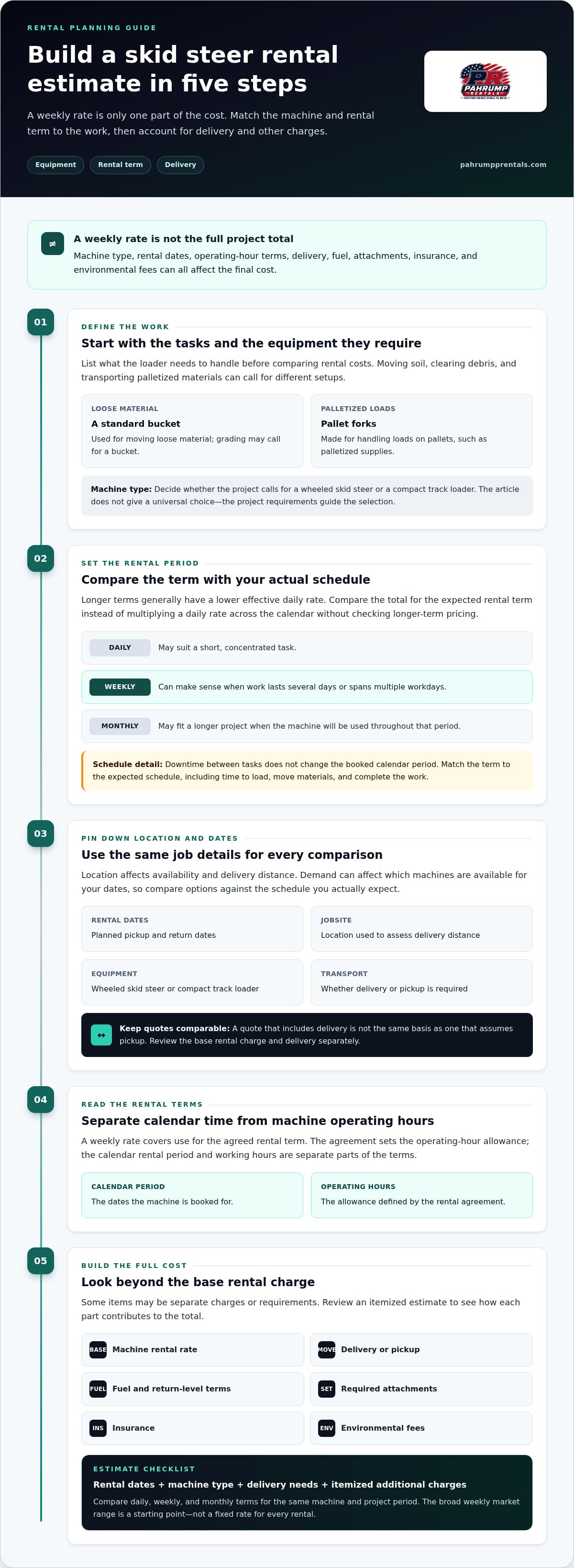
A weekly rate covers use of the skid steer for the agreed rental term, while the agreement sets its operating-hour allowance. The calendar rental period and the machine’s working hours are separate parts of the terms.
Before estimating the cost, list the tasks the loader must handle. Moving soil, clearing debris, and transporting palletized materials may call for different setups. A standard bucket can move loose material, while pallet forks are made for handling loads on pallets. Match the rental period to when you’ll need the machine, including time to load, move materials, and complete the work.
The total depends on your rental needs, including machine type, rental period, delivery, fuel, attachments, insurance, and environmental fees. A weekly rate is only one part of the budget, so compare the full itemized cost.
Fuel, Attachments, and Additional Fees
Fuel, attachments, insurance, and environmental fees may be separate charges or requirements. Their treatment can change the total even when the rental period is the same.
Fuel costs depend on how much the machine operates and the rental’s fuel-return terms. Repeated loading or long operating stretches use the machine differently from brief, occasional tasks. Budget for fuel separately and check what fuel level is required when you return the machine.
Attachments also affect the setup. A bucket moves loose material, while pallet forks handle palletized loads, so choose an attachment for the work rather than adding one by default. Insurance and environmental fees may appear as separate line items. Review the agreement’s itemization to distinguish the machine rate from fuel, attachments, insurance, and environmental charges.
For example, grading may call for a bucket, while moving palletized supplies requires forks. The two tasks have different attachment needs, even if each uses a skid steer for a week. For operations managing bulky inventory or warehouse storage alongside equipment handling, resources such as colbydandenong.com.au illustrate how specialized racking configurations integrate with loading workflows. List the work and required equipment before budgeting to compare costs accurately and avoid treating the base rate as the full rental total.
Typical daily, weekly, and monthly rental prices
Skid steer rentals commonly have daily, weekly, and monthly terms. Comparing each option with the time you actually need the machine shows how the rental period affects the effective daily cost.
Rental Duration and Daily Rate Savings
Rental duration is how long the machine is booked. Longer terms generally have a lower daily rate, which matters when a project’s workdays are spread across a week or month.
A daily rental may suit a short task, while a weekly term can make more sense for work lasting several days. Monthly pricing may fit a longer project when you’ll use the machine throughout that period. Compare the total for your expected rental term instead of multiplying the daily rate without checking longer-term pricing.
A job that runs across several workdays may include downtime between tasks. The rental period still matters even when the machine isn’t operating continuously. Match the term to the expected schedule rather than defaulting to a daily rate or booking longer than needed.
Average Weekly Rental Cost
An average weekly cost describes a broad U.S. market range, not a fixed rate for every rental. Machine type, rental duration, and local delivery needs can all change your project’s total.
To estimate how much to rent a skid steer for a week, compare the weekly term with daily and monthly options. Longer terms generally lower the effective daily rate, so match the booking period to your project schedule. The total also depends on machine type, location, delivery, and other rental terms.
A shorter rental may suit a concentrated task, while a longer term may work better when the project continues over several weeks. Estimate the cost by starting with the rental dates and equipment type, then accounting for delivery and other charges.
Monthly rates offer another reference for longer projects, but they won’t suit every schedule. If you need the machine for only part of a month, compare the relevant daily or weekly term with the monthly option. Let the expected rental period and use guide your choice.
Before setting a budget, note your rental dates and the equipment type required. Compare daily, weekly, and monthly terms for the same machine and project period. This shows whether a longer booking changes the effective daily cost and keeps the estimate grounded in your schedule.
Location, demand, and delivery costs
For a local weekly estimate, first define your rental dates, jobsite location, and machine type. Compare quotes using the same details so differences reflect local rates and delivery, not different rental requirements.
Location affects rental costs because the equipment must be available near the jobsite, and delivery charges often depend on distance. A skid steer traveling farther may cost more to deliver than one making a shorter trip. Include the jobsite location when comparing weekly estimates.
Demand can affect which machines are available for your dates. When nearby projects need similar equipment, your preferred machine may be harder to secure. Availability can also change with the rental dates, so compare options against your actual schedule.
Use a consistent comparison process. Share the same information for each quote:
- The planned pickup and return dates.
- The jobsite location, which affects delivery distance.
- Whether you need a wheeled skid steer or a compact track loader.
- Any delivery or pickup requirement.
Local details make estimates easier to compare. Two weekly quotes may differ because one includes delivery while the other assumes pickup. Different rental dates can also affect equipment availability. Review the base rental charge and delivery separately.
Consider the jobsite route as well as the distance. A site with limited access may need a different transport arrangement from an open work area. Provide clear location details and identify the drop-off point so the delivery estimate reflects the actual site and you can compare like with like.
Availability and cost go together. A lower local rate isn’t useful if the machine is unavailable for your project dates, and a suitable machine may need a different delivery plan. Narrow your options by matching the rental window, equipment type, and jobsite location.
For a useful local comparison, use the same project details for every estimate. Record the rental dates, machine type, jobsite, and delivery terms, then compare the weekly charge and delivery separately. This shows how location and transport affect the total without treating one local quote as representative of the entire U.S. market.
Weekly rental costs for wheeled skid steers and compact track loaders
Wheeled skid steers and compact track loaders suit different jobsite conditions. Compare them by considering the surface, the work, and the equipment setup you need.
Wheeled skid steers are one common rental choice for jobs that need a compact loader. A wheeled machine may fit projects involving material handling, site cleanup, or moving loose soil. A compact track loader is another option when the job calls for tracks instead of wheels. The two types have different weekly rental costs, so choosing by task helps keep the comparison relevant.
Compact track loaders usually cost more to rent than wheeled skid steers. That difference makes the jobsite surface and planned work important parts of the decision. For example, a project focused on moving palletized materials may call for a different setup from a project working across soft ground. The machine should match the conditions and the task, rather than being selected by price alone.
The exact rental price depends on equipment type, rental period, location, and delivery needs. Use a quote for your specific project to budget accurately. Compare tracked and wheeled machines separately because they aren’t interchangeable rental options.
Compare the equipment against the job’s main demands:
- Wheeled skid steer: consider it for tasks such as loading loose material or clearing a work area.
- Compact track loader: consider it when tracks better match the site conditions and planned work.
- Attachments: match the attachment to the task, such as a bucket for loose material or forks for palletized loads.
- Delivery: include the jobsite location because delivery charges can depend on distance.
These differences explain why weekly quotes can vary by machine type. A wheeled skid steer and a compact track loader are both loaders, but they’re different rental configurations. Compare the machine, attachment, dates, and delivery arrangement together to keep the quoted setup aligned with the work.
For example, site cleanup may focus on moving debris, while material handling may require forks. Soft or uneven ground may also make a compact track loader a better fit. Identify the main task and site conditions before comparing equipment.
A sound weekly comparison means more than choosing the lower-cost machine. Match the equipment to the work, site, attachment, rental period, and delivery plan. That gives you a clearer basis for comparing wheeled skid steers and compact track loaders.
What is the average weekly cost to rent a skid steer in the United States?
A U.S. weekly rental estimate depends on the skid steer’s size and type, rental dates, location, and delivery needs. Treat the weekly rate as one part of your budget and consider how the equipment and terms fit the work.
Machine size helps explain why weekly estimates vary.
Machine size affects which jobs it can handle. A small-frame model may suit lighter material-handling work, while a large-frame machine is designed for heavier loads. Match the equipment to the task before comparing weekly estimates. A lower-cost machine that lacks the capacity you need may not be the right fit.
Equipment type matters, too. Wheeled skid steers and compact track loaders have different weekly rental costs, with tracked machines usually costing more. Compare the same machine type over the same dates to keep the comparison focused on your project’s requirements.
- Machine size: compare the rated operating capacity with the loads you need to handle.
- Equipment type: distinguish wheeled skid steers from compact track loaders.
- Rental period: use the planned start and return dates for the estimate.
- Jobsite location: include delivery needs because distance can affect delivery fees.
For a rental estimate, the price depends on the equipment type, rental period, location, and delivery requirements. The exact figure for your case is provided after a quote request, so use those project details to frame your budget.
For a material-handling project, start by identifying the likely load size and required operating capacity. Then decide whether wheels or tracks better suit the site. Compare weekly estimates for that equipment type and rental period, including delivery. These steps make the estimate more relevant than relying on a single national figure.
Machine size can further narrow your options. A medium-frame skid steer, for example, has different capacity and horsepower specifications from a small-frame model. Identify the work and equipment class before estimating the weekly total. This ties your estimate to the machine you need rather than an average for a different setup.
Use the same job details to compare equipment and estimate a weekly rental. Explore equipment options to find the category that suits your project.
Pahrump Rentals & Hardware: Industrial Equipment Rentals
Pahrump Rentals & Hardware offers industrial equipment rentals for planned projects. Once you’ve identified the machine type, rental period, and jobsite needs, explore its rental options to match equipment to the task.
For projects that also need tools or jobsite supplies, Pahrump Rentals & Hardware offers tool rentals and professional hardware solutions. Contractors can also use the Contractor Portal to organize project needs.
Share your planned work and equipment requirements to make the next conversation focused. For equipment rentals and project supplies in Pahrump, Beaty, Goldfield, or Tonopah, contact Pahrump Rentals & Hardware.
Plan Your Rental Around the Work Ahead
Before setting your project schedule, consider how the skid steer fits into the work sequence. Knowing how much to rent a skid steer for a week is only part of planning. Coordinating delivery with the tasks that need the machine can help you make better use of the rental period.
Set out the work the machine will support, the equipment setup you need, and the timing that fits your project. A clear plan gives you a practical starting point for discussing your rental needs and matching the equipment to the job.
For help with your next project, contact Pahrump Rentals & Hardware. With a thoughtful plan in place, you can move ahead with confidence and focus on the work in front of you.
Frequently Asked Questions
When Does Renting a Skid Steer Make Sense?
Renting makes sense when you need a skid steer for a short, defined period rather than ongoing work. A homeowner clearing one area or a contractor completing a temporary site task may prefer renting to owning and storing a machine. The same logic applies to other temporary site needs; for instance, when staging outdoor venues following ground preparation, specialists like VMS Event Rental (VMS Group) provide canopies and marquee tents on flexible rental terms. Renting can also suit projects with changing equipment needs. For recurring work, compare expected rental periods with how often you’ll use the machine.
How do weekly skid steer rental prices vary by rental company and location?
Weekly rental estimates can vary with machine type, local demand, availability, and delivery distance. A project in Pahrump may have different delivery considerations from one near Goldfield, Tonopah, or Beaty. For a useful comparison, match the machine type, rental dates, and delivery arrangement across estimates. This separates differences in the weekly rate from transport and equipment setup.
Are delivery, pickup, fuel, or cleaning fees charged for a weekly skid steer rental?
Depending on the agreement, delivery, pickup, fuel, and cleaning may be separate from the base rate. Delivery charges can depend on distance to the jobsite. Fuel terms may depend on the machine’s condition at return, while cleaning terms set expectations for its condition. Include these line items in your budget so the weekly rate doesn’t stand in for the full rental cost.
Is renting a skid steer for a week cheaper than renting it by the day?
A weekly term generally has a lower effective daily rate than renting by the day over several days. The best fit still depends on the schedule. If site preparation and material handling happen on separate days, compare the weekly term with the total daily rental cost. Include idle days and return timing instead of counting only active operating days.
What insurance, damage waiver, or deposit is required to rent a skid steer?
Insurance, damage-waiver, and deposit terms are set by the rental agreement, so requirements vary by rental. Read the agreement to understand what coverage applies, what damage responsibilities remain, and whether a deposit is required. Review exclusions and return conditions. Keep the signed terms with your project records so the machine operator understands the arrangement.
What should I check before renting a skid steer, and what are common rental risks?
Before accepting a skid steer, compare its condition with the rental paperwork and note any visible damage. Confirm the machine and attachment suit the job, then review operating-hour limits, fuel terms, and return expectations. Common pitfalls include choosing an unsuitable machine, overlooking delivery arrangements, and misunderstanding damage responsibilities. A written record of the equipment’s condition and agreed terms helps keep the rental organized.


