
A useful repair estimate starts with a clear description of the problem. For travel trailer repair near Goldfield, NV, describe the symptoms, trailer, and work needed when requesting an estimate. The repair and its scope determine the price, which is provided after a quote request.
A trailer problem can be hard to assess from a brief description, especially when more than one system is involved. Explain when the issue began, what you’ve observed, and share clear photos to help clarify the situation and focus the estimate on the work needed.
This guide explains what information to prepare, common repair concerns to describe, and how repair scope affects an estimate. You’ll also learn what to expect when arranging RV repair near Goldfield, so you can take a practical next step with a clearer picture of the process.
Key Takeaways
- When requesting an estimate, describe the problem, share relevant photos, and state whether the trailer is at home, a campground, or a storage facility.
- For a slide-out issue, look for track obstructions and check the house batteries; forcing a malfunctioning slide-out can cause further damage.
- Understand how repair scope and the information provided shape an estimate, and use the article’s guidance to prepare for the conversation.
- Know which electrical details matter: RV repairs may involve either 30-amp or 50-amp cords and plugs.
- Learn how Pahrump Rentals & Hardware’s equipment rentals, tools, hardware solutions, and Contractor Portal may support your project needs.
How do I request a quote or estimate for my RV repairs?
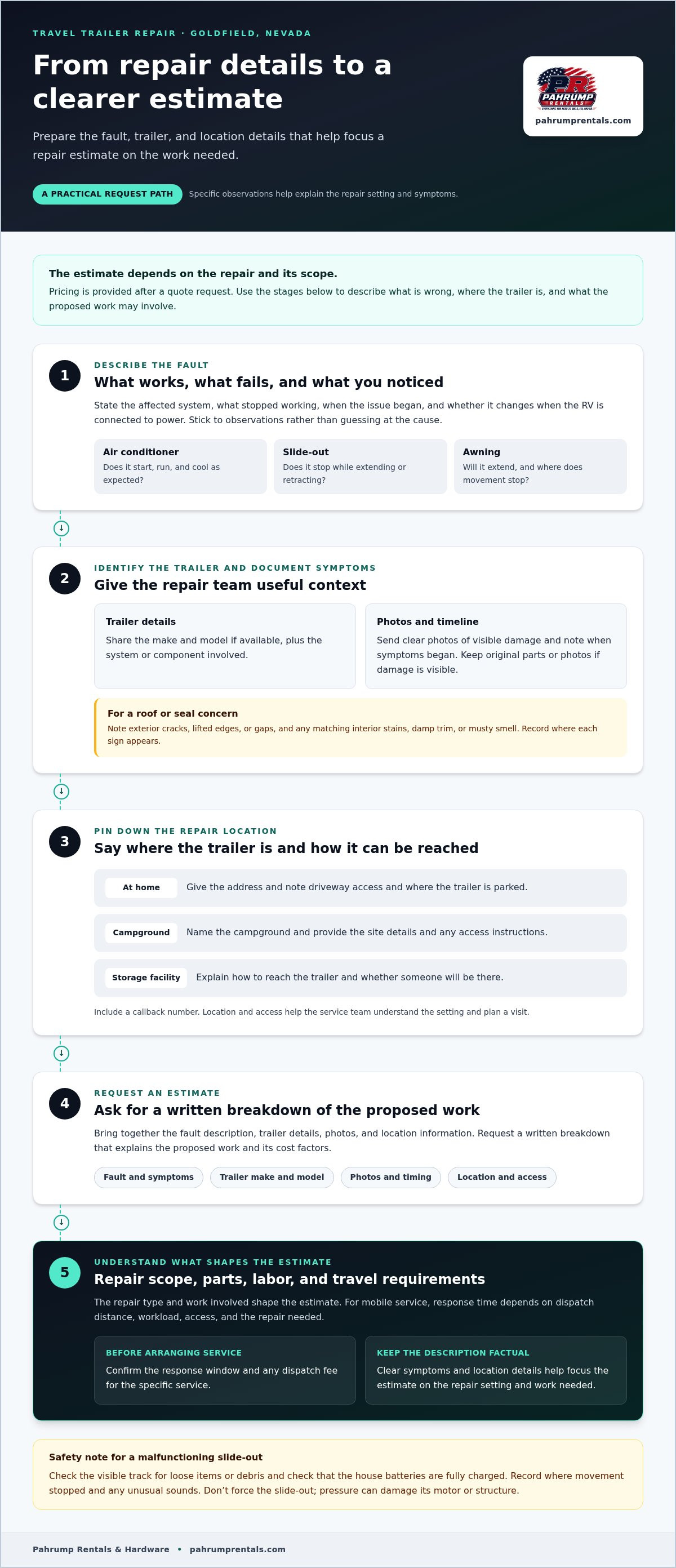
To request an estimate, describe the fault, trailer, and location where the repair is needed. For travel trailer repair near Goldfield, NV, say whether the RV is parked at a home, campground, or storage facility. Include the site address or campground name, a callback number, and a clear description of what stopped working. Photos can help show visible damage.
Location affects how a service visit is planned. At home, note driveway access and where the trailer is parked. At a campground, provide the site details and any access instructions. At a storage facility, explain how to reach the trailer and whether someone will be there. These details help the service team understand the repair setting and discuss next steps.
Prepare a concise description before contacting the service department. Include the trailer’s make and model if available, the symptoms, when they began, and whether the issue changes when the RV is connected to power. For example, report whether an air conditioner fails to start, a slide-out stops moving, or an awning will not extend. Keep the original parts or photos if damage is visible.
- Describe the fault: Explain what works, what fails, and any visible damage.
- Identify the RV: Share its make and model, plus the affected system.
- Give the location: Name the home, campground, or storage facility.
- Ask for an estimate: Request a written breakdown of the proposed work and its cost factors.
The repair type, parts, labor, and travel requirements affect the estimate, and pricing is provided after a quote request. Mobile response time depends on dispatch distance, workload, access, and the repair needed. Confirm the response window and any dispatch fee when arranging the specific service.
Nearest mobile RV repair service to Goldfield, Nevada: A suitable mobile service needs to reach the trailer’s exact location. Whether it’s at a home, campground, or storage site can affect the practical route for a visit.
Reviews and ratings for RV repair services near Goldfield, Nevada: Compare reviews about the same repair concern, such as an air conditioner fault or slide-out problem. Look for specific accounts of communication, estimate clarity, and completed work rather than relying on a rating alone.
For air conditioning or HVAC concerns, report whether the unit starts, runs, and cools as expected. For slide-out or awning problems, describe its direction of movement and where it stops. Don’t force a stuck component. Clear symptoms help the service department understand whether the issue involves electrical, mechanical, or visible damage.
Slide-outs, leveling systems, roofs, and seals
A slide-out that stops partway may involve an obstruction, power issue, or mechanical fault. Look along the visible track for loose items or debris, and check that the house batteries are fully charged. Don’t force a malfunctioning slide-out, since pressure can damage its motor or structure. Note whether it stopped while extending or retracting and whether you heard unusual sounds.
Leveling problems can affect how doors, slide-outs, and interior fittings sit. Describe what happens when you operate the system, such as a control responding without moving the supports. Note whether the trailer appears uneven and which side seems low. Keep people clear of moving equipment, and don’t crawl beneath a trailer supported by a system that may be malfunctioning. These observations give a repair professional useful context.
Roof leaks and damaged seals need attention because water can affect interior surfaces. Look for visible cracks, lifted edges, or gaps around roof openings, windows, and doors. Inside the trailer, note water stains, damp trim, or a musty smell. Record where each sign appears, such as a ceiling mark near a roof vent. Photos from inside and outside can show whether the damage appears in one area or several.
Prepare a concise record before arranging an inspection. Include the affected component, its symptoms, when you first noticed them, and whether rain or system use changes the problem. Avoid applying sealant over an unexplained leak: covering the visible opening may not address where water enters. A clear description helps distinguish a roof or seal concern from nearby plumbing or condensation issues.
- Slide-out: Check the visible track and battery charge; don’t force movement.
- Leveling system: Describe control response and which area appears uneven.
- Roof or seal: Note the exact exterior gap and any matching interior stain.
- Repair request: Share observations and photos of each affected area.
If a slide-out has stopped, leave it in place and record its position. For a suspected leak, protect nearby belongings and document fresh moisture. These details help explain the problem without risking further damage. A repair assessment can then focus on the system involved, visible symptoms, and appropriate work.
When describing a slide-out fault, stick to what you observed: whether it stopped while extending or retracting, where it came to rest, and what you saw along the track. Check for obstructions along the tracks and confirm that the house batteries are fully charged. Include any unusual sound or control response, but avoid guessing at the cause. If the mechanism isn’t moving as expected, leave it in place rather than trying to overcome resistance. Forcing a malfunctioning slide-out can damage its motor or structure.
Keep the repair request focused on symptoms and checks already made. If the slide-out’s position or behavior changes, add that detail; otherwise, describe what happened when the fault first appeared. A clear record helps the repair professional understand the circumstances without mistaking an assumption for a diagnosis. Avoid operating the slide-out just to demonstrate the problem, and share only observations you can make without forcing movement.
Technician certification and repair estimates
A useful travel trailer repair estimate explains the fault, proposed work, and expected cost factors. Costs in rural Nevada depend on the system, damage, parts, labor, and travel requirements; pricing is provided after a quote request. A roof leak, for example, may need investigation to locate the entry point before the repair scope is clear.
Technician credentials matter when they relate to the system being repaired. A credential in one area doesn’t automatically demonstrate experience with every RV system. Electrical troubleshooting and roof-seal work, for example, involve different tasks. Ask for the credential’s exact name and the work it covers, then consider whether that experience matches the trailer’s fault. A clear explanation of the diagnostic process also helps you understand how the estimate was developed.
Read an estimate by separating the diagnosis from the proposed repair. The diagnosis describes the observed problem, such as a failed connection or damaged seal. The repair scope explains the planned work and which components may need attention. Parts, labor, travel, and further diagnostic work can affect the total. If inspection reveals related damage, the scope may need an update before the additional work proceeds.
Give the service department details that help narrow down the repair. Provide the trailer’s make and model, identify the affected system, and describe what happens when you operate it. For example: “The exterior light flickers when the switch is on.” A photo, a short symptom timeline, and any recent changes can help distinguish one fault from another. Clear details support a more specific estimate than a broad description such as “electrical problem.”
- Credential: Record its exact name and connection to the repair system.
- Diagnosis: Look for a description of the observed fault.
- Scope: Identify the work and components included.
- Cost factors: Note how parts, labor, travel, or further diagnostics affect the estimate.
Before approving work, compare the written scope with the symptoms you reported. If the estimate lists a component replacement, its diagnosis should explain why that component is relevant. Keep a copy of the estimate and any revised scope. This gives you a clear record of the agreed work, especially if inspection reveals a separate issue. A specific repair description makes the estimate easier to understand and keeps the next step focused on the trailer’s actual condition.
Costs vary with the system, extent of damage, parts and labor needed, travel, and further diagnostics. Pricing is provided after a quote request.
Business hours
Business hours determine when you can reach a service department, discuss a repair, and arrange next steps. They don’t establish when a mobile technician will arrive in Goldfield, Nevada. Treat office availability and dispatch timing as separate details. A repair request may be recorded during office hours, while travel and scheduling determine the service visit.
Before calling, organize the details that make the conversation efficient. Write down the trailer’s location, affected system, and symptoms. If the RV is at a campground, include its name and site information. If it’s in storage, note how the trailer can be accessed. Having these details ready lets you focus on the repair instead of searching for basic information.
Prepare a short list of scheduling questions. Ask what happens after you submit the repair request, how the estimate will be discussed, and what information is needed to plan a visit. Keep the answers with the trailer’s repair notes. A written record helps prevent confusion if you speak with the service department more than once.
- Location: Record the Goldfield address, campground name, or storage facility.
- Repair details: Identify the affected system and describe what it does.
- Access: Note gate instructions, site details, or who can meet the technician.
- Schedule: Write down the agreed contact and visit arrangements.
Separate urgent symptoms from your preferred appointment times. For example, report an active leak or an electrical system that has stopped working, then explain any access limits. Don’t assume that business hours mean mobile service is available at that time. Clear details about both the fault and location give the service team useful scheduling information.
For a mobile visit near Goldfield, clear location details help with planning. Give directions from a recognizable local landmark and mention road or site access conditions that could affect reaching the trailer. If the RV is stored away from home, arrange who can provide access and when. The contact person should know about the repair concern and have the trailer information available.
After your initial conversation, keep the estimate, repair notes, and scheduling details together. Record the date of each contact and any next steps discussed. If the trailer’s symptoms change, update the description before work is planned. This simple process keeps the repair request organized and clarifies the difference between office contact, estimate planning, and an on-site visit.
RV and travel trailer repairs
RV repairs involve distinct systems, so identifying the affected component helps define the work. A power fault, roof leak, or damaged running gear calls for different diagnostic steps. In Goldfield, Nevada, start by naming the system and describing its symptoms. State what stopped working, when it happened, and whether the problem changes with power or movement.
When considering RV repair around Tonopah, Beatty, and Goldfield, distinguish the service location from the repair location. A shop visit and mobile service require different arrangements. Give the town and exact trailer location when requesting service, then describe the system needing attention. This clarifies whether the RV is at a fixed facility or parked elsewhere.
How far the nearest full-service RV repair shop is from Goldfield depends on the shop’s location and the route to your trailer. Compare the actual starting point and road route rather than relying on town names alone. For a mobile visit, the destination is where your RV is parked; for shop service, it’s the facility.
Electrical concerns benefit from precise descriptions. Report whether the issue affects lights, outlets, appliances, or the power connection. RV electrical service can involve both 30-amp and 50-amp cords and plugs. Identify the cord or plug involved, and describe what happens when the trailer is connected. Don’t guess at the fault; the observed symptom is more useful than an assumed diagnosis.
Repair planning also depends on whether the trailer can be moved safely and accessed. A wheel or hitch concern differs from an interior appliance issue. Explain whether the trailer is parked at a residence, campground, or storage facility, and mention any access restrictions. If it can’t be moved, say so when describing its location. This helps establish whether the repair requires an on-site assessment.
- Electrical: Identify the affected system and whether a 30-amp or 50-amp cord or plug is involved.
- Water entry: Describe where moisture appears and which nearby area shows damage.
- Movement: Explain whether the trailer can be repositioned or must remain parked.
- Location: Provide the town and the exact place where the RV is situated.
Before approving a repair, connect the written scope to the reported symptom. For example, an estimate for an electrical concern should identify the affected connection or component and proposed work. If inspection reveals a separate fault, keep it distinct from the original repair. A clear record supports an informed decision about each repair, whether the trailer needs electrical troubleshooting, structural attention, or assessment of another system.
Pahrump Rentals & Hardware: Industrial Equipment Rentals
Pahrump Rentals & Hardware supports project needs with Industrial Equipment Rentals, Tool Rentals, and Professional Hardware Solutions. If your trailer repair involves a separate worksite task, these offerings can help with equipment and hardware for that project. The Contractor Portal provides a business-focused way to access the company’s services.
For example, a contractor handling site work alongside an RV repair project can explore rental equipment, tools, or hardware suited to that work. These offerings complement repair planning but don’t replace a technician’s assessment of the trailer itself.
Take the next step with a clear repair plan
A well-prepared estimate request can turn a trailer problem into a manageable repair plan. Keep your notes and photos together, and use the written scope to decide what work addresses the issue. For travel trailer repair near Goldfield, NV, sharing the trailer’s location and symptoms gives the service conversation a practical starting point.
Pahrump Rentals & Hardware offers RV Repair for owners who need help with trailer concerns. For related projects, the business also offers Industrial Equipment Rentals, Professional Hardware Solutions, and Tool Rentals. Choose the next step that fits your needs, whether discussing the repair or arranging equipment for related work.
Clear information, a defined repair scope, and a direct conversation can make it easier to move forward with confidence. Contact Pahrump Rentals & Hardware to discuss your next step. With the right details in hand, you can approach the repair process with a steady plan.
Frequently Asked Questions
Where can I find RV and travel trailer repair shops near Goldfield, NV?
RV owners near Goldfield can contact Pahrump Rentals & Hardware in Pahrump for RV repair; the business serves the wider local area, including Beatty and Tonopah. It’s a regional option for travel trailer repair near Goldfield, NV, rather than a shop address in Goldfield itself. Before traveling, describe your trailer’s issue and ask whether the repair can be handled at the Pahrump location and what to bring.
What travel trailer repair services are offered near Goldfield, NV?
Available help includes professional RV repair and RV supplies, which can support repairs, maintenance, and upgrades. If your trailer needs a replacement part or a repair assessment, explain the component and symptoms when you contact the shop. Ask whether the required part is available and whether the repair is within its service scope. Propane is also among the business’s offerings, which may be useful during a broader RV stop.
How can I check RV repair shop hours, phone numbers, and appointment availability near Goldfield?
Use Pahrump Rentals & Hardware’s current business contact listing for its phone number and hours, then call before driving from Goldfield, Beatty, or Tonopah. Tell the staff your trailer’s make, model, year, and repair concern. Discuss whether the work is handled by appointment and the next step for bringing in the trailer or arranging service.
Reviews and ratings for RV repair services near Goldfield, Nevada
Compare reviews about the same repair concern, such as an air conditioner fault or slide-out problem. Look for specific accounts of communication, estimate clarity, and completed work rather than relying on a rating alone.


