

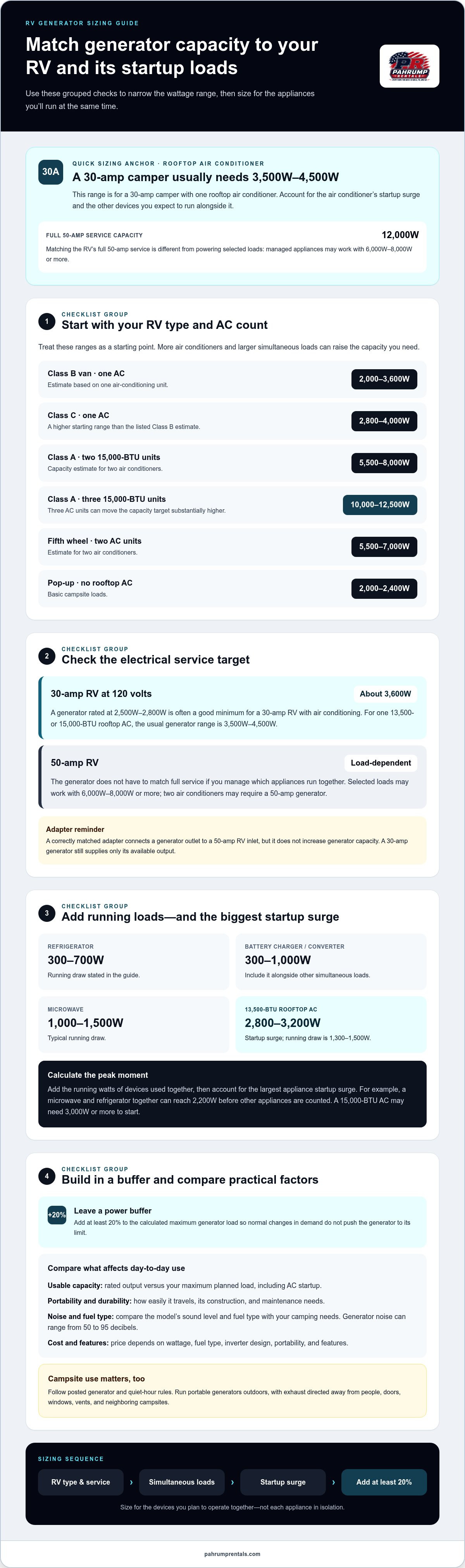
A 30-amp camper with a rooftop air conditioner usually needs a 3,500W to 4,500W inverter generator, while matching the full capacity of 50-amp RV service requires 12,000W. To determine what size generator is right for my RV, I need to account for its electrical service, air conditioner startup draw, and the appliances I plan to run at the same time. A 2,000W generator can handle basic camper loads, but usually won’t start a standard rooftop air conditioner.
Choosing a generator can feel like a balancing act: too little power limits what you can use, while more capacity than you need may not make sense for your setup. This guide explains how to size a generator around your RV and its everyday electrical demands. You’ll also learn what a 2,000W model can run, why air conditioners need extra power to start, and which practical factors to weigh when choosing a portable generator.
Key Takeaways
- Size for the appliances you’ll run together, and account for the extra surge power an air conditioner needs when it starts.
- Leave a power buffer above your calculated maximum load so normal changes in demand don’t push the generator to its limit.
- Use your RV’s type and number of air conditioners to narrow the capacity range, then factor in battery charging and other appliances.
- Compare portability, noise, fuel type, and durability to find a generator that suits both your power needs and the way you camp.
Can a 2000 Watt Generator Run a Camper?
Yes, a 2,000W generator can run basic camper loads, but it usually can’t start a standard rooftop air conditioner. The deciding factor is the combined wattage of appliances running at once, including the brief startup surge from motors.
RV Appliance Wattage Requirements
Appliance wattage is the power each device draws while running, and it determines which loads fit within a generator’s capacity. A refrigerator may draw 300W to 700W, while a battery charger or converter typically draws 300W to 1,000W. A 2,000W generator may cover smaller loads, but charging and cooking at the same time can use much of its capacity.
A 2,200W generator is probably enough for RV battery recharging alone. For choosing a setup for travel or camping, add the wattage of devices you expect to use together, rather than treating each appliance as an isolated load.
Appliance Loads and Surge Wattage
Load calculation means adding the running wattage of appliances used at the same time, then accounting for the largest startup surge. A microwave typically draws 1,000W to 1,500W while running, and a refrigerator draws 300W to 700W. If both run together, their combined demand can reach 2,200W before other appliances are counted.
Inverter generators produce electricity differently from conventional generators. RV owners in Pahrump, Beaty, Goldfield, and Tonopah often consider them when quieter operation and steadier output matter. Either type needs enough capacity for connected loads and motor-starting demand.
Starting and Running Wattage
Running wattage is the steady power an appliance needs; starting wattage is the short surge required to start its motor. A 13,500-BTU RV air conditioner typically draws 1,300W to 1,500W while running, but 2,800W to 3,200W at startup. Startup demand is therefore higher and can exceed a 2,000W generator’s capacity.
To calculate starting demand, identify the appliance with the highest startup wattage and add the running loads of other devices operating at that moment. A 15,000-BTU air conditioner may need 3,000W or more to start, depending on its model and conditions.
Appliance Runtime Calculations
Wattage measures power; watt-hours estimate energy used over time. Multiply an appliance’s watts by its hours of use to estimate watt-hours. For example, a 100W television used for two hours per day requires a little more than 200 watt-hours of generator capacity.
For battery recharging, account for the charger’s draw and the other appliances running simultaneously. Add at least 20% to the calculated maximum generator load to allow a power buffer.
Generator cost depends on wattage, fuel type, inverter design, portability, and features. Compare options based on your RV’s power needs and how you plan to use the generator, not wattage alone.
What size generator do I need for my RV?
Size a generator for your RV’s electrical service, air conditioners, and the appliances you’ll run at the same time. Your RV type offers a starting point, but the number of AC units and their startup demand can change the capacity you need.
Sizing by RV Type and Electrical System
Generator sizing means matching your RV’s electrical system and typical loads to the generator’s available output. A larger RV or an additional air conditioner can raise power demand substantially.
A Class B van with one air-conditioning unit may need 2,000 to 3,600 watts; a Class C with one may need 2,800 to 4,000 watts. A Class A with two 15,000-BTU units may need 5,500 to 8,000 watts, while three may call for 10,000 to 12,500 watts. A fifth wheel with two units may need 5,500 to 7,000 watts. A pop-up without rooftop air conditioning typically needs 2,000W to 2,400W for basic campsite loads.
Sizing for 30-Amp and 50-Amp Service
Amp service indicates how much electrical power the RV can receive at 120 volts, helping owners set a practical generator target.
A 30-amp RV at 120 volts can handle about 3,600 watts; a generator rated at 2,500 to 2,800 watts is often a good minimum for a 30-amp RV with air conditioning. A 30-amp camper with one 13,500- or 15,000-BTU rooftop air conditioner usually needs a 3,500W to 4,500W inverter generator. A 50-amp RV can support substantial electrical loads, but generator needs depend on which appliances are used at the same time. Selected managed loads may work with 6,000W to 8,000W or more.
Portable Generators for 50-Amp RVs
A portable generator can power a 50-amp RV if its output meets the loads being used. A correctly matched adapter connects the generator’s outlet to the RV’s 50-amp inlet, but the adapter doesn’t increase generator capacity.
For example, a 30-amp generator connected through an appropriate adapter still supplies only its available output, not the RV’s full 50-amp service. Check that the adapter matches the generator outlet and RV inlet, then manage appliances to stay within the generator’s wattage. Two air conditioners may require a 50-amp generator; one ac unit and fewer simultaneous loads may need less.
What Should I Look for When Buying a Portable Generator?
Compare usable capacity, portability, noise, durability, and fuel type with your RV’s electrical needs. A refrigerator, microwave, battery charger, and air conditioner all draw power differently, so work out which devices you’ll use together.
At RV parks and campgrounds, follow posted generator and quiet-hour rules. Run portable generators outdoors, directing exhaust away from people, doors, windows, vents, and neighboring campsites.
Generator Portability and Performance
Portability and performance describe how easily a generator fits your travel needs while supplying enough power. Check its rated capacity against your maximum planned load, including air-conditioner startup demand. Generator noise can range from 50 to 95 decibels, so the model’s sound level matters around other campers. For durability, compare construction and maintenance requirements with how often you’ll transport and use the unit.
A portable power station stores electricity in batteries and can run selected devices without a fuel-powered generator. Its capacity and recharging method determine whether it can power your appliances for as long as needed. Solar panels can recharge it in sunlight, but the station still needs enough output for the connected loads.
Portable, Built-In, and Alternative Generator Types
A portable generator can move between uses, while a built-in generator stays installed in the RV. Built-in models typically draw fuel from the RV’s main tank until it reaches about a quarter full, which affects fuel planning compared with carrying a separate portable unit.
Gas and diesel generators use different fuels, so consider which fits your travel and refueling plans. Solar systems pair panels with battery storage rather than providing fuel-powered operation. For any setup, compare maximum output with the devices you’ll run, including battery charging and an RV air conditioner. A generator can replace shore power only if its output supports the loads you choose to run.
Pahrump Rentals & Hardware: Industrial Equipment Rentals
Pahrump Rentals & Hardware provides industrial equipment and tool rentals for local projects. Its professional hardware solutions support practical hardware needs, and its Contractor Portal helps contractors manage their work.
Once you’ve determined your RV’s generator capacity, turn to Pahrump Rentals & Hardware when a local project calls for equipment, tools, or hardware. These offerings complement generator planning without changing your camper’s power needs.
Contact Pahrump Rentals & Hardware to discuss your equipment or hardware needs.
Plan Your Next Trip With Confidence
Choose a generator that suits the way you camp, not just the electrical capacity printed on your RV. Before your next trip, consider which appliances you’ll run together, how often you’ll need power away from shore power, and whether your travel plans are changing. This practical review can help you decide whether your current setup still meets your needs.
Once you’ve worked out what size generator for my RV means for your routine, prepare the rest of your setup. Pahrump Rentals & Hardware supports local projects in Pahrump, Beaty, Goldfield, and Tonopah with equipment rentals and hardware solutions.
Contact Pahrump Rentals & Hardware to discuss your project needs. Take the next step at your own pace and plan for more comfortable, well-prepared travels.
Frequently Asked Questions
What is the difference between 30-amp and 50-amp RV?
A 30-amp RV service at 120 volts corresponds to 3,600 watts, while 50-amp service has two feeds and can provide up to 12,000 watts total. That difference affects how many high-draw appliances owners can use together. A 50-amp RV doesn’t automatically need a 12,000-watt generator if loads are managed. Campers around Pahrump, Beaty, Goldfield, and Tonopah can compare their RV’s service with planned loads.
How Many Watts Does It Take to Run a Camper?
A camper’s wattage requirement depends on which appliances run simultaneously. A 2,000-watt generator can support basic loads but usually won’t start a standard rooftop air conditioner. For example, a 1,500-watt space heater and 120-watt fan total 1,620 running watts, before any starting surge. Add other devices only if capacity remains. This example helps campers near Pahrump, Beaty, Goldfield, and Tonopah assess modest loads.
How Much Power Does Your RV Need?
Your RV needs enough generator output for its highest simultaneous load, along with energy for operating time and battery charging. Separate peak watts from daily watt-hours: a brief appliance surge affects generator capacity, while extended refrigerator or fan use affects fuel or stored-energy planning. This distinction helps RV owners in Pahrump, Beaty, Goldfield, and Tonopah choose for their routines instead of assuming every appliance runs continuously.
What are the differences between inverter generators and conventional generators for RVs?
RV owners often choose inverter generators for quieter operation and steadier output. Either type needs enough capacity for connected loads and motor-starting demand.


