
For coastal or marine applications, Type 316 stainless steel is the recommended option. Choosing stainless steel screws in Pahrump still means matching corrosion resistance to the project’s exposure, materials, and fastening needs. The right screw has to fit the job, not just resist rust.
When comparing fasteners, look beyond the material. Screw size, head shape, and the surfaces being joined all affect which option suits a project. This guide explains how stainless steel resists corrosion and what to consider when choosing screws for work in and around Pahrump.
Learn how exposure affects material choice, how to compare screw sizes and product ranges, and where stainless steel trim head screws may fit. These practical considerations can help you choose fasteners suited to the task and the finish you want.
Key Takeaways
- For coastal or marine applications, Type 316 stainless steel is the recommended option; consider the exposure the fastener will face when choosing material.
- Match screw length and diameter to the materials being joined and the depth of the fastening point.
- Trim head screws can suit projects where a smaller, less prominent head is preferred, but the application should guide the choice.
- Compare head style and drive type with the tools available and the access you have at the fastening point.
- Explore how professional hardware solutions and tool rentals can support your project’s fastening needs.
Corrosion resistance
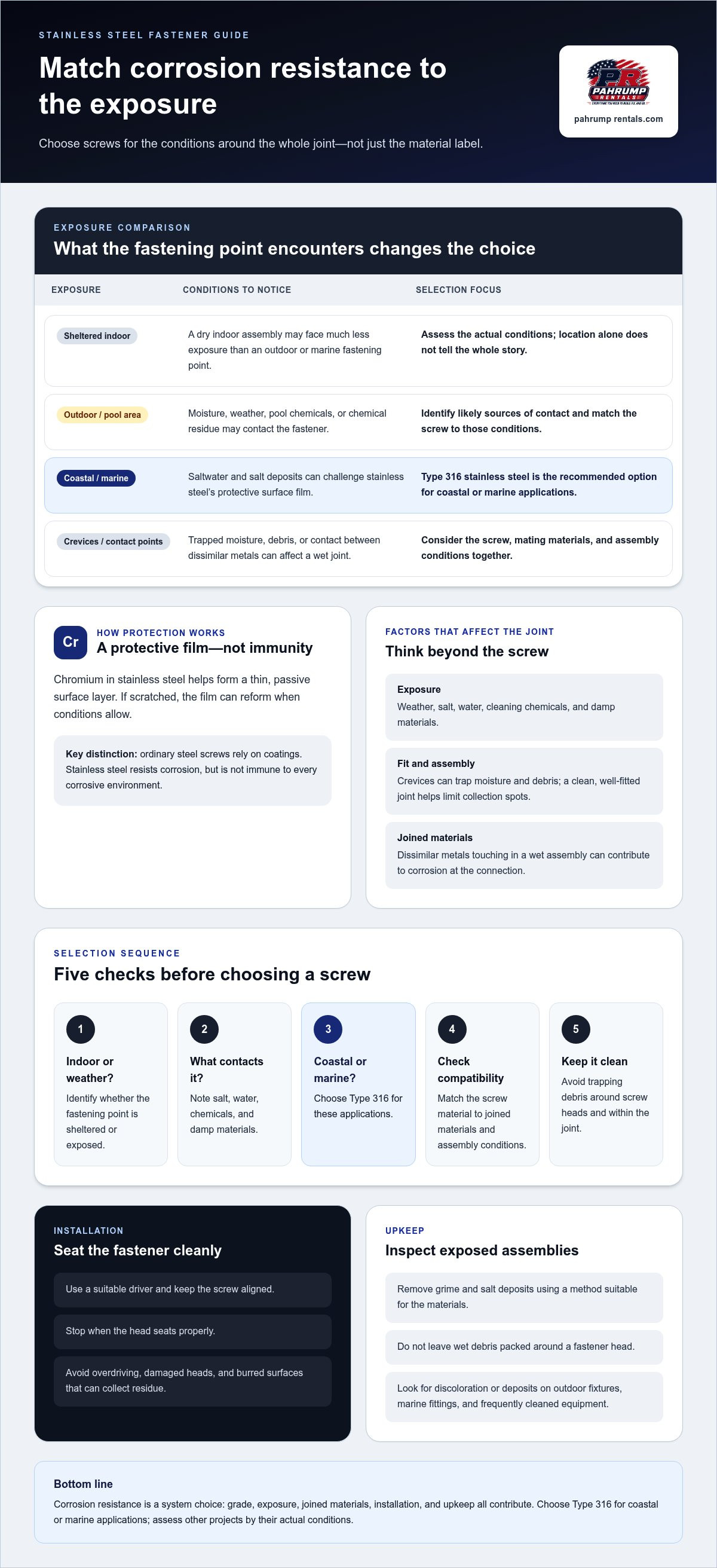
Stainless steel resists corrosion through a protective surface layer. Chromium in the alloy helps form this thin, passive film. If the surface is scratched, the film can reform when conditions allow. That protection distinguishes stainless fasteners from ordinary steel screws, which rely on coatings. It does not make stainless steel immune to every corrosive environment.
Start by identifying what the screw will encounter. Dry indoor framing differs from a coastal deck or marine fitting. Salt, moisture, cleaning chemicals, and trapped debris can all affect corrosion. For coastal or marine applications, Type 316 stainless steel is the recommended option. The environment matters as much as the fastener’s material label.
For stainless steel screws in Pahrump, match the grade to the actual exposure. A project’s location alone doesn’t tell the whole story. An outdoor fixture near a pool, for example, may face moisture and chemical residue, while a sheltered indoor assembly may have much less exposure. Identify likely sources of contact before choosing screws.
Pay particular attention to chlorides. Saltwater and salt deposits can challenge stainless steel’s protective film. Crevices can also trap moisture and debris. A screw head pressed against a washer or uneven surface may leave a narrow gap. A good fit and clean assembly help limit spots where corrosive material can collect.
Use this practical selection sequence:
- Identify whether the fastening point stays indoors or faces weather.
- Note contact with salt, water, chemicals, or damp materials.
- Choose Type 316 for coastal or marine exposure.
- Match screw material with the joined materials and assembly conditions.
- Keep the joint clean and avoid trapping debris around heads.
Material compatibility matters, too. Dissimilar metals touching in a wet assembly can contribute to corrosion at the connection. For example, a stainless steel screw driven into another metal component creates a contact point to consider. The surrounding material, moisture, and exposure all affect the result. Choose compatible components for the entire joint, not just the screw.
Installation affects fastener performance. A damaged head or burred surface can collect residue, while overdriving can damage the workpiece or distort the seating area. Use a suitable driver, keep the screw aligned, and stop when the head seats properly. These steps help create a clean connection and prevent avoidable damage.
Regular maintenance can help preserve exposed assemblies. Remove grime and salt deposits with a method suitable for the materials, and avoid leaving wet debris packed around a fastener head. Inspect outdoor fixtures, marine fittings, and frequently cleaned equipment for discoloration or deposits. Cleaning early keeps surfaces clearer and makes changes easier to spot.
Corrosion resistance is a system choice, not a single specification. Grade, exposure, joined materials, installation, and upkeep all contribute. Type 316 is the recommended choice for coastal or marine applications, while other projects require assessment of their own conditions. Treat the screw, mating surfaces, and surrounding environment as one assembly when selecting fasteners.
Screw sizes and product ranges
Start by identifying the materials being joined. Measure their combined thickness before choosing screw length. A screw that’s too short may not hold securely; one that’s too long may emerge through the far surface. When attaching a cabinet panel to a frame, account for both layers. Then consider the screw’s diameter and thread design.
Diameter is the width across the screw’s threaded body, while length indicates how far it can enter the material. Both affect fit and holding performance. A thicker screw needs a suitable receiving material and hole; a longer screw needs enough clear depth behind the workpiece. Check both measurements against the assembly rather than relying only on the old fastener.
Head shape affects how screw length is measured. For a pan-head screw, length is generally measured from beneath the head to the tip. For a countersunk screw, the head sits within the material, so its measurement includes the head. When replacing a screw, compare where the new fastener will sit with the existing hole and surface.
Use this sizing sequence before choosing a product:
- Measure the thickness of every layer being fastened.
- Check available depth behind the receiving material.
- Identify whether the head sits above or flush with the surface.
- Match diameter to the hole and material strength.
- Compare thread form with the substrate and intended grip.
A thin bracket attached to a wooden panel, for example, needs a different screw length than two thick boards joined together. In either case, the screw must pass through the first piece and engage the second. A predrilled hole can affect the fit, too. Match the hole to the screw and material rather than forcing a mismatched fastener.
Product ranges vary by material grade, diameter, length, thread, head, and drive. These details are useful for comparison, but they are not interchangeable. A wood screw’s thread is designed for different engagement than a machine screw’s. A machine screw typically mates with a threaded hole or nut. Choose the fastener type to suit the joint’s construction.
Consider the available tools and access when choosing stainless steel screws. A long screw may be difficult to control in a confined corner. A wider head may cover an oversized opening, while a countersunk head needs a matching seat. Review the drawing, existing hardware, or a sample assembly, and note the required dimensions before comparing product options.
For a replacement, bring the old screw or record its measurements. Compare length, diameter, head profile, thread, and drive. Don’t rely on appearance alone: screws that look similar can differ in length or thread pitch. If the original is damaged, measure an undamaged matching fastener from the same assembly.
Project buyers can browse a fastener product range while comparing the dimensions their assembly requires. A clear specification helps narrow choices for a repair, fixture, or new build. Record the material, thickness, required head style, and available clearance together. That gives each size comparison a practical purpose.
Stainless steel trim head screws
A trim head screw has a smaller profile than many standard screws, making it suitable for visible trim, narrow moldings, and cabinetry. A cabinet face frame, for example, may call for a fastener that draws less attention. The smaller head can create a neater appearance, but it still needs to suit the material and joint.
Stainless steel describes the fastener material; trim head describes its shape. Each addresses a different need. Stainless steel may suit projects where corrosion resistance matters, while a trim head may suit installations where a less prominent head is preferred. Neither feature determines the correct length, diameter, or thread on its own.
Start with the receiving material. A trim head screw used in wood needs threads suited to wood. When joining a panel to a frame, the screw must pass through the panel and grip the frame. For thin trim over a solid backing, choose a length that holds the trim without emerging through the other side. A proper fit matters more than appearance alone.
A smaller head covers less surface area, so placement and seating can be more noticeable. If the screw is too close to an edge, the material may split or break. A pilot hole can help control placement in hardwood or delicate trim. When the finish matters, test the fastening method on a scrap piece first.
Use this selection checklist before installing trim head screws:
- Identify the trim material and its backing.
- Measure the combined thickness of the pieces.
- Check available depth behind the receiving surface.
- Match screw diameter and thread to the material.
- Choose a drive that fits the tool and access.
- Test the head seating on a spare piece.
Install the screw carefully. Keep the driver aligned with it, apply steady pressure, and stop when the head seats. Excess force can damage the trim or drive the head below the surface. A countersink may help create a flush seat, but its shape must match the screw head. Test on scrap wood or a matching offcut first.
Consider the finished surface, too. Paint may conceal a small head more easily than a stain, while clear finishes can make fastener placement more visible. A consistent layout helps the finished line look intentional. Mark positions before driving, especially along long trim boards or repeated cabinet panels.
Stainless trim head screws can be useful for exterior trim, but exposure still guides material choice. For coastal or marine applications, Type 316 stainless steel is recommended. The screw must also suit the wood, backing, and installation conditions. A decorative head cannot compensate for a poor material match or insufficient engagement.
For replacement work, remove an existing screw and compare its head profile, length, diameter, and thread. Check whether it sits flush or remains slightly raised. If the old fastener damaged the trim, assess the hole before reusing it. A sound installation depends on a compatible screw and an undamaged surface, not just a similar-looking head.
What screw head styles and drive types are available locally?
Head shape determines how a screw sits against the material; drive type determines which tool turns it. For a stainless steel fastener, both affect fit, appearance, and installation. A flat head can sit flush in a matching countersink, while a pan head remains raised. Choose according to the joint and finish.
Common head styles serve different purposes. A flat or countersunk head suits applications where a smooth surface matters. A pan head provides a broad, raised bearing surface. A round head stays prominent and may suit exposed hardware. A hex head accepts a wrench or socket, while a trim head has a smaller profile for discreet fastening.
Drive types vary as well. Phillips drives have a cross-shaped recess; slotted drives have one straight slot. Square drives use a four-sided recess, while Torx drives use a star-shaped recess. Match the driver bit to the screw head. A poor fit can cause the bit to slip, damage the recess, or mark nearby material.
Use this quick selection process:
- Decide whether the head should sit flush or remain raised.
- Consider the visible finish, such as painted trim or exposed hardware.
- Check tool access around the fastening point.
- Choose a drive that matches your available driver or bit.
- Test the screw and tool together on scrap material.
A countersunk head, for example, needs a suitable seat. Without one, its rim may stand proud or press unevenly into the surface. A pan head avoids the angled seat but remains visible. A trim head can make fastening less noticeable on narrow molding. Choose according to the surface and desired finish.
Limited access can rule out an otherwise suitable drive. A screwdriver needs room to approach the head straight, and a socket needs clearance around a hex head. A right-angle driver may help in a tight cabinet corner. Choose the drive and tool as a pair, and consider tool comfort if you’ll be fastening repeatedly.
Take care when comparing screws for replacement work. Remove an existing screw and inspect its head profile and recess. Phillips and similar-looking cross drives may not fit the same bit properly, so check the recess before applying force. If the head is damaged, use an undamaged matching fastener from the same assembly as your reference.
Material and finish matter, too. A decorative round head may suit visible hardware, while a flat head may suit a flush panel. A stainless screw can be chosen for corrosion resistance, but head shape doesn’t determine corrosion performance. For coastal or marine applications, Type 316 stainless steel is recommended. Keep material grade and installation style as separate decisions.
Before choosing a local fastener, note the head profile, drive shape, size, and intended surface. Bring the old screw when replacing hardware. Clear details help narrow the options without relying on visual guesswork, making it easier to compare fasteners against your project’s needs.
Pahrump Rentals & Hardware: Industrial Equipment Rentals
Pahrump Rentals & Hardware offers professional hardware solutions for repairs, installations, and ongoing work in Pahrump, Beatty, Goldfield, and Tonopah. For tasks that also require equipment or tools, industrial equipment and tool rentals can support the wider project. Contractors can use the Contractor Portal to manage rental agreements and project needs.
Before choosing screws, organize the project details: materials being joined, exposure conditions, required head style, and tool access. These notes make it easier to identify the right hardware considerations and any related equipment needs. For local hardware and equipment support in Pahrump, Beatty, Goldfield, or Tonopah, contact Pahrump Rentals & Hardware.
Turn Your Fastener Choice Into a Project Plan
Plan the fastening decision as part of the wider job. For a project using stainless steel screws in Pahrump, note the materials, work area, and tools required. This connects the fastener choice with how the work will be completed, whether it’s a repair, installation, or larger project.
Pahrump Rentals & Hardware offers professional hardware solutions, tool rentals, and industrial equipment rentals for projects in Pahrump, Beatty, Goldfield, and Tonopah. These offerings can support the work around your fastening task, from preparation through equipment planning. A clear project scope helps focus your next steps.
Contact Pahrump Rentals & Hardware about your project and take the next step with a steady plan. Thoughtful preparation helps you move forward with confidence.
Frequently Asked Questions
What sizes and types of stainless steel screws are available in Pahrump?
Stainless steel screws in Pahrump vary by length, diameter, thread, head style, and drive type. Choose dimensions to suit the materials and joint, then consider whether the screw will fasten a hinge, panel, or trim. Pahrump Rentals & Hardware provides fasteners and professional hardware solutions for local projects. Bring a sample screw or written measurements to help narrow the options.
Are 304 or 316 stainless steel screws better for outdoor use?
Type 316 is recommended for coastal or marine exposure, where salt can challenge a fastener’s corrosion resistance. Type 304 can suit less aggressive outdoor conditions, depending on moisture and other environmental exposure. For example, a sheltered outdoor fixture differs from hardware exposed to salt spray. Compare the site conditions and the materials being joined before choosing a grade. The outdoor label alone doesn’t determine the best fit.


