
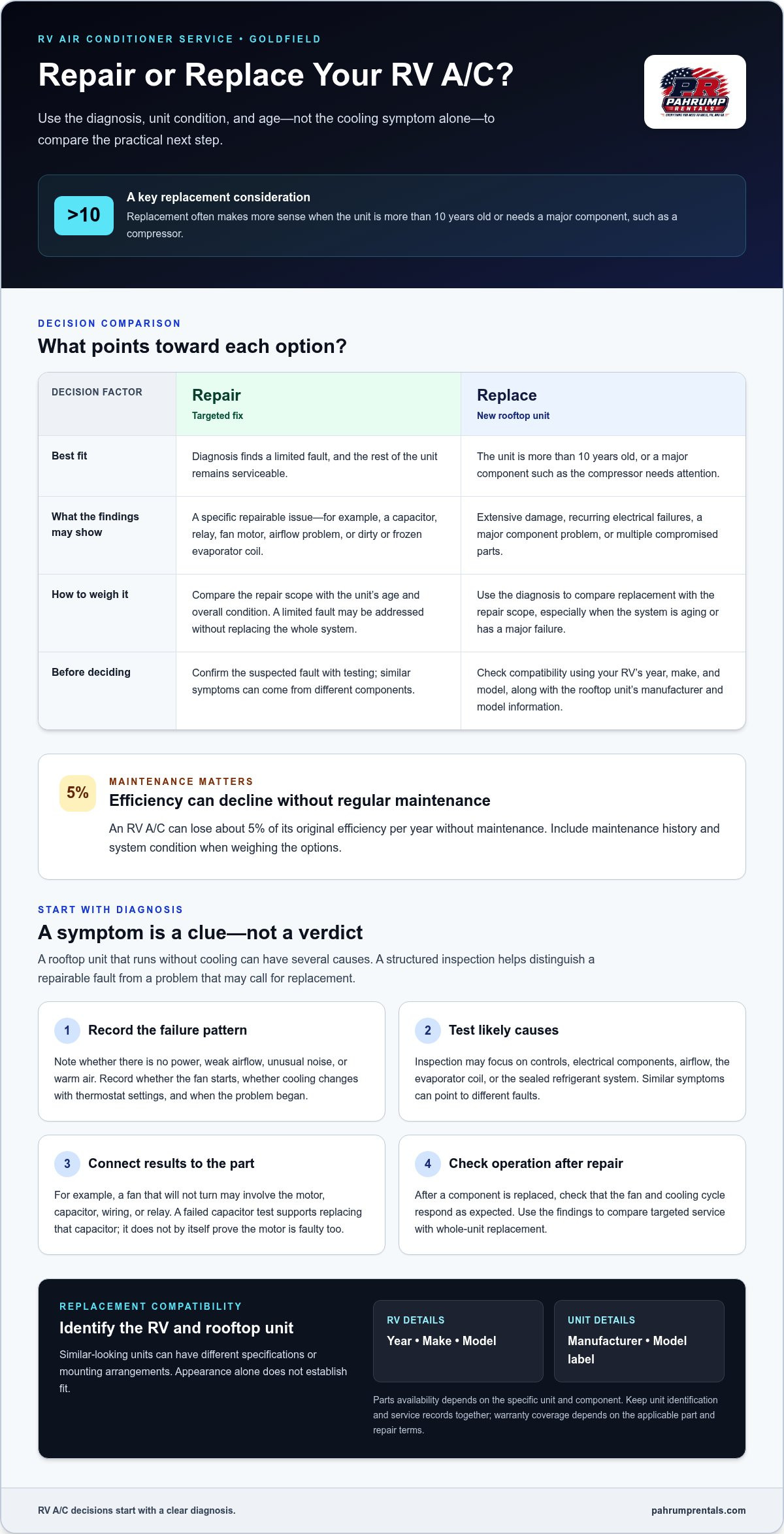
Replacing your RV’s A/C isn’t always the best fix. For RV air conditioner service in Goldfield, repair often makes sense when the problem is limited, while replacement often makes more sense if the unit is more than 10 years old or needs a major component such as a compressor. The right replacement unit depends on your RV’s year, make, and model.
A unit that runs without cooling can have several different causes, so the symptom alone doesn’t tell you whether it’s time for a new system. It’s reasonable to want a reliable answer before committing to either option. Regular maintenance matters, too: an RV A/C can lose about 5% of its original efficiency per year without it.
This guide explains how to weigh repair against replacement, recognize common RV air-conditioner problems, and understand what can affect service costs. You’ll also learn what diagnosis may involve and when refrigerant concerns need professional attention, so you can make a practical decision for your RV and travels around Goldfield.
Key Takeaways
- Use a structured diagnostic process to distinguish a repairable fault from a problem that may call for replacement.
- Learn how capacitor, fan motor, and relay problems can affect A/C operation and what testing can reveal.
- Recognize common causes of weak or absent cooling, including airflow issues and evaporator damage.
- Understand which maintenance needs and system conditions influence service pricing, without relying on a one-size-fits-all estimate.
- See why refrigerant loss and sealed-system faults call for careful diagnosis, and what factors guide the next repair step.
Need RV air conditioner repair?
If your rooftop unit runs but doesn’t cool, get the problem diagnosed before choosing repair or replacement. Start by noting the symptoms, RV details, and recent maintenance.
On-Site Diagnosis and Repair
Mobile, on-site diagnosis begins with the failure pattern: no power, weak airflow, unusual noise, or warm air. Note whether the fan starts, whether cooling changes with thermostat settings, and when the problem began. These details help narrow the inspection to controls, electrical components, airflow, or the sealed refrigerant system.
A technician can inspect the rooftop unit and test likely causes before recommending a repair. A dirty or frozen evaporator coil, for example, can limit cooling, while an electrical fault can stop normal operation. Electrical components and sealed refrigerant systems can be dangerous to handle incorrectly, so leave those repairs to a professional.
Repair-versus-Replacement Recommendations
Repair is often the practical choice when diagnosis points to a limited fault and the rest of the unit remains serviceable. Replacement often makes more sense when the air conditioner is more than 10 years old or needs a major component such as a compressor. Compare the repair scope with the unit’s age and condition, not just its cooling symptom.
Compatibility is essential when replacing a rooftop unit. The right replacement depends on your RV’s year, make, and model, so have those details ready when comparing options. Consider whether the existing unit has recurring problems, damaged components, or maintenance issues that could affect future performance. A clear diagnosis helps you weigh repair against replacement.
Brands and Models Serviced
RV air conditioners vary by brand and model. Use the rooftop unit’s manufacturer label and model information to identify it, and have your RV’s year, make, and model ready to assess replacement compatibility. These details are more reliable than appearance alone, because similar-looking units can have different specifications or mounting arrangements.
Parts availability depends on the specific unit and component. Warranty coverage also depends on the applicable part and repair terms, so keep the unit identification and service records together. Customer reviews can help you assess whether a repair experience included a clear diagnosis, understandable options, and useful communication. Look for details about the work, not just a star rating.
Appointments and Emergency Service
Scheduling and the repair needed affect appointment availability and emergency service near Goldfield. For an urgent cooling problem, share the RV’s location, the unit’s symptoms, and whether the rooftop system still powers on. Include the manufacturer and model information if available, so the service team has practical details for planning the visit.
Before arranging mobile RV repair, make the unit accessible and describe any changes in its operation. For example, report whether cooling stopped suddenly or weakened over time. If the diagnosis points to a repairable component, the next step is targeted service. If it reveals an aging unit or major compressor failure, use the findings to compare repair with replacement.
Capacitor, fan motor, and relay testing and replacement
An RV rooftop A/C can lose cooling or airflow if an electrical component fails. A capacitor helps start or run a motor, a relay controls power to a circuit, and a fan motor moves air across the coils. Because different faults can cause similar symptoms, testing each component helps identify the failed part instead of replacing parts by guesswork.
A technician starts by documenting the symptom, such as a fan that won’t start, a humming unit, or cooling that stops during operation. They then isolate power before inspecting connections and testing the capacitor, relay, and motor. Electrical work can be dangerous if handled incorrectly. Leave energized components and electrical diagnosis to a professional rather than opening the rooftop unit yourself.
Testing should connect the symptom to the component’s results. A fan that won’t turn, for example, may point to a motor, capacitor, wiring, or relay issue. A failed capacitor test can support replacing the capacitor, but it doesn’t prove the fan motor is faulty too. Diagnosis should account for the circuit and the unit’s overall condition. After replacement, the fan and cooling cycle should be checked to confirm they respond as expected.
Roof-mounted maintenance also includes inspecting the shroud, which protects exterior components and can be damaged by weather or impact. A cracked or loose cover can leave parts exposed, so replacement should match the air-conditioner model. MaxxAir replacement shrouds are listed for Coleman-Mach models 1, 3, and 15. Match the model identification before selecting a shroud; a similar outline alone doesn’t establish fit.
For rooftop A/C replacement, your RV’s year, make, and model help determine compatibility. A new unit may be appropriate if diagnosis finds extensive damage, recurring electrical failures, or a major component problem. Compare the repair scope with the condition of the existing system. If the fault is limited to a replaceable capacitor, relay, or motor, targeted repair may preserve the unit. If several parts or the unit itself are compromised, replacement becomes a more relevant option.
Keep the rooftop unit’s model-label details and a clear description of the fault ready for your RV repair appointment. This helps focus testing on the right unit and component. A careful process, including symptom review, power isolation, component testing, and a post-repair operation check, helps determine whether to repair one electrical part, replace a damaged shroud, or consider replacing the whole A/C.
Common RV A/C problems
Cooling problems can start in the electrical system, airflow path, or sealed refrigerant circuit. Tracking the exact symptoms helps technicians narrow down the diagnosis.
Common Operating Issues
An RV air conditioner that runs without cooling may have a failed run capacitor, a dirty or frozen evaporator coil, low refrigerant due to a sealed-system leak, or a failing compressor. These faults can feel similar inside the RV, but each calls for a different inspection. Note whether the fan runs and whether airflow changes during operation.
A dirty coil can restrict heat transfer, while ice on the evaporator can obstruct airflow. If you see ice, note when it appeared and whether cooling had weakened beforehand. A technician can inspect the coil and airflow path, test electrical operation, and assess the sealed system. This process helps distinguish a maintenance issue from a component failure.
Corrosion from harmful acids can damage an RV A/C evaporator beyond repair. A technician can inspect for corrosion and determine whether the affected coil is repairable. Keep your observations specific: note water or visible damage around the unit, unusual noise, and whether the system starts consistently. These clues don’t replace testing, but they help explain the pattern of the fault.
Useful details to record include:
- Whether the compressor and fan appear to start.
- Whether airflow is weak, absent, or interrupted.
- Whether cooling stopped suddenly or faded over time.
- Whether frost or visible coil damage appears.
Signs of Air Conditioner Problems
Warm air from the vents means cooling isn’t working as expected. If the fan still moves air, the fault may involve the capacitor, evaporator, refrigerant charge, or compressor. Weak airflow may point to a blocked or frozen coil. Record changes in air temperature and fan behavior instead of describing the issue only as “not cooling.”
Listen for humming, repeated starting attempts, or a new rattle from the rooftop unit. A fan that fails to move air may indicate a motor or electrical fault. You may also be able to see a damaged shroud from outside, but don’t climb onto the roof without safe access. Photos taken from the ground can help document exterior damage.
Tell the technician what happens at startup, what changes while the unit runs, and whether the problem repeats. A system that cools briefly before airflow drops, for example, gives a different diagnostic clue than one that never starts. Don’t open electrical panels or refrigerant lines. Electrical components and sealed-system work can be dangerous if handled incorrectly.
Air conditioner maintenance pricing
RV A/C maintenance costs depend on the work required, not just the rooftop unit’s nameplate. A basic inspection differs from service that involves electrical testing, coil cleaning, parts, or sealed-system diagnosis. The price depends on the case and is provided after a quote request. Key factors include the unit’s condition, access, diagnostic needs, and repair scope.
Describe how the A/C behaves before arranging service. Note whether it starts, moves air, cools consistently, or develops frost. Include your RV’s year, make, and model, along with the air-conditioner label details. Clear information helps define the inspection and distinguish routine maintenance from troubleshooting a specific fault.
A maintenance visit may include an examination of the rooftop unit, airflow path, evaporator coil, condensate drainage, shroud, and electrical connections. The work changes if testing finds a failed capacitor, damaged fan motor, or refrigerant leak. Cleaning a coil requires different labor and materials than replacing a component. The findings determine the appropriate service scope.
Maintenance also affects performance over time. An RV air conditioner can lose about 5% of its original efficiency per year without regular maintenance. That makes coil condition, airflow, and recurring symptoms relevant when considering service. A dirty or frozen evaporator coil can reduce cooling, while electrical faults may require testing beyond a visual inspection.
For systems that use a receiver drier, its maintenance needs depend on the system and its condition. The receiver drier stores refrigerant, absorbs moisture, and filters debris and acids from the refrigerant. Its replacement is a distinct task from cleaning an accessible coil, so the system design and service need affect the estimate.
To understand a maintenance quote, separate inspection, cleaning, electrical diagnosis, parts, and sealed-system work. Ask for a clear scope that identifies which tasks address the problem and which are preventive. A quote listing the components tested and proposed repairs makes it easier to compare maintenance with corrective service, without assuming every RV needs the same work.
Before approving work, review the diagnosis and recommended parts together. Weak airflow with a dirty coil, for example, calls for a different scope than a unit that runs without cooling because of a sealed-system fault. A detailed service record can also help track maintenance, recurring electrical issues, and receiver drier replacement intervals.
Refrigerant-charge evaluation and sealed-system diagnosis
An RV air conditioner can run without cooling for several reasons, including a failed run capacitor, dirty or frozen evaporator coil, low refrigerant due to a sealed-system leak, or failing compressor. Each fault needs a different response, so warm air alone doesn’t show that refrigerant is low. Diagnosis should distinguish airflow, electrical, and sealed-system causes before you decide on a repair.
A useful evaluation follows the refrigerant circuit and checks how each part contributes. The compressor moves refrigerant gas toward the condenser, where heat dissipates and the gas condenses into a high-pressure liquid. An orifice tube or expansion valve regulates flow into the evaporator, where refrigerant absorbs heat from inside the RV. A fault in one area can affect cooling elsewhere in the circuit.
Technicians can start with the operating symptoms, inspect the evaporator for dirt or ice, and assess system performance. If airflow is restricted, the coil’s condition matters. If the coil is clear but cooling remains weak, the compressor and sealed circuit need closer evaluation. If low refrigerant is suspected, the technician should check for a leak rather than treating a refill as the entire repair.
The receiver drier stores refrigerant, absorbs moisture, and filters debris and acids from the refrigerant. These functions support the sealed circuit, but don’t make the receiver drier the cause of every cooling failure. Diagnosis should consider its condition alongside the compressor, condenser, expansion valve, and evaporator. Corrosion from harmful acids can damage an RV A/C evaporator beyond repair, making inspection important when corrosion is suspected.
Keep a clear record of symptoms for the service assessment. Note whether the fan runs, whether the air feels warm from startup, and whether cooling changes after the unit has operated. Also describe any visible frost or repeated loss of cooling. These observations help connect the symptoms to an inspection step without assuming refrigerant is the problem.
Sealed-system diagnosis should identify the fault before repair begins. A leak requires attention to its source, while a failed compressor may affect the decision to repair or replace the unit. A dirty coil, by contrast, may need cleaning rather than refrigerant work. Ask for a diagnosis that distinguishes these possibilities and explains how the proposed work addresses the cause. This clarifies the next step and helps prevent unrelated parts from being replaced.
Pahrump Rentals & Hardware: Industrial Equipment Rentals
Pahrump Rentals & Hardware supports local projects with Industrial Equipment Rentals, Tool Rentals, and Professional Hardware Solutions. Once an A/C diagnosis clarifies the repair plan, these offerings can help with related hands-on project needs, such as finding suitable tools or hardware for work around an RV. The Contractor Portal also supports contractor project needs.
For a refrigerant leak, electrical fault, or rooftop-unit replacement, follow the diagnosis and repair steps described above. Pahrump Rentals & Hardware offers equipment and hardware for projects, not sealed-system service.
Contact Pahrump Rentals & Hardware to discuss your project equipment, tool, or hardware needs.
Plan your next service step with confidence
For RV air conditioner service in Goldfield, use the diagnosis to make a clear plan for your next trip. Keep the service findings with your RV records to guide future maintenance and explain recurring symptoms. A documented repair plan also helps distinguish A/C needs from the tools or materials required for separate RV projects.
Pahrump Rentals & Hardware provides RV repair, as well as Industrial Equipment Rentals, Tool Rentals, and Professional Hardware Solutions. These offerings address different needs: RV repair is for the vehicle, while rentals and hardware support project work. Choose the option that fits the task, rather than treating equipment rentals as a substitute for A/C diagnosis.
For help with RV repair or a separate equipment, tool, or hardware need, contact Pahrump Rentals & Hardware. A thoughtful next step keeps your RV plans organized and helps you move forward with confidence.
Frequently Asked Questions
Can you fix my RV air conditioner without me coming to a shop?
Mobile diagnosis and repair can address some RV air-conditioner problems at the vehicle’s location. Share where the RV is, its make and model, and what the A/C does when switched on. Note, for example, whether the fan starts, airflow feels weak, or cooling stops after startup. Electrical faults and sealed-system repairs require professional handling, and clear symptoms help focus the service visit.
Who can I turn to for expert RV A/C repair near me?
Pahrump Rentals & Hardware provides RV repair for owners in its local service area, including Goldfield, Pahrump, Beaty, and Tonopah. When describing the problem, include the RV’s location and the unit’s manufacturer and model information. A brief account of the symptoms, such as warm airflow or a fan that won’t start, helps identify the repair issue and plan the next step.
RV air conditioner repair services near Goldfield, Nevada
Pahrump Rentals & Hardware offers RV repair for local customers in Goldfield, Nevada. For an A/C problem, describe whether the unit starts, whether air moves through the vents, and when cooling changed. Include your RV’s year, make, and model to help identify the vehicle and rooftop system. This gives the repair team useful context for assessing the work.
RV air conditioner service near Pahrump, Beaty, and Tonopah
Pahrump Rentals & Hardware serves RV owners in its local Nevada area, including Pahrump, Beaty, Goldfield, and Tonopah. If your A/C needs attention, provide the RV’s current location and describe what the system does. Mention whether the fan runs, airflow is weak, or cooling has stopped. These details help clarify the repair need and distinguish where the vehicle is parked from your travel destination.
RV AC repair shops and mobile technicians near Goldfield, Nevada
Pahrump Rentals & Hardware provides RV repair for Goldfield-area owners, and mobile diagnosis can help assess an A/C problem where the RV is located. Describe whether the unit has power, moves air, or cools, and provide the vehicle’s location. Electrical parts and sealed refrigerant systems require professional diagnosis, since incorrect handling can be dangerous.
RV air conditioner service near Goldfield and nearby Nevada communities
Local RV repair is available for owners in Goldfield and nearby Nevada communities, including Pahrump, Beaty, and Tonopah. When describing your service need, name the town where the RV is parked, not just your planned route. Include the unit’s model details and main symptom, such as unusual noise or loss of cooling, to give the repair team practical context.
Typical RV air conditioner diagnostic and repair costs in Goldfield
There isn’t one typical charge for every A/C diagnosis and repair. The price depends on the case and is provided after a quote request. The scope can vary with the unit’s condition, diagnostic work, access, required parts, and whether the fault involves electrical components or the sealed refrigerant system. A symptom description and RV model information help define the work being assessed.
Does RV AC repair near Goldfield offer mobile service or on-site appointments?
Mobile, on-site diagnosis and repair can address RV A/C problems near Goldfield. When arranging a visit, provide the RV’s location, make and model, and a clear description of the fault. For instance, say whether cooling is absent from startup or fades during operation. This information helps prepare for diagnosis and focus attention on the components most relevant to the symptoms.
Customer reviews for RV air conditioner service near Goldfield
Look for reviews that describe the work, clear diagnosis, understandable options, and useful communication, rather than relying on a star rating alone.


