

What if the right garden tiller for your project isn’t the biggest one? For a garden tiller rental Tonopah project, soil conditions, plot size, and access can matter just as much as engine size. Tonopah-area soil is often gravelly sandy loam with little organic matter, so a tiller suited to a small, previously cultivated bed may not suit ground that has never been tilled.
Plan for handling and transport, too. The drive from Tonopah to Pahrump is about 168 miles one way, or roughly 2 hours and 50 minutes, so choosing suitable equipment and organizing the trip are important parts of the job. Clear the work area and decide how you’ll move the tiller before the rental period to make better use of your time.
This guide will help you match a tiller to your soil, garden size, and task, then prepare your site and rental logistics. You’ll also find a practical way to explore equipment and tool rentals through Pahrump Rentals & Hardware, which serves Tonopah and nearby communities, including Pahrump, Beaty, Goldfield, and Tonopah.
Key Takeaways
- Start with the soil-preparation task and plot size to narrow down the tiller category that fits your project.
- Compare maneuverability and working width against your plot’s access points, not equipment size alone.
- Plan for the machine’s handling demands and follow its operating instructions throughout the job.
- Before pickup, measure and clear the work area, then plan transport, loading, unloading, and the route to the plot.
- Use your project details to guide a garden tiller rental Tonopah search, and explore relevant equipment categories in Pahrump Rentals & Hardware’s rental inventory.
Garden Tiller Rental in Tonopah: Start With the Job and the Ground
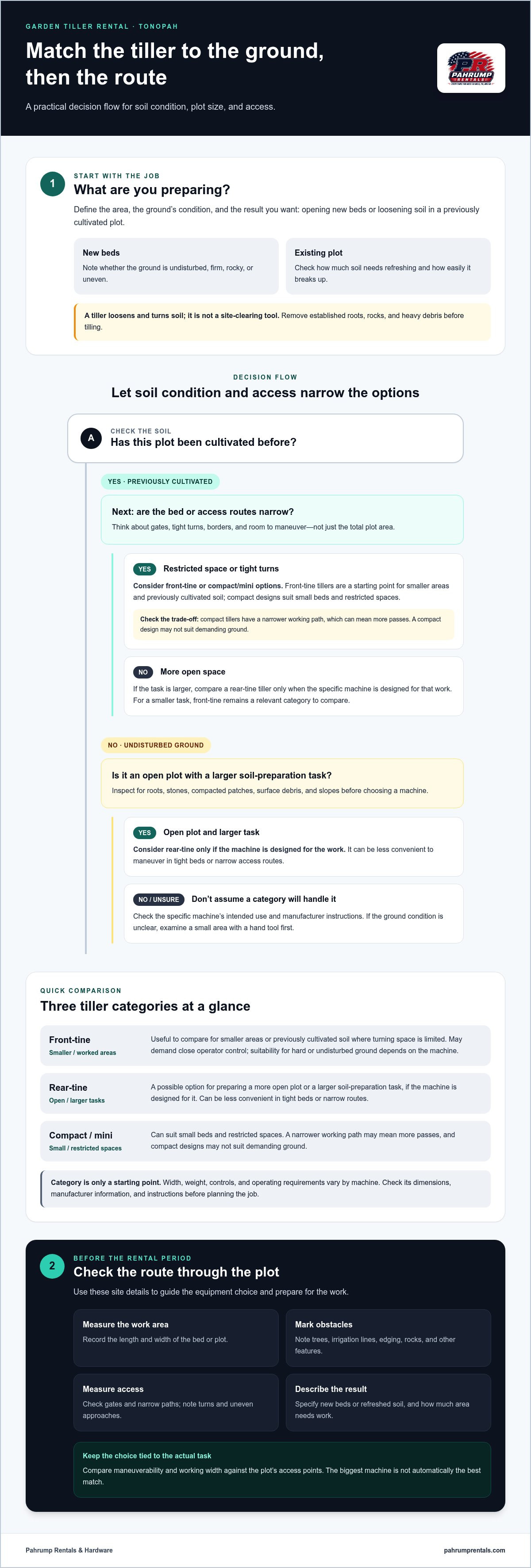
A garden tiller breaks and loosens soil for a specific garden-preparation task. Choose by the work you need to do, not by guessing at engine size. Before arranging a garden tiller rental Tonopah project, define three things: the area to prepare, the condition of the ground, and the result you want. Are you opening new beds, or loosening soil in a plot that has already been cultivated? Those jobs can call for different levels of effort and maneuverability.
Renting can make sense when you need a tiller for a one-time preparation job rather than regular use. It lets you plan around the project without taking on ongoing equipment ownership, storage, and maintenance. Consider how often you expect to use a tiller, the scale of the task, and whether the work is limited to one season or plot.
What garden tillers do, and what the project still requires
A tiller cuts and turns soil, helping loosen ground for beds or other planting areas. It isn’t a site-clearing tool. Established roots, rocks, and heavy debris can obstruct the work or create hazards, so identify and remove those materials before tilling rather than expecting the machine to clear them. For background on how tillers differ, see this overview of types of rotary tillers.
Tilling is one preparation step, not a guarantee of a successful garden. Decide what the finished ground should look like: a newly formed bed or refreshed soil in an existing cultivated plot. That goal helps define how much area needs work and keeps the equipment choice tied to a clear task.
Assessing a Tonopah-area garden plot before renting
Inspect the actual site rather than assuming its soil or seasonal conditions. Check whether the ground feels firm or already loose, look for surface debris, and note slopes that could affect control. Soil can vary between properties and even across one yard, so base your decision on the plot you’ll till. If you’re unsure about its condition, examine a small area with a hand tool first.
Record these practical details before choosing equipment:
- Work area: Measure the length and width of the bed or plot to estimate how much ground needs preparation.
- Obstacles: Mark trees, irrigation lines, edging, rocks, and other features that limit where the tiller can safely travel.
- Access: Measure gates and narrow paths, and note turns or uneven approaches between the transport point and the work area.
- Finished result: Describe whether you’re opening new beds or refreshing previously worked soil, and how much of the plot needs attention.
These observations give you a useful project brief for selecting a tiller category. A clear scope also helps keep the rental period focused on work the machine is suited to perform.
Which Garden Tiller Type Fits Your Tonopah Project?
A tiller’s category can narrow the options, but it doesn’t tell the whole story. Working width affects how many passes a plot may need, while the machine’s layout and weight influence turning and control. A wider machine might cover an open bed efficiently, yet be awkward in a narrow garden with tight corners. For a garden tiller rental Tonopah project, match the machine to the ground and route through the plot, not just the total area.
Front-tine, rear-tine, and compact tillers compared
These categories describe broad design differences, not a guarantee that a particular machine suits every job. Typical tasks are starting points. The machine’s specifications and manufacturer instructions determine its intended use and safe operation.
| Type | Typical task | Key limitation |
|---|---|---|
| Front-tine | Working smaller areas or previously cultivated soil where turning space is limited. | May demand close operator control, and suitability for hard or undisturbed ground depends on the machine. |
| Rear-tine | Preparing a more open plot or tackling a larger soil-preparation task, if the machine is designed for that work. | Can be less convenient to maneuver in tight beds or narrow access routes. |
| Compact or mini | Loosening soil in small beds and working around restricted spaces. | A narrower working path can mean more passes, and a compact design may not suit demanding ground. |
Don’t assume a category’s typical working width or handling describes every machine. Width, weight, controls, and operating requirements vary, so check the specific machine’s instructions and dimensions. Verify any machine-specific figures, including width or depth, against its manufacturer information before planning the job.
Match the tiller to soil and plot size
Previously cultivated soil may be easier to work than undisturbed ground, but conditions at the site still matter. Look for roots, stones, compacted patches, and moisture that could affect how the machine moves through the soil. A tiller isn’t a substitute for clearing debris, and no category should be assumed to handle every soil condition or land-clearing task.
Use the plot’s layout to compare your options. For a narrow bed between borders, maneuverability and control may matter more than covering ground quickly. In a broad, open plot, working width may carry more weight. On uneven ground or through tight turns, consider whether you can guide the machine safely and maintain control. If the site has obstacles or restricted access, account for them before choosing a larger or wider option.
Bring your measured area, access notes, and description of the ground into your garden tiller rental Tonopah planning. Comparing these details with the equipment rental inventory helps you explore relevant categories for the job. Choose based on the task, then follow the selected machine’s instructions.
Compare Rental Options by Access, Workload, and Handling
A useful comparison starts with the route into the garden and the amount of soil to prepare. A tiller that suits a broad, open plot may be difficult to turn between narrow beds or move through a tight gate. For a garden tiller rental Tonopah project, compare the work area, soil condition, access width, and workload together. No single factor, including machine size, determines whether an option is practical.
| Project condition | What to prioritize | Consideration |
|---|---|---|
| Narrow gate, path, or close-set beds | Compact dimensions and maneuverability | A confined route may rule out a wider machine, even if the plot itself is sizeable. |
| Open plot with substantial area to prepare | Working width and workload suitability | A wider working path may cover more ground per pass, but the machine still needs to suit the soil and operator. |
| Previously cultivated ground | Control and match to the current soil condition | Previously worked soil can differ from compacted or undisturbed ground. |
| Roots, rocks, or heavy debris present | Site assessment and removal of obstructions | Tilling is not a substitute for clearing large obstacles or earthmoving. |
When maneuverability matters more than working width
Measure more than the bed. Record the narrowest gate or path, the space between beds, and the room available to turn at each end. In a small enclosed garden, control and the ability to position the machine may matter more than covering ground quickly. An open plot offers more room to turn, so working width can become a more useful comparison. Choose for the tightest part of the route, not the easiest section.
Handling matters, too. A machine that feels difficult to guide can make precise work near borders or obstacles harder. Consider who will operate it, whether they can maintain control through turns, and how the machine will move from the access point to the plot. Follow the selected machine’s manufacturer instructions for operation, setup, and safe use. A general category description is not a substitute for those directions.
When the ground may need a different approach
Previously tilled soil and compacted, undisturbed ground aren’t the same job. Check the plot for dense patches, moisture changes, roots, stones, and debris before selecting equipment. Extensive obstructions can make tilling the wrong first step. Remove manageable debris by hand. Larger roots, rocks, or site-clearing work may call for a different approach or specialized equipment. A garden tiller is intended for soil preparation, not every clearing or earthmoving task.
Use your measurements and notes about the ground to narrow the options, then explore the equipment rental inventory as part of your planning. This keeps the comparison tied to your actual workload and access needs rather than the assumption that a bigger machine is always better.
Prepare for a Garden Tiller Rental Near Tonopah
A little preparation can make rental time more productive and help prevent avoidable handling problems. Before arranging a garden tiller rental Tonopah project, get the plot ready, check the route from your vehicle, and plan how the machine will be loaded and moved. Use this checklist to organize site and transport details before work begins.
Site and transport checklist before pickup
Walk the complete route, from the vehicle’s parking spot to the garden. Check the narrowest gate, path, and turn, then compare those measurements with the equipment’s dimensions. Make sure there’s room to park and handle the load safely. Clear loose debris from the plot and access route, and identify irrigation lines, cables, or other underground features so you can avoid damaging them.
- Inspect the plot. Note uneven ground, slopes, obstacles, and areas where soil conditions change. Mark sections that need a different approach.
- Measure the work area and access. Record the garden dimensions, gate width, path clearance, and turning space. Include the vehicle’s available space for transporting the equipment.
- Clear the route and work area. Remove loose branches, stones, tools, and other debris that could interfere with moving or operating the tiller. Identify underground features before tilling.
- Plan loading and unloading. Decide where the machine will be moved in and out of the vehicle and how it will reach the plot. Consider its size and handling needs when choosing a vehicle and arranging help.
- Set a clear path to the garden. Keep people, pets, and unnecessary items away from the route and work area before starting.
If your project involves several equipment needs, include the tiller in the wider plan. Reviewing the tool and equipment rental inventory can help you consider other rental categories relevant to the work, without assuming one machine can handle every task.
Safe setup and first use
Before starting, read the manufacturer’s instructions for the specific machine and follow its setup and operating guidance. Wear protective equipment appropriate to the machine and task, such as sturdy footwear and eye and hearing protection when directed. Keep stable footing, maintain control, and make sure bystanders stay clear of the operating area.
Start only when the work area and route are clear. If the tiller strikes or catches on an unexpected obstruction, stop and reassess rather than forcing it onward. Refer to the machine instructions for safe shutdown and next steps. Careful setup helps you work within the equipment’s intended use and respond calmly if ground conditions differ from what you expected.
Ready to plan the equipment side of your project? Explore rental options for your garden project through Pahrump Rentals & Hardware, serving Tonopah and nearby communities.
Plan Your Tonopah Tiller Rental With Pahrump Rentals & Hardware
A practical rental decision comes down to fit. The right tiller category should suit the ground you’re preparing, the plot’s size and layout, the access route, and the amount of work planned. Keep those details together as you explore equipment options for your Tonopah project. This makes it easier to focus on a machine suited to the job instead of choosing by size alone.
A quick checklist for choosing the right rental
Before beginning your rental search, make sure you can describe four things: the soil condition, plot area, narrowest access point, and finished result you want. Then account for transport and how you’ll safely move the equipment to the work area. Once you’ve selected a machine, read and follow its specific operating instructions.
- Ground: Note whether soil is previously worked, firm, or obstructed.
- Plot: Record the area that needs tilling and the task it must support.
- Access: Consider gates, paths, turns, and room to maneuver.
- Workload: Estimate the amount of soil to prepare and plan transport accordingly.
Next steps for your local equipment search
With your project notes in hand, explore the rental inventory by relevant equipment categories. This gives homeowners and professional users a straightforward starting point for a garden tiller rental Tonopah search, with the site details guiding your choice. Pahrump Rentals & Hardware is an independent local business serving Tonopah and nearby communities, including Pahrump, Beaty, Goldfield, and Tonopah, with equipment and tool rentals for project planning.
Tonopah projects also benefit from practical logistics planning. Think through the trip, vehicle space, loading and unloading, and the route from the drop-off point to the plot before setting a work plan. Keep your measurements and notes about the ground available as you review options. For wider rental-planning context, use the Pahrump Rentals & Hardware tool-rental guide alongside this project checklist.
A clear scope helps you compare categories with confidence. The rental inventory gives you a place to explore equipment relevant to the work, while your project details keep the decision grounded in the actual garden. Don’t assume one tiller can handle large obstructions or every soil condition. Keep the task focused on soil preparation, and use other appropriate equipment for work beyond that purpose.
Ready to take the next step? Explore the equipment rental inventory and plan your Tonopah garden project around the ground, access, and workload you’ve assessed.
Put Your Garden Project Plan Into Motion
A well-planned garden starts with a clear next step. Turn your measurements and notes about the plot into a simple project plan, including the work you’ll tackle first and how you’ll organize equipment and transport. That preparation gives your garden tiller rental Tonopah search a practical focus, whether you’re preparing a home garden or planning work on a larger site.
Pahrump Rentals & Hardware supports local projects with equipment and tool rentals. Its rental inventory offers a place to explore relevant equipment categories, and the contractor portal provides another resource for project planning. Keep your intended task in view as you review options, and choose equipment according to its instructions and the conditions at your site.
When you’re ready to take the next step, explore rental equipment for your project. A thoughtful plan can help you approach the work with confidence and make steady progress toward a garden ready for planting.
Frequently Asked Questions
Can I use a garden tiller on hard or compacted soil?
Possibly, but suitability depends on the tiller, the soil’s condition, and the site. For a garden tiller rental Tonopah project, inspect a small section first and note whether the ground is dry, compacted, or mixed with stones. Don’t assume a tiller will break through every surface. Follow the specific machine’s instructions, and stop if it struggles or encounters an obstruction.
What size garden tiller do I need for a small garden?
Choose a category that fits the plot and can be handled safely rather than automatically opting for a larger machine. Consider the garden’s area, the width of gates and paths, bed spacing, and room to turn at the ends. For example, a tight layout with narrow passages may favor maneuverability over working width. Match the equipment to the task and follow its operating instructions.
Do I need to remove weeds and rocks before using a tiller?
Clear loose debris and address large obstructions before starting. Rocks can interfere with operation, while roots may catch or limit the machine’s movement. Inspect the plot and remove manageable debris so it won’t be drawn into the work area. Don’t rely on tilling to eliminate every weed. Some weeds may regrow, and their roots may need separate attention. Follow the machine’s instructions if it catches or strikes something.
Can a garden tiller clear new ground?
A tiller prepares soil, but it isn’t designed to clear every kind of new ground. Established roots, large rocks, and dense vegetation may need to be removed or handled through a different approach before soil preparation can begin. Walk the site and identify what’s present before choosing equipment. If the task involves substantial clearing rather than loosening soil, don’t assume a tiller can safely or effectively do that work.
How do I transport a rented garden tiller?
Transport depends on the particular tiller and the vehicle you’ll use. Before setting out, make sure the vehicle has suitable loading space and plan how the machine will be positioned securely for the trip. Think through how you’ll load and unload it, then map a clear route from where it’s parked to the garden. Follow the machine’s handling instructions and don’t guess at its dimensions or transport needs.
When is the best time to till a garden in Tonopah?
The right time depends on the soil’s moisture and condition, plus when you plan to plant. Check the ground at your own site rather than relying on a fixed Tonopah calendar date. Soil that’s overly wet may be difficult to work and can compact under pressure; very dry, firm ground may also present challenges. Use the planned planting schedule to set your timing, then assess conditions before starting.


