

The cost to rent a mini excavator for a day in Pahrump depends on the machine size and rental terms, so the base rate is only part of the budget. Delivery, fuel, cleaning, insurance or a damage waiver, and attachments can change the total. A smaller machine may suit tight access and lighter digging, while a larger one may fit more demanding work.
It’s reasonable to want a clear estimate before arranging equipment, especially when extra charges can affect a one-day project. This guide explains what shapes the daily rental total and how to account for common add-ons. You’ll learn what to consider when comparing delivery with pickup, how rental periods and included operating time affect value, and when attachments may help. The goal is to give you a practical way to plan the work and choose equipment that suits the site.
Key Takeaways
- Compare the daily base rate with the full rental total, including delivery, fuel, cleaning, coverage, and attachments.
- Choose between delivery and pickup based on transport needs and how the equipment will reach your worksite.
- Understand how fuel use and the machine’s return condition can affect charges after the rental.
- Review what a damage waiver covers and how its cost is calculated before adding it to your rental.
- Match attachments to the task, and plan excavation work with site access and safety requirements in mind.
How much does it cost to rent a mini excavator for a day?
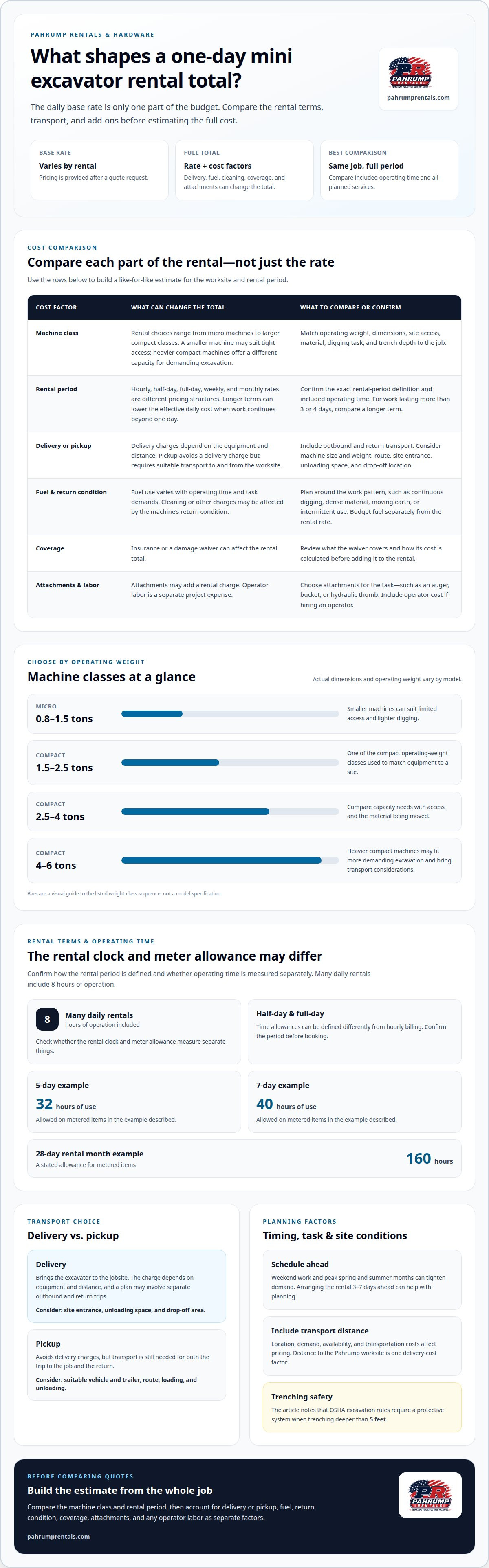
The daily rental total depends on machine class, rental length, and added services. Pricing varies by rental and is provided after a quote request. Hourly, half-day, full-day, weekly, and monthly rates are different pricing structures, not interchangeable measures. Compare the full rental period and included operating time before choosing the structure that fits the work.
Rental choices are commonly grouped by operating weight, from micro machines around 0.8 to 1.5 tons through compact classes of 1.5 to 2.5 tons and 2.5 to 4 tons, up to 4 to 6 tons. These classes help match the excavator to the site and material being moved. A smaller machine can suit limited access, while heavier compact machines offer a different capacity for demanding excavation. Actual dimensions and operating weight vary by model.
Half-day and full-day terms may define time differently from hourly billing. Rental terms can define half-day and full-day periods differently, so confirm the time allowance before booking. Many daily rentals include 8 hours of operation, so check whether the rental clock and meter allowance measure separate things. That distinction matters when a job involves setup, breaks, or more than one work period.
Weekly and monthly terms can lower the effective daily cost when work runs beyond a single day. A five-day rental allows 32 hours of use on metered items in one example, while a seven-day rental allows 40 hours. A 28-day rental month allows 160 hours. If excavation may last more than 3 or 4 days, compare the longer rental period rather than multiplying a daily rate across the entire project.
Location, demand, availability, and transportation costs affect rental pricing. Weekend work and peak spring and summer months can tighten demand, so arranging the rental 3-7 days ahead can help with planning. Seasonal timing may affect which machine class fits the schedule, while transport distance influences the delivered total. Include the site’s access and the amount of material to move when comparing options.
Duration and machine size are only part of a responsible choice. Account for the digging task, access limits, and the trench depth before selecting equipment. According to the Occupational Safety and Health Administration, excavation rules require a protective system when trenching deeper than 5 feet. A rental plan should consider that requirement alongside the machine’s reach, work area, and the material being excavated.
Can I get a mini excavator delivered or pick it up?
Delivery is available for rentals, and the charge depends on the equipment and distance. Pickup avoids a delivery trip but requires a suitable way to transport the machine to and from the worksite.
Delivery Availability
Delivery brings the excavator to the jobsite, with the charge based on the equipment and distance. It can simplify a project when the machine’s weight or dimensions make transport difficult. Consider the site entrance, unloading space, and work area. For grading, a clear drop-off area near the work zone can reduce unnecessary movement after delivery.
Pickup puts transport planning in your hands. The vehicle and trailer must suit the machine’s size and weight, and the route must allow safe loading and unloading. The machine’s capacity matters too: a larger excavator may suit heavier digging but add transport demands. Match the delivery or pickup plan to the equipment, site access, and work schedule.
Delivery and Pickup Charges
Delivery and pickup charges reflect the rental item and distance traveled, not just the time spent operating the excavator. A delivery plan may involve separate outbound and return trips, so include both when estimating the total. The distance from the rental location to your Pahrump worksite is one factor in the calculation.
Pickup avoids delivery charges but still requires transport for both the trip to the job and the return. Compare the full transport effort with the rental duration: for a one-day job, delivery may be more practical if arranging suitable transport is difficult. Treat logistics as part of the excavator rental cost, not as an afterthought.
Fuel use depends on operating time and the demands of the task. Digging dense material or moving earth continuously uses fuel differently from shorter, intermittent work. Estimate how the machine will be used and budget fuel separately from the rental rate. Fuel needs can also affect planning if the equipment must be ready for a specific work window.
Attachments affect both the machine’s capabilities and transport needs. An auger suits a different task from a bucket, while a hydraulic thumb can help handle material. Each attachment may add a rental charge and affect the setup at the site. Choose attachments for the job, such as grading, digging, or debris handling, rather than adding equipment you won’t use.
Insurance or a damage waiver can affect the rental total, while operator labor is a separate project expense. An operator’s cost depends on the work scope and time required, so include it in the budget if you plan to hire one. Before renting, consider the machine, delivery plan, fuel needs, attachments, and coverage as separate cost factors. A monthly rental may require different transport planning than a one-day job, so align logistics with the rental period.
Fuel and cleaning charges
Fuel and cleaning are separate considerations from the mini excavator rental rate. Fuel use depends on operating conditions: steady digging, moving material, and extended idling consume fuel differently. A machine working continuously through dense soil has a different workload from one making occasional bucket passes. Budget for the expected work pattern rather than assuming a short job uses little fuel.
Plan fuel around the task and the machine’s return condition. Digging a utility trench, shaping a grade, and moving loose material place different demands on equipment. Keep the work area organized and avoid unnecessary idling while positioning the excavator. These steps help manage fuel use, although workload remains the main factor in consumption.
Cleaning charges relate to the equipment’s condition when it is returned. Soil on the bucket, packed material around the tracks, or debris left on the machine can require extra cleaning. Before returning it, remove loose dirt from accessible surfaces and attachments, then compare its condition with how it arrived. A clear record of existing dirt or damage helps distinguish the return condition from issues present at delivery.
Season and site conditions can affect the cleanup required. Damp ground can cling to tracks, while dry soil may fall away more easily. Grading can also leave material across the bucket and undercarriage. Set aside time after the work to clear loose debris, check the attachment, and leave the machine orderly. Rushing can create avoidable cleanup during the return inspection.
For a practical estimate, separate operating fuel from return cleaning. List the planned tasks, such as trench digging, grading, or material handling, and note whether the excavator will run continuously or intermittently. Then account for the machine’s condition at pickup and return. A useful mini excavator rental budget reflects both how the equipment will be used and how it will be handed back, not just the daily rate.
Insurance and damage waivers
Insurance and damage waivers affect the amount due beyond the excavator’s rental rate. A damage waiver typically costs 10-15% of the rental rate per day. On a one-day rental, calculate it from the daily rate; for a weekly rental, ask how the waiver applies across the rental period. Keep the waiver separate in your estimate so you can compare it with other charges.
A damage waiver is an optional rental cost, not a substitute for understanding the agreement. Read the terms to see what the waiver covers, what it excludes, and what responsibilities remain yours. Landscaping near fences or hard surfaces, for example, can expose equipment to accidental damage. The worksite, machine operation, and return condition all matter when assessing potential risk.
Insurance requirements depend on the rental agreement and the renter’s circumstances. Review whether the agreement requires proof of coverage, offers a damage waiver, or specifies another arrangement. Don’t assume personal or business insurance automatically applies to rented equipment. If you already have coverage, understand its terms before relying on it for a mini excavator rental.
For Nevada budgeting, list the deposit, applicable taxes, and coverage separately. That is a market reference, not a fixed Nevada deposit requirement. A deposit is different from the rental fee: it may affect the amount due at pickup without representing the final rental cost.
Taxes should appear separately in the rental total, not be confused with the daily or weekly rate. The tax amount depends on the transaction details, so use the quote’s itemized total when planning. Keep the deposit distinct, too. Separating rental rates, taxes, the deposit, and damage-waiver charges makes it easier to distinguish final charges from refundable amounts.
Compare rental periods using the same coverage assumptions. A weekly rental may have a different base rate from a daily rental, while a waiver priced per day can change the comparison. Compare the complete one-day total with the complete weekly total, including the waiver, delivery, and pickup if applicable. This helps prevent a lower advertised rate from obscuring the amount due.
Attachment fees
Attachments adapt a mini excavator for tasks a standard bucket may not handle as efficiently. Each can add to the rental cost, and the right choice depends on the material, work area, and excavation goal. A hydraulic thumb helps grip and handle material, while an auger drills holes. Choose only what the task requires to keep the equipment plan focused.
Attachment charges vary by type and rental terms, so list them separately from the excavator’s rental rate. A hydraulic breaker, auger, and thumb each serve a different purpose and may have different charge structures. An auger or breaker rented for a project every few weeks may be priced differently from a daily attachment rental. Include the specific attachment and rental period when comparing excavator rental rates.
Start with the work, then choose the attachment. For post holes, an auger is more appropriate than repeated bucket digging. A hydraulic breaker is designed for breaking hard material, while a bucket is not. A thumb can help pick up irregular debris. Choose an attachment that suits both the machine and the job, rather than adding one simply because it’s available.
Compatibility matters. The attachment must connect to the excavator and work with its hydraulic setup where required. The machine’s size and capacity also determine whether a combination suits the task. When planning transport, include the excavator and any attachments in the equipment load. Extra items can affect loading space and jobsite setup.
For a clear comparison, list the base rental rate, attachment type, rental duration, and transport arrangement separately. For example, compare a bucket-only grading project with trenching that requires an auger. The jobs need different equipment configurations, even if they use the same excavator. Separate line items make differences in total rental cost easier to understand.
Use each attachment only for its intended task, and inspect it before and after work. Check the connection, visible wear, and accumulated material before operating. At return, remove loose debris and report damage promptly. These steps help keep the attachment’s condition clear and support an orderly return alongside the excavator.
For a project that needs a specific setup, review equipment rental options and plan for the machine, attachment, and worksite together.
Pahrump Rentals & Hardware: Industrial Equipment Rentals
Pahrump Rentals & Hardware offers Industrial Equipment Rentals and Tool Rentals for local projects that need capable equipment. When planning excavation, discuss the equipment needs alongside the worksite, rental period, and task. Professional Hardware Solutions can support broader project needs, and contractors can use the Contractor Portal to manage rental and hardware procurement.
For a mini excavator project, bring together the details that shape your choice: the work, site access, rental duration, transport plan, and required attachments. Considering these factors together helps you build a practical equipment rental plan instead of focusing on the base rate alone.
Contact Pahrump Rentals & Hardware to discuss your equipment rental needs.
Plan Your Next Project With Confidence
Turn your rental research into a clear project plan by matching the equipment to the work, site, and schedule. Knowing the cost to rent a mini excavator for a day in Pahrump gives you a starting point, but a successful job also depends on choosing equipment that fits the task. Pahrump Rentals & Hardware offers Industrial Equipment Rentals, Tool Rentals, and Professional Hardware Solutions for projects in Pahrump, Beaty, Goldfield, and Tonopah.
Before arranging a rental, outline the task and how you expect the machine to support it. This gives you a practical basis for discussing the right equipment and related project needs. A considered plan can reduce unknowns and keep your next steps organized.
Contact Pahrump Rentals & Hardware to discuss your project needs and move forward with confidence.
Frequently Asked Questions
Do I need any special license or certification to operate a rented mini excavator?
Most compact mini excavators don’t require a special license for personal projects on private property. That doesn’t replace the need to understand the machine’s controls and operate it carefully. Before starting, review the equipment instructions and identify hazards around the work area. A commercial site or different use may involve other requirements, so consider the specific setting and work before operating.
Is renting a mini excavator for a full week cheaper than paying daily rates?
Weekly rental terms can cost less per day than extending separate daily rentals. The break-even point depends on the machine, rental terms, and how long the work actually takes. Compare complete totals for the expected period, including transport and add-ons. A weekly term may suit a project with several stages, while a single-day rental can better fit a contained task.
What is included in a mini excavator rental?
The rental agreement defines what comes with the excavator and what is charged separately. Don’t assume an attachment, fuel, delivery, or damage waiver is included in the base rental. For example, a standard bucket may be the planned setup, while an auger is an additional item. Review the itemized terms so the equipment, rental period, and extra charges are clear before work begins.
What should I do before the machine arrives?
Prepare the route to the work area and leave a clear space for unloading and operation. Before digging, contact 811 a few business days ahead so buried utilities can be marked. Identify the planned trench, obstacles, and areas where material will be placed. A clear site plan helps avoid repositioning the machine unnecessarily and makes it easier to coordinate the delivery with the work schedule.
What is the mini excavator daily rental cost in Pahrump, NV?
The cost to rent a mini excavator for a day in Pahrump depends on machine size and rental terms. A broad market snapshot collected November 1, 2026, found daily offers between $265 and $353, with a median near $275; it isn’t specific to Pahrump. Pahrump Rentals & Hardware provides its rental price after a quote request, with the case and equipment needs shaping the total.
Which mini excavator rental companies are near Pahrump, Nevada?
Pahrump Rentals & Hardware is a local resource for equipment rentals in Pahrump, Beaty, Goldfield, and Tonopah. Describe the work, site access, rental period, and any attachments you need. Those details help frame the equipment requirements for excavation or grading. Contractors can also use the Contractor Portal to manage rental and hardware procurement. This keeps planning focused on the project, not a generic equipment list.
What are the daily and weekly mini excavator rental rates near Pahrump?
Daily and weekly rates depend on machine size, rental duration, availability, and transport. Weekly terms can reduce the effective daily cost compared with extending daily rentals, but compare the complete total for the project period. Include required attachments and delivery in each estimate. A multi-stage job may suit a weekly term, while short, focused work may not need a longer rental.
What are mini excavator delivery and pickup fees in Pahrump?
Delivery and pickup charges depend on the equipment and distance to the worksite. Pricing varies by rental and is provided after a quote request. Include both delivery and return transport when comparing the total with pickup arrangements. Site access, unloading space, and machine size also shape the practical plan, especially when the equipment needs to reach a confined work area.


