

The closest aerator isn’t automatically the right one for your Pahrump lawn. Searching “aerator rental near me” is a sensible first step, but lawn size, turf type, and soil conditions all influence which machine will suit the job. Pahrump’s clay-rich soil can compact, and caliche layers may affect how water moves through the ground.
A rental is easier to plan when you consider transport, access, operating instructions, and how much time the work may take. This guide explains how to match an aerator to your turf and project, prepare the lawn, and plan for safe operation and care after aeration. It also covers practical rental planning for Pahrump and nearby communities, including Beaty, Goldfield, and Tonopah. For warm-season grasses, late spring to early summer is generally the best time to aerate, with soil moisture and temperature helping guide the timing. A clear plan helps you choose equipment for the job and organize the work from pickup through return.
Key Takeaways
- Look for signs of compacted soil, but distinguish them from other lawn problems before planning aeration.
- Compare core and spike aerators by how they treat the soil, then match the method to your lawn’s needs.
- Before searching “aerator rental near me,” estimate the area to aerate and note obstacles that could affect equipment access.
- Prepare the lawn and transport plan ahead of pickup, and follow the specific machine’s instructions and safety guidance.
- Use a clear project plan to make local equipment rental a practical alternative to buying and storing a machine.
Aerator Rental Near Me in Pahrump: What the Machine Does and When You Need One
If you’re searching for “aerator rental near me,” first decide whether your lawn needs aeration. An aerator addresses a particular soil problem, not every cause of thin, discoloured, or unhealthy grass. Compaction is more likely where people, pets, or equipment regularly cross the lawn, but different conditions can produce similar symptoms.
Soil conditions vary between properties in the Pahrump area. USDA soil information describes the Pahrump soil series as fine sandy loam, while local ground may also include silty or clay-rich soils and hard caliche layers. Those differences matter. Use your lawn’s symptoms and the soil beneath it to guide your decision instead of assuming every yard in the valley has the same conditions.
What does a lawn aerator do?
A lawn aerator creates openings in turf and soil to support the movement of air, water, and nutrients into the ground. Depending on the machine, it may remove small soil plugs or make holes without removing plugs. Aeration is different from dethatching, which removes a layer of dead grass and other organic material from the surface. A general overview of aeration explains the broader process and its different forms.
Compaction can make soil feel firm and restrict how readily water enters it. Slow drainage, pooling, or grass that struggles in heavily trafficked areas may be clues, but they don’t prove compaction. Poor irrigation coverage, uneven grading, thatch, pests, and other lawn issues can also cause weak growth or standing water. Aeration addresses compacted soil; it doesn’t replace diagnosing and treating those separate problems.
Which lawn conditions may call for aeration?
Consider aeration when the ground is consistently hard, water has trouble soaking in, or the same parts of the lawn receive repeated foot traffic. Look for more than one clue. For example, a well-watered patch that stays thin along a regular walking route may warrant a closer look at the soil. Dry spots near sprinkler gaps may point to uneven irrigation instead.
Lawn type and condition affect whether aeration is appropriate and when to do it. Warm-season grasses are common in Southern Nevada, and late spring to early summer is generally a suitable period for aerating them while they’re actively growing. Soil moisture and temperature still matter, so treat the calendar as a guide rather than a fixed rule. Don’t choose a date based on season alone.
Aeration is a targeted maintenance task. It won’t correct every cause of poor growth, and a hard layer such as caliche may limit how deeply openings can reach. Assess the lawn’s symptoms and site conditions first. That gives you a practical basis for choosing equipment and planning the work.
Core or Spike Aerator? Match the Rental Type to Your Lawn
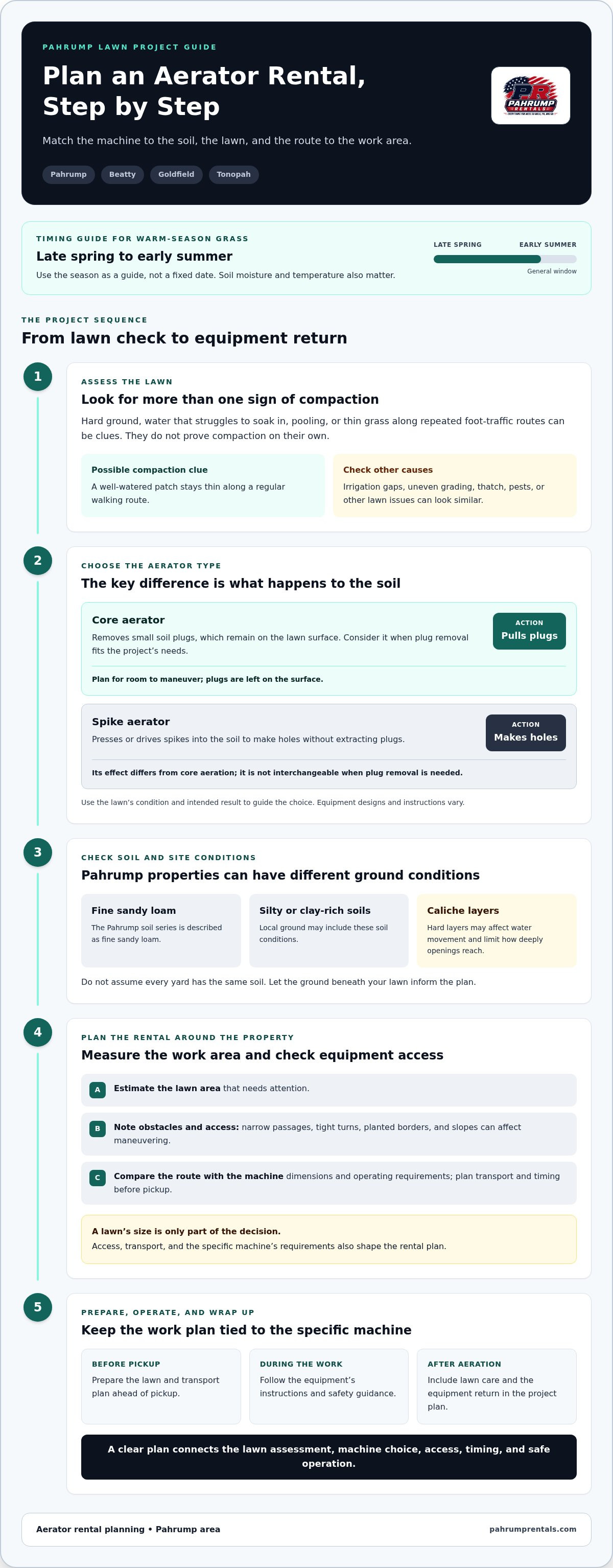
Once you’ve decided that aeration may suit your lawn, choose a machine based on how it treats the soil. A core aerator removes small plugs of earth. A spike aerator presses or drives spikes into the ground, making holes without pulling plugs out. Neither approach is right for every yard. Soil condition, lawn size, access, and the purpose of the work all matter.
Use this comparison as a starting point, not a guarantee of results. Equipment designs and operating instructions vary, so match the specific machine to your project requirements.
| Type | Action | May suit | Selection caveat |
|---|---|---|---|
| Core | Removes small soil plugs | Ground where plug removal fits the lawn’s needs | Leaves plugs on the surface and needs room to maneuver |
| Spike | Makes holes without extracting plugs | Projects where making openings without plug removal is preferred | Doesn’t remove soil, so its effect differs from core aeration |
When does a core aerator make sense?
A core machine extracts small cylinders of soil as it moves over the lawn. The plugs remain on the surface afterward. This method may suit a project intended to relieve compacted ground by removing some soil, but the lawn’s condition should guide that decision. A hard surface alone doesn’t establish the cause or determine which machine is suitable.
Consider the layout as well. Narrow passages, tight turns, planted borders, and slopes can affect how easily equipment reaches the target area. Before choosing, compare the machine’s size and operating requirements with the route to the lawn. Don’t assume a particular model or feature based only on the general term “core aerator.”
When might a spike aerator be considered?
A spike aerator creates holes by pressing or driving solid points into the soil. It doesn’t lift out plugs, so the work and visible finish differ from core aeration. It may fit a project where making openings without removing soil is the intended approach. It isn’t interchangeable with core aeration when the project specifically calls for plug removal.
Before searching “aerator rental near me,” describe the lawn’s condition and the result you’re aiming for. That gives you a clearer basis for choosing the equipment category than relying on a machine name alone.
For a practical rental plan, compare the work area and access route with the equipment’s dimensions and instructions. Explore equipment rental options as you narrow down what the project requires.
How to Plan an Aerator Rental for a Pahrump-Area Project
A smooth rental starts with a clear picture of the job. Before searching “aerator rental near me,” estimate how much lawn needs attention, note obstacles, and plan transport and timing. These details help you choose equipment around the site rather than basing the decision on lawn area alone.
What should you measure and prepare before pickup?
Work through these steps in order. Keep your notes handy so you can compare the project with the equipment’s dimensions and instructions.
- Estimate the aeration area. Measure the sections you intend to treat and set aside areas that don’t need work. If the lawn has separate sections, sketch them and note approximate dimensions.
- Mark obstacles and access points. Note gates, narrow paths, slopes, trees, garden edges, irrigation heads, and other features that could affect the route or operation. Identify tight turns and surfaces the machine must cross.
- Match access to the equipment. Compare the machine’s actual dimensions and operating guidance with the width of gates and paths. Plan how it will reach the lawn, not just whether it can fit in your vehicle.
- Plan transport and loading. Check the machine’s stated weight and transport requirements against your vehicle, trailer, and loading setup. Follow the rental instructions for securing and unloading it. Don’t assume every vehicle or trailer is suitable.
- Set a workable schedule. Allow time for pickup, loading, travel, setup, operation, cleanup, and return. Include a buffer for an uneven layout or slower progress around obstacles.
As you organize the project, consider the tools and equipment needed for the full job, including getting equipment to and from the site. Pahrump Rentals & Hardware provides equipment and tool rentals for local projects.
How can you schedule around local conditions?
Soil moisture affects how the ground responds to aeration. Very dry, hard soil may be difficult to work, while overly wet ground can be messy and vulnerable to damage. Assess the lawn shortly before the planned work and follow the machine’s instructions. Turf condition matters too: the date alone doesn’t mean the lawn is ready.
Seasonal recommendations for Pahrump-area lawns depend on grass type and local conditions. Don’t assume one month or schedule applies to every yard. Consider the turf’s active growth, current weather, and soil condition when setting a date. The same considerations apply in nearby communities such as Beaty, Goldfield, and Tonopah, where individual site conditions can differ.
Coordinate the rental period with a realistic work pace. A small, open lawn may be simpler to cover than several separated areas with gates and obstacles. Plan the route and clear the work area in advance so you can use the rental time efficiently without rushing loading, operation, or return.
How to Use a Lawn Aerator Safely and Get the Lawn Ready
A careful setup helps protect the lawn, the machine, and the people nearby. Before starting, read the instructions for the specific aerator you’re using. Controls, operating limits, and shutdown procedures may differ between machines. Follow the equipment’s directions rather than relying on general advice alone.
Before operating, read the machine’s instructions, inspect the work area for hazards, and wear protective gear suited to the equipment and task.
Use this checklist to prepare, work methodically, and leave the rental ready for return:
- Inspect the machine. Before use, look over the equipment and controls for visible damage or loose parts. Make sure you understand how to start, steer, stop, and shut it down. If something doesn’t look right or a control is unfamiliar, pause and review the instructions before proceeding.
- Prepare the work area. Remove toys, hoses, branches, and other loose objects. Mark sprinkler heads, irrigation lines, edging, cables, and visible obstacles so you can avoid them. Check the route from the access point to the lawn, including gates, slopes, and tight turns. Keep children, pets, and bystanders outside the active work area.
- Check the ground and protective gear. Follow the machine’s instructions for suitable ground conditions. Don’t assume a surface is ready just because it looks dry or firm. Wear appropriate protective equipment as directed, and secure loose clothing or anything that could interfere with safe handling.
- Operate in planned passes. Start from a clear area and move steadily, following the manufacturer’s operating instructions. Plan your route to cover the intended lawn without making abrupt turns near obstacles. Keep a safe distance from others, stay alert to changing ground conditions, and stop if the machine behaves unexpectedly.
- Shut down before cleaning or moving. Follow the specified shutdown procedure before inspecting, clearing debris, adjusting, or transporting the aerator. Keep hands and tools away from moving parts, and don’t attempt to clear a blockage while the machine is running.
- Clean up and care for the lawn. Remove loose debris from the work area and clean the equipment only as its instructions allow. If core aeration leaves soil plugs, follow the machine guidance and your lawn-care plan for handling them. After aeration, resume watering and routine lawn care according to the turf’s condition. Recovery and results vary with the grass, soil, and weather.
Returning equipment clean and in the condition described by its instructions helps keep the handoff straightforward. If your project calls for rental equipment, plan your equipment rental with Pahrump Rentals & Hardware as part of your preparation.
Rent an Aerator Near Pahrump with a Clear Project Plan
A rental decision is easier when the lawn and job logistics are clear. Before searching “aerator rental near me,” bring together four details: the condition you’re addressing, whether core or spike aeration better matches the task, how equipment can reach the work area, and when the soil and turf are suitable. This helps you plan equipment around the project instead of forcing the project around the equipment.
A quick decision checklist before renting
Use this checklist to turn your lawn assessment into a practical rental plan:
- Define the task. Make sure aeration addresses the issue you’ve observed, rather than assuming it will resolve unrelated lawn problems.
- Map the work area. Estimate the lawn section to treat and note gates, narrow paths, slopes, irrigation components, and other obstacles that could affect access.
- Select the aeration action. Decide whether removing soil plugs or making openings without removing plugs better fits the project’s needs. Compare the equipment instructions with your intended work.
- Plan the route and transport. Consider the machine’s actual dimensions and transport requirements, then check that your vehicle, loading setup, and access path suit them.
- Allow enough time. Include pickup, loading, travel, setup, operation, cleanup, and return in your schedule. Avoid rushing the work to meet an unrealistic time window.
- Choose a suitable work period. Account for turf condition and soil moisture, and use locally appropriate seasonal guidance rather than relying on a date alone.
Local rental support for homeowners and contractors
For homeowners, renting can be a practical way to use equipment for a defined lawn project without purchasing and storing a machine between jobs. Pahrump Rentals & Hardware provides equipment and tool rentals for local projects in the Pahrump area. Whether you’re planning work in Pahrump, Beaty, Goldfield, or Tonopah, the lawn’s condition and access plan help clarify what type of equipment the job calls for.
Professional customers managing project needs and rental agreements can use the contractor rental portal to organize rental planning. A project outline that includes the area, method, site access, and intended schedule can help keep equipment needs organized alongside other job requirements.
No single aerator choice suits every lawn. A measured area, realistic access plan, suitable timing, and clear understanding of the machine’s operation give you a sound basis for planning. Explore local equipment rental options with Pahrump Rentals & Hardware for your next lawn project.
Put Your Lawn Project Plan Into Action
A well-planned lawn project can also give you a useful starting point for future care. Keep a simple record of the areas you worked on, the date, soil conditions, and how the turf responds over time. Those notes can help you decide whether the same approach makes sense for another part of the yard or whether conditions call for a different plan.
If you’re ready to move from searching “aerator rental near me” to planning the next step, bring your notes about the lawn, access, and timing. A clear outline makes it easier to identify the equipment category the task calls for and avoid renting a machine without a defined purpose. Local equipment rental can also be a practical alternative to purchasing and storing a tool you need for a specific job.
Explore equipment and tool rentals from Pahrump Rentals & Hardware for your Pahrump-area project, and take the next step with a plan that fits your lawn and schedule.
Frequently Asked Questions
What is the difference between a core aerator and a spike aerator?
A core aerator removes small soil plugs, while a spike aerator makes holes by pushing into the ground without extracting plugs. Core aeration leaves plugs on the surface, so the visible cleanup differs too. To choose, consider what you want the work to address and how the lawn is used. For example, a frequently crossed area may call for a different approach from a lightly used section. Neither tool is best for every lawn or soil.
When is the best time to aerate a lawn in Pahrump, Nevada?
There isn’t one date that suits every Pahrump lawn. Timing depends on the grass type, whether it’s actively growing, and current soil moisture. Use lawn-care guidance suited to your turf before arranging equipment, especially if conditions have changed since the guidance was published. The same principle applies to lawns in Beaty, Goldfield, and Tonopah, where site conditions may differ. Avoid scheduling solely by the calendar if the lawn or soil isn’t ready.
Can I aerate a lawn when the soil is dry?
Very dry or hard soil can make aeration difficult, and overly wet ground may also cause problems. Assess the lawn’s current condition rather than assuming that a recent watering or dry spell makes it workable. Follow the specific machine’s instructions about operating conditions, and don’t force the equipment through unsuitable ground. If the soil doesn’t seem ready, postponing the job can be more practical than risking poor operation or unnecessary stress to the turf.
Do I need to remove thatch before aerating?
Not automatically. First identify what is affecting the lawn: thatch is a layer of dead grass and organic material near the surface, while aeration addresses openings in the soil. If you’re unsure which issue is present, inspect the boundary between the grass and soil across several parts of the yard. Don’t add dethatching to the plan just because you’re aerating. Choose each task based on the lawn’s actual condition.
How long does it take to aerate a lawn with a rental machine?
There’s no dependable fixed duration without knowing the machine, lawn, ground, access, and operator’s experience. A straightforward open area may be simpler to cover than separated sections reached through narrow gates or paths. Estimate the work area, then allow additional time for setup, turns, obstacles, cleanup, and transport. If you’re searching “aerator rental near me,” planning the full job, including equipment pickup and return, helps set a realistic schedule.
Should I water the lawn after aerating?
Whether and how much to water depends on the turf, soil condition, weather, and what you plan to do next. Follow lawn-care guidance suited to your property rather than applying the same schedule to every yard in Pahrump or nearby communities. If you’re overseeding or applying another treatment, use that product’s instructions to guide watering. Watch how quickly the soil dries and adjust care to current conditions rather than relying on a fixed routine.


