
A few minutes of checking your RV can help you spot a small leak or tire concern before it interrupts a trip. The right preventative RV maintenance tips make upkeep easier to manage, but general advice doesn’t always account for Pahrump’s heat, dust, and changing travel demands. Tires, batteries, seals, and other components can show wear that’s worth catching early.
A dependable routine doesn’t need to be complicated. This checklist organizes key checks by timing and system, from regular walk-arounds to pre-trip inspections and seasonal care. You’ll learn what changes to watch for, why maintenance intervals should follow your RV and component manufacturers’ guidance, and which basic checks owners can handle themselves. You’ll also see when a warning sign calls for professional attention instead of another trip. With a clear plan and the right RV supplies, you can care for your vehicle with greater confidence and prepare for travel around Pahrump.
Key Takeaways
- Use a simple before-, during-, and after-trip routine to make RV upkeep easier to repeat.
- Adapt visual checks for tires, seals, and other exposed components to Pahrump’s heat, sun, and dust.
- Follow the manufacturer’s guidance for maintenance intervals, and adjust inspections for storage, use, and observed condition.
- These preventative RV maintenance tips help you spot changes early and distinguish owner checks from repairs that need professional attention.
- Keep useful RV supplies on hand and address warning signs before continuing your trip.
Preventative RV Maintenance Tips: Why a Routine Matters Before You Travel
Preventative maintenance means regularly inspecting and caring for your RV so you can notice wear, damage, or changes in operation before they become harder to address. It can’t guarantee that a breakdown won’t happen. Instead, a consistent routine helps you spot developing concerns and decide what needs attention before you travel.
An RV combines vehicle systems with the components of a living space. Tires, brakes, lights, and other road-related parts sit alongside appliances, plumbing, electrical systems, roof seals, and slide-outs. The Recreational Vehicle Overview offers general context on RV types, but your own owner’s manual is the practical reference for model-specific procedures and service intervals.
Some checks apply to both motorhomes and towable RVs, including looking over tires, lights, seals, and visible signs of leaks. Other tasks depend on the RV type. Motorhome owners need to follow the chassis and engine maintenance schedule. Towable RV owners should include the towing vehicle and connection components in trip preparation. For either type, follow the manufacturer’s instructions for tasks involving specialized procedures or safety systems.
Which RV checks can help prevent trip disruptions?
It’s easier to assess a change when you know what’s normal for your RV. Look for visible tire damage or unusual wear, gaps or deterioration in exterior seals, and new moisture around windows, roof openings, or plumbing. Pay attention to changes in how appliances and other systems operate. A new sound, unfamiliar smell, leak, or dashboard warning is a reason to pause and investigate rather than assume it will clear up on the road.
Keep a brief record of what you notice, when it started, and whether it changes with use. A photo can help you track visible changes over time. Limit owner checks to observations and tasks described in your manual. If a warning points to a system fault, or you’re unsure whether the RV is safe to drive or tow, arrange professional attention before continuing.
How can Pahrump-area conditions shape an RV maintenance routine?
When inspecting an RV around Pahrump, take heat, direct sun, and dust into account. Sun exposure and heat can affect exterior materials over time, while dust can collect on exposed surfaces and around openings. These conditions don’t create one schedule that suits every RV. Inspection frequency depends on use, storage, the component manufacturer’s guidance, and what you observe.
After storage or a demanding trip, take a closer look at accessible exterior components, including tires, seals, vents, and connections. Note cracks, looseness, accumulated debris, or changes since your last inspection. Don’t attempt repairs beyond your skill or the manual’s directions. A steady routine of preventative RV maintenance tips helps you identify concerns early and decide when professional RV repair is the appropriate next step.
A Repeatable RV Maintenance Schedule for Before, During, and After Trips
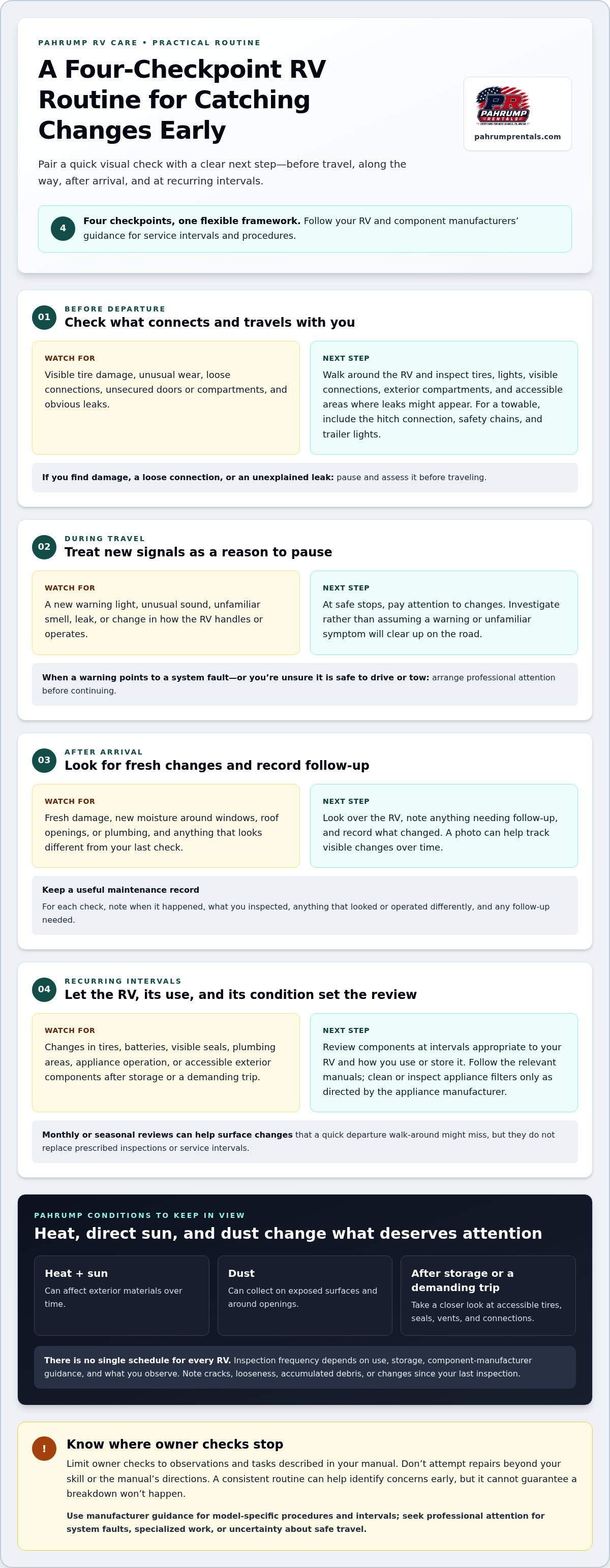
A useful schedule gives each check a place in your routine, so maintenance doesn’t depend on memory or happen only when something goes wrong. Set four checkpoints: before departure, during travel, after arrival, and at recurring intervals. Keep visual inspections separate from repairs or procedures that require specialized knowledge.
Think of this as a flexible framework, not a substitute for your RV’s instructions. Maintenance intervals vary by model and component, so follow the relevant owner’s manual when its guidance differs from a general checklist. The Forbes RV Maintenance Checklist is another reference for organizing seasonal and recurring tasks, but your manufacturer’s directions should guide work on your specific RV.
What should you check before each RV trip?
Walk around the RV and look at the tires, lights, visible connections, exterior compartments, and accessible areas where leaks might appear. Make sure doors, storage compartments, and installed accessories are secure. For a towable, include the hitch connection, safety chains, and trailer lights in your departure check. If you notice damage, a loose connection, or an unexplained leak, pause and assess it before traveling.
What belongs on a recurring monthly or seasonal checklist?
At intervals appropriate for your RV and how you use or store it, review tires, batteries, visible seals, plumbing areas, and appliance operation. Clean or inspect appliance filters only as directed by the appliance manufacturer. A monthly or seasonal review can surface changes that a quick departure walk-around might miss, but it doesn’t replace prescribed inspections or service intervals.
Keep one maintenance log, whether in a notebook or a digital record. For each check, note the date, what you inspected, anything that looked or operated differently, and any follow-up needed. This makes it easier to notice a developing pattern and gives a repair professional a clearer account of the concern.
- Before departure: Check visible safety and connection points, secure doors and compartments, and look for obvious leaks.
- During travel: At safe stops, pay attention to new warning lights, unusual sounds, or changes in how the RV handles.
- After arrival: Look over the RV for fresh damage or leaks, and record anything that needs follow-up.
- At recurring intervals: Review components and perform owner-level care according to the relevant manuals.
A useful preventative maintenance routine combines repeatable visual checks, manufacturer-guided care, and timely follow-up when something changes. Keep appropriate RV maintenance supplies on hand for routine owner tasks, and leave specialized repairs to professional service.
RV Maintenance Checks That Matter Most in Pahrump’s Desert Conditions
Heat, sun exposure, and dust make it useful to pay close attention to exposed surfaces and accessible systems. A quick glance can reveal changes, but the right inspection schedule depends on how often you travel, where and how long the RV is stored, the guidance for each component, and what you’ve noticed since the last check. Follow the owner’s manual and component instructions rather than applying one fixed interval to every RV.
Keep the purpose clear: an owner inspection is for spotting and recording warning signs, not diagnosing every fault or attempting a technical repair. If you find cracked material, a loose part, a leak, or a system that’s operating differently, document what you see and arrange an appropriate assessment. Visible tire damage, separated seals, water marks, or active leaks deserve timely attention because they may indicate a developing problem that could worsen with continued use.
How should you inspect RV tires, roof areas, and exterior seals?
Check tires for visible cuts, bulges, cracking, or unusual wear. Treat a pressure concern according to the RV and tire manufacturers’ instructions. Don’t rely on appearance alone to determine whether pressure is correct. Look over accessible roof edges, seams, and seals for cracks, separation, or signs of water entry. Use only safe access methods described by the RV manufacturer. Don’t climb onto a roof unless it’s designed for that access and you can do so safely.
After storage or a demanding journey, look for changes that may follow sun and heat exposure. Inspect slide-out seals and surrounding areas for visible damage, but leave adjustments or mechanical work to trained repair personnel. For more detail on identifying slide-out concerns, see this RV slide-out repair guidance.
How can you keep plumbing, propane, and comfort systems on your checklist?
Look beneath accessible plumbing connections and around fixtures for dampness, drips, or fresh water marks. Check that appliances operate as expected, and follow each appliance’s instructions for cleaning, filter care, and service. Dust around vents or filters is a prompt to consult the manufacturer’s cleaning procedure, not to disassemble equipment or improvise a repair.
Include propane appliances in your routine visual and operational awareness. If you notice an unusual propane odor or suspect a system problem, stop using the appliance or system and seek qualified service. Don’t attempt to locate or repair a leak yourself. Owners planning propane use can review propane refill information for RVs as part of trip preparation.
These preventative RV maintenance tips are most useful when they lead to an informed next step. Make a note of the location and appearance of any change, then arrange professional RV repair when the concern involves a leak, damaged component, or system fault. Regular visual checks help you notice what’s different, while qualified service addresses work beyond routine owner care.
How to Spot RV Problems Early and Decide What Needs Professional Attention
A warning sign doesn’t always reveal its cause, but it gives you a reason to pause and make a careful decision. Use a simple sequence: stop, observe, document, and arrange appropriate service. If a problem affects vehicle control, a tire appears damaged, a leak is active, or a system behaves in a way that seems unsafe, don’t continue using or operating the affected equipment. Prioritize safety over completing the trip.
This approach keeps maintenance manageable. You don’t need to diagnose every symptom or keep a complicated record. One log for the RV, updated during routine checks and whenever something changes, can help you track concerns without relying on memory.
Which warning signs should an RV owner take seriously?
Pay attention to new leaks, visible tire damage, unusual noises, dashboard warning lights, and sudden changes in how the RV drives, tows, or operates. A change might be minor, but it can also point to a concern that needs assessment. Don’t assume one symptom identifies the cause. A warning light alone doesn’t tell you which component needs attention, and a damp patch doesn’t establish where a leak began.
If the RV feels difficult to control, a tire looks compromised, or a system is leaking or operating abnormally, stop in a safe location and avoid using the affected system. Don’t test damaged equipment to see whether the problem goes away. Record what happened, where you noticed it, and whether anything changed immediately beforehand. Arrange professional assessment before continuing if the condition could affect safe travel or operation.
When should you handle an observation yourself and when should you seek repair?
Keep owner-level work to visual checks and routine care described in your RV or component manual. You can note a stain, photograph a cracked seal, or record when a sound occurs without taking equipment apart. Complex electrical, propane, structural, and mechanical concerns call for qualified service. Don’t attempt a repair if it involves unfamiliar procedures, specialized equipment, or a potential safety hazard.
A simple log makes the next step clearer. Include the date, location of the concern, what you observed, and any warning lights or changes in operation. Add photos when they safely capture visible damage, and note whether the issue appeared after storage, travel, or use of a particular system. These details can help a repair professional understand what you’re reporting, without replacing a proper inspection.
Use these preventative RV maintenance tips as a decision aid, not a reason to push through a warning. For professional RV repair support in Pahrump, arrange RV repair with Pahrump Rentals & Hardware when an issue needs trained attention.
Keep Your RV Road-Ready with Supplies and Local Repair Support
Good RV care is a steady routine, not a single inspection squeezed in before departure. A short walk-around, recurring checks guided by your manuals, and a clear record of follow-up needs can help you keep maintenance organized. These preventative RV maintenance tips work best when they fit how you travel, how you store the RV, and what you notice during use.
Owner-approved routine care may call for supplies suited to your RV and its components. Pahrump Rentals & Hardware provides RV supplies for local owners and travelers. Explore RV products and supplies to support appropriate maintenance tasks, and use each product according to its instructions and your RV or component manufacturer’s guidance. Having supplies on hand doesn’t replace a repair when an inspection reveals damage or a system fault.
How can a maintenance log make follow-up easier?
A simple log gives each check a place and helps you remember what needs attention. Record inspection dates, observations, completed tasks, and service visits. Note the component involved and any change since the previous entry. Set reminders based on the owner’s manual, upcoming travel plans, and observed condition, rather than relying on one schedule for every RV.
Keep the log with relevant owner’s manuals and service records, either in one organized folder or a digital location you can access. This makes it easier to find instructions before routine care and review prior observations if the same concern appears again. Even brief entries can make the history more useful than memory alone.
Where can Pahrump RV owners turn when a check reveals a problem?
Visual checks help identify concerns, but they don’t establish the cause or complete every repair. Issues involving damaged components, persistent leaks, or systems that aren’t operating as expected may require professional assessment. Avoid using equipment that appears unsafe, and don’t attempt work that goes beyond the procedures in your manuals or your experience.
Pahrump Rentals & Hardware provides professional RV repair and specialized RV supplies for owners and travelers in Pahrump and nearby communities, including Beaty, Goldfield, and Tonopah. That local support can help bridge the gap between routine owner care and a repair that needs professional attention. Keep your notes and relevant records together so you can clearly describe what you observed and when it changed.
A consistent routine helps you prepare with more confidence, while a reliable next step matters when a check uncovers a concern. Get local RV repair and supply support.
Build a Maintenance Habit That Travels With You
Give your next inspection a place on the calendar. Choose one practical starting point, such as reviewing your owner’s manual and setting reminders for the checks that apply to your RV and travel plans. A manageable routine is easier to keep than a long list you only revisit before a trip. Over time, your notes can help you focus on areas that have shown wear or changed since earlier inspections.
The most useful preventative RV maintenance tips are the ones you can follow consistently and adapt when your RV’s condition or use changes. You don’t have to handle every repair yourself. Knowing when to pause and seek professional support is part of responsible ownership, especially when a concern could affect safe operation.
For a local next step, explore Pahrump Rentals & Hardware’s RV supplies and professional repair support for Pahrump, Beaty, Goldfield, and Tonopah. Get local RV repair and supply support, and take your next trip-preparation step with greater confidence.
Frequently Asked Questions
How often should I perform preventative RV maintenance?
Follow the intervals in your RV and component manuals, since schedules vary by model and equipment. A practical preventative RV maintenance routine also accounts for how often you travel, how the RV is stored, and any changes you observe. Add reminders to a calendar, then review them before trips and after extended storage. If the manual calls for service sooner than your personal schedule, follow the manual.
What should I check on my RV before a road trip?
Before departure, confirm that the RV is ready for the specific trip, not just generally roadworthy. Check that mirrors and lights are working, entry steps and awnings are stowed, and loose items inside are secured. Review the dashboard for warnings before setting out. For a motorhome, consult the chassis instructions for vehicle checks. For a towable, verify that the towing setup is secured according to its manuals.
Can I do RV maintenance myself?
Yes. Owners can handle visual inspections and routine care when the manuals describe the procedure and it’s within their skills. Examples include noting visible wear, cleaning an accessible filter as directed, or keeping inspection records. Don’t take apart unfamiliar equipment or work on complex electrical, propane, structural, or mechanical systems without the right training. Pahrump Rentals & Hardware provides professional RV repair for concerns that need service.
What are common signs that an RV needs repair?
New fluid or water marks, damaged tires, unusual sounds, warning lights, and unexpected changes in handling or appliance operation can all warrant attention. A symptom alone doesn’t identify the cause, so avoid guessing or continuing to use equipment that appears unsafe. Note when the change began and whether it happens consistently. If vehicle control or a system’s safe operation may be affected, stop using it and arrange an assessment.
How should I maintain an RV in hot, dusty conditions?
Inspect exposed surfaces and accessible vents for accumulated dust, and follow the appliance maker’s directions for filter care. Look for changes in exterior seals and other materials after storage or extended exposure, then record any cracking, separation, or residue. Owners traveling or storing RVs around Pahrump, Beaty, Goldfield, and Tonopah can adapt their checks to actual exposure and use rather than assume one schedule fits every location.
Should I perform RV maintenance before storing my RV?
Yes. Before storage, address any known concerns rather than leaving them unrecorded for the next trip. Remove food and other items that shouldn’t remain inside, clean the living area, and prepare batteries, plumbing, appliances, and tires according to their manuals. Keep the RV’s records together and note the storage date and unfinished tasks. Before using it again, review those notes and follow the manufacturer’s return-to-service guidance.


