
A pressure washer can clean outdoor surfaces quickly, but the wrong nozzle or a pass from too close can damage siding, wood, or paint. This beginner's guide to using a pressure washer starts with a safer principle: match the pressure and distance to the surface, then work in steady, controlled passes.
If setting up the machine, connecting the water supply, or choosing a nozzle feels uncertain, take time to check the manual before you begin. Preparation helps you avoid rushing into a high-pressure spray. You’ll learn how to inspect the equipment and water connections, choose a cautious starting nozzle, and test an inconspicuous area before cleaning the full surface.
The guide also covers protective gear, safe operating habits, and a practical sequence for common outdoor cleaning tasks. You’ll finish with steps for shutting down, draining, and storing the machine safely. For an occasional project, renting equipment can be a practical alternative to buying and storing a machine. Start with the surface, keep control of the spray, and build confidence one careful pass at a time.
Key Takeaways
- This beginner's guide to using a pressure washer explains how pressure, water flow, nozzle choice, and distance affect cleaning results.
- Follow the machine’s manual for setup and startup, then test your approach on an inconspicuous area before cleaning the full surface.
- Use controlled, even passes and adjust your distance and technique to suit the material you’re cleaning.
- Protect yourself and others by keeping the spray pointed safely, maintaining stable footing, and wearing appropriate protective equipment.
- Shut down and store the equipment according to its manual. For a one-time project, renting can be a practical alternative to buying equipment.
Pressure Washer Guide: What It Does and When to Use It
A pressure washer directs water under pressure through a wand and nozzle to remove dirt and buildup from suitable surfaces. Unlike an ordinary garden hose, which rinses with a broader, lower-force stream, a pressure washer delivers a more concentrated spray. Results depend on the machine, the surface, the type of dirt, and how you use the wand. A Pressure washer can vary in design and use, so understanding your specific machine is an important first step in this beginner's guide to using a pressure washer.
What jobs are suitable for a pressure washer?
Pressure washing can help clean outdoor areas such as patios and walkways, along with exterior surfaces that are suitable for the method. It can rinse loose grime or help lift stubborn buildup, but it won’t produce identical results on every job. Consider what you’re removing: loose dust and mud may rinse away differently from embedded organic growth, which may need a different approach.
Check surface-care guidance before cleaning, especially for painted, delicate, or older materials. Wear, cracks, loose paint, and previous repairs can make a surface more vulnerable to force or water intrusion. If you’re unsure whether a material is suitable, don’t apply a concentrated spray until you’ve checked the manufacturer’s instructions or relevant surface-care guidance.
Pressure washer basics: pressure, flow, and the nozzle
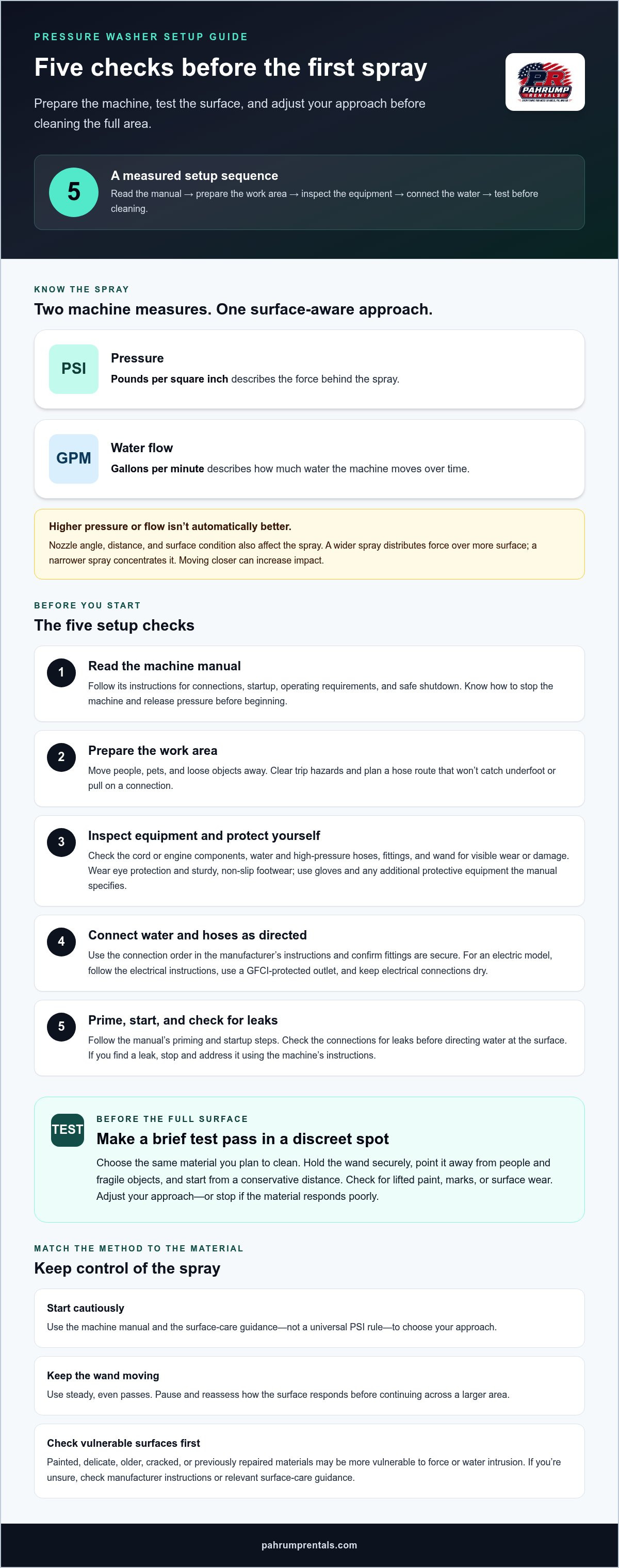
PSI, or pounds per square inch, describes water pressure: the force behind the spray. GPM, or gallons per minute, describes water flow: how much water the machine moves over time. A simple comparison is the stream’s push versus the amount of water it carries. Both affect cleaning, but higher pressure or flow isn’t automatically better for every task.
The nozzle shapes the spray, spreading it over a wider area or concentrating it into a narrower stream. A wider spray generally distributes force over more of the surface, while a narrow spray concentrates it in a smaller area. Distance matters, too: moving closer can increase the impact on the material. Together, pressure, flow, nozzle angle, distance, and surface condition determine how the cleaning feels and performs.
Don’t choose a setting based on a universal PSI rule. Read the machine manual and follow care guidance for the surface you plan to clean. Start cautiously and check how the surface responds before continuing. This measured approach helps you clean effectively while reducing the chance of damage.
How to Prepare and Set Up a Pressure Washer Before You Start
A careful setup helps prevent leaks, interruptions, and avoidable damage. Use a simple sequence: read the machine manual, prepare the work area, inspect the equipment, connect the water supply as directed, and test before cleaning. The exact setup varies by machine, so follow its instructions for connections, startup, and operating requirements.
A general walkthrough of how to use a pressure washer can provide helpful background, but the manual for your machine takes priority. Before you start, identify the controls and understand how to shut the machine down and release pressure. Knowing how to stop safely is part of preparation, not something to figure out mid-job.
Prepare the work area and choose protective equipment
Move people, pets, and loose objects away from the work zone. Look for trip hazards and plan a clear route for the hose so it won’t catch underfoot or pull against a connection. Wear eye protection and sturdy, non-slip footwear; use gloves and any additional protective equipment specified by the manual.
Outdoor work in Pahrump’s heat can become tiring. Plan breaks, drink water, and avoid leaving equipment or hoses where they could create a hazard or be exposed to conditions the manual warns against. In Pahrump, Beaty, Goldfield, and Tonopah, a few minutes spent clearing and planning the work area helps you focus on safe operation, especially when working outdoors in dusty or hot conditions.
Connect and test the pressure washer
Before connecting anything, check the power cord or engine components as applicable, water and high-pressure hoses, fittings, and wand for visible wear or damage. Don’t operate equipment with damaged parts or loose connections. For an electric model, follow the manual’s electrical instructions, use a GFCI-protected outlet, and keep electrical connections dry.
Connect the water source and hoses in the order described by the manufacturer. Confirm that fittings are secure, then follow the manual’s steps for priming and startup. Before directing water at the surface, check connections for leaks. If you find one, stop and address it using the machine’s instructions rather than continuing with a leaking setup.
Choose a discreet test area on the same material you plan to clean. Hold the wand securely, point it away from people and fragile objects, and make a brief test pass from a conservative distance. Check for changes such as lifted paint, marks, or surface wear. Adjust your approach before continuing, or stop if the material responds poorly. For an occasional project, plan the equipment and setup around the surfaces you need to clean.
How to Use a Pressure Washer Without Damaging the Surface
Controlled technique matters as much as the machine. Use the same sequence for each job: test a discreet area, begin at a conservative distance, make steady passes, then pause and reassess. A test pass shows how the surface responds before you expose a larger area to the spray.
Keep the wand moving. Sweep evenly across the surface with slightly overlapping passes, and avoid holding the spray in one spot. A concentrated stream can cut into material or leave a visible mark if it stays in place. If cleaning is uneven, reassess your distance and nozzle choice rather than immediately moving closer or increasing pressure.
Choose a nozzle and spray distance cautiously
Nozzle angle affects how concentrated the water stream is. A narrower spray focuses force on a smaller area and can raise the risk of damage; a wider spray spreads it out. Begin with the nozzle and setup recommended in the machine manual for your task. Keep a cautious distance, make a short test pass, and adjust gradually only if the surface remains undamaged and cleaning is effective.
Never change a nozzle while the machine is pressurized. Follow the manual’s shutdown and pressure-release steps before changing attachments, then reconnect as instructed. Don’t point the wand at yourself or anyone nearby during the process.
Adjust the method for common outdoor surfaces
Different materials respond differently to water pressure and spray direction. Wood can be marked or have fibers raised; concrete may have cracks or vulnerable joints; siding can allow water into seams; and painted surfaces may have loose or aging paint. Inspect for damage before washing, and avoid directing the spray into gaps, cracks, or fragile areas.
Use the surface manufacturer’s care guidance alongside the pressure washer manual. There’s no universal setting or distance that suits every wood deck, concrete walkway, siding panel, or painted surface. If a test pass lifts paint, leaves marks, forces water into a joint, or otherwise changes the material, stop and reassess. A gentler cleaning method may be more suitable for that area.
For this beginner's guide to using a pressure washer, remember the working rhythm: test, spray evenly, pause, and inspect. Move methodically across manageable sections so you can notice changes early. Good control comes from matching the spray to the material, not from using the strongest setting.
Pressure Washer Safety: Common Beginner Mistakes to Avoid
High-pressure water can injure people and damage property, even when the spray looks like a narrow stream of water. Keep control of the wand, maintain stable footing, and pause if anything feels uncertain. Use this checklist before and during the job:
- Direct the spray safely. Never aim the wand at people, animals, or any part of your body. Keep bystanders outside the work area.
- Wear protective equipment. Use eye protection, sturdy non-slip footwear, and any additional protective gear specified in the machine manual.
- Watch your footing and hose. Keep hoses routed away from walkways where possible. Don’t step over a taut hose or work from an unstable surface.
- Keep water away from electrical hazards. Avoid spraying electrical equipment, outlets, and connections. Follow the manual’s instructions for the machine’s power source.
- Stay with the machine. Don’t leave it running unattended, and don’t rush while handling the wand, hose, or fittings.
Stop the machine if a hose or fitting leaks, the spray behaves unexpectedly, or the equipment makes an unusual change in operation. Follow the manual’s shutdown and pressure-release instructions before inspecting or adjusting anything. Don’t continue until the issue is addressed safely.
Which pressure-washing mistakes create avoidable risks?
Pointing the wand toward a person, pet, or body part is never safe, even briefly. Spraying near electrical equipment or working from a ladder or unstable surface also adds avoidable risk. A moving hose can catch a foot or pull on a connection, so keep track of its path as you work. Stay focused, keep others clear of the spray area, and never walk away from an operating machine.
Gas-powered machines produce carbon monoxide. Operate them outdoors in a well-ventilated area, never in a garage, shed, or other enclosed space. For electric models, follow the manual’s directions and keep electrical connections dry.
Detergent, runoff, and changing conditions
Use only detergents approved for both the machine and the surface you’re cleaning. Follow the detergent label and equipment manual for application and rinsing instructions. Keep cleaning solution away from areas you don’t intend to treat, and avoid allowing runoff to reach places where it could cause harm.
In Pahrump’s dry, dusty conditions, plan the work area and water use before you begin. Check where rinse water will flow, and adjust your approach to limit unnecessary runoff. If wind, heat, dust, or footing makes it difficult to control the spray safely, pause and reassess. A careful pace is central to any beginner's guide to using a pressure washer.
After Pressure Washing: Cleanup, Storage, and Renting for a Project
Finishing the cleaning pass is only part of the job. Follow the machine’s manual for shutdown and storage, then leave the work area clear and the equipment ready for its next use. The steps can differ between machines, so don’t assume the same order applies to every model.
How should you shut down and store a pressure washer?
Use the manufacturer’s shutdown procedure. It will explain how to turn off the machine, release remaining pressure, and disconnect the water supply, hose, and accessories in the correct order. Don’t remove a fitting or attachment while the system is pressurized. If you’re unsure of a step, pause and refer to the manual before continuing.
Once the equipment is shut down and disconnected as directed, clean the work area. Pick up loose debris, put away detergents, and check that rinse water hasn’t left a slippery or muddy surface. Clean and store the machine, hoses, and accessories as the manual instructs. Keep components protected from damage and avoid putting them away wet if the manufacturer calls for dry storage. Coil hoses without sharp bends, and secure small attachments so they stay together.
Should you rent or buy for an occasional cleaning project?
Think about how often you expect to use the equipment, whether you have suitable storage, and what your project requires. Buying may make sense if pressure washing is a recurring task and you can maintain and store the machine properly. For a one-time or occasional job, renting equipment can help you avoid keeping a tool you rarely use. Include setup, cleanup, and the machine’s instructions in your project plan as you decide.
Pahrump Rentals & Hardware provides equipment and tool rentals for local DIY customers and contractors. Renting tools can be a practical way to plan projects in Pahrump, Beaty, Goldfield, and Tonopah without buying and storing equipment you use only occasionally. This final step completes the beginner's guide to using a pressure washer: clean carefully, shut down methodically, and store equipment responsibly.
Put Your Pressure-Washing Plan Into Practice
Safe cleaning starts with a few steady habits: follow the machine manual, match your technique to the surface, and keep the spray moving while you check how the material responds. The beginner's guide to using a pressure washer comes down to careful preparation, controlled passes, and a proper shutdown when the work is done.
If it’s an occasional project, renting equipment may be a practical alternative to buying and storing a machine. Pahrump Rentals & Hardware is a local independent business serving Pahrump and nearby communities, with equipment and tool rentals for residential and professional projects. Browse the equipment and tool rentals for your next project as you plan your work in Pahrump, Beaty, Goldfield, or Tonopah.
Take your time, use the right approach for the surface, and finish with the same care you brought to setup. With a sound plan, you can tackle your outdoor cleaning project confidently.
Frequently Asked Questions
How do you use a pressure washer for the first time?
Start by reading the machine’s manual and preparing a clear work area. Inspect the hoses, fittings, and power connections, then connect the water supply and start the washer as the manufacturer directs. Wear the recommended protective equipment and keep people and pets away. Before cleaning the full surface, test the spray in a discreet spot. This beginner's guide to using a pressure washer follows a cautious approach: prepare, test, and reassess.
What PSI should a beginner use on a pressure washer?
There isn’t one PSI setting that’s right for every beginner or surface. PSI describes water pressure, but the nozzle, water flow, spray distance, and material also affect cleaning intensity. Check the machine manual and the surface-care instructions rather than choosing a number from a general rule. Start with the manual’s recommended setup, test an inconspicuous area, and adjust cautiously only if the surface shows no signs of damage.
Can a pressure washer damage concrete, wood, or siding?
Yes. A pressure washer can mark wood, worsen damage in cracked concrete, force water behind siding, or lift loose paint. Inspect the surface for cracks, fragile areas, or peeling finishes before you begin. Use the machine and surface manufacturers’ instructions to guide your approach, then make a controlled test pass in an inconspicuous area. Stop if you see marks, lifted paint, or other changes, and reassess before continuing.
Do you need detergent when using a pressure washer?
No, detergent isn’t needed for every job. Water alone may be suitable for some rinsing tasks, while other dirt may need an appropriate cleaning solution. If you use detergent, choose one approved for both the pressure washer and the surface, and follow the product label and machine manual for use and rinsing. Keep the solution away from areas you don’t intend to clean, and manage runoff so it doesn’t spread where it could cause harm.
How far away should you hold a pressure washer from a surface?
There’s no single safe distance for every machine, nozzle, and material. Follow the machine manual and surface-care guidance, then begin at a conservative distance with the recommended setup. Make a brief test pass and check for marks, paint lifting, or water entering gaps. Move closer only gradually if the surface responds well and cleaning remains ineffective. Keep the wand moving rather than holding the spray on one spot.
Is it safe to use a pressure washer around electrical outlets?
Keep the spray away from outlets, electrical equipment, and connections. Water and electricity can create a serious shock hazard. For an electric pressure washer, use a GFCI-protected outlet as directed by the manual, and keep plugs and connections dry. Don’t handle electrical connections with wet hands or spray near them. If water reaches a connection or you notice damage to a cord, stop and follow the manufacturer’s safety instructions before proceeding.
Should you rent or buy a pressure washer for a one-time project?
For a one-time cleaning job, renting equipment may be more practical than buying a machine you’ll rarely use or have little room to store. Consider how often you expect to use it, your storage space, and what the project requires. Pahrump Rentals & Hardware serves local DIY customers and contractors with equipment and tool rentals for projects in Pahrump, Beaty, Goldfield, and Tonopah.


