

Planning the work is the first step in finding fence building tools for rent Goldfield. A fence project may involve moving equipment and materials to a rural worksite, so the order of your tasks matters: scheduling tools before the site is ready can leave you with idle rental time or an extra trip.
Start with the fence type and the work it involves, then account for ground conditions, transport, and the sequence of each construction stage. This guide explains how to plan for layout, digging, setting posts, and attaching fence materials, then organize rentals around those tasks. You’ll also find practical considerations for a Goldfield worksite, including access and coordinating equipment with hardware. Pahrump Rentals & Hardware serves Goldfield and nearby communities with tool and industrial equipment rentals, hardware, and contractor rental support.
Key Takeaways
- Map the fence length, terrain, access, materials, and post locations before deciding what equipment your project needs.
- Match tool categories to each construction stage, from layout and digging to cutting and fastening.
- Use this fence building tools for rent Goldfield guide to weigh a short-term rental against buying tools you may use again.
- Plan site access, equipment transport, and the order of work to keep the rental period focused and productive.
- Coordinate equipment needs with related hardware and fasteners through Pahrump Rentals & Hardware’s rental resources.
Fence Building Tools for Rent in Goldfield: Start With Your Project Plan
Before looking for fence building tools for rent Goldfield, define the job: are you repairing a short section, adding a new run, or building a full perimeter fence? Your rental plan depends on the task, fence type, and scale. A small repair may need only a few hand or fastening tools. A longer installation can involve repeated digging, setting posts, cutting, and fastening. Start with the work to be done, then identify the tools that support it.
Your project’s scope, site, and fence material determine which tools belong on the rental list and when you’ll need them.
What to measure before renting fence-building tools
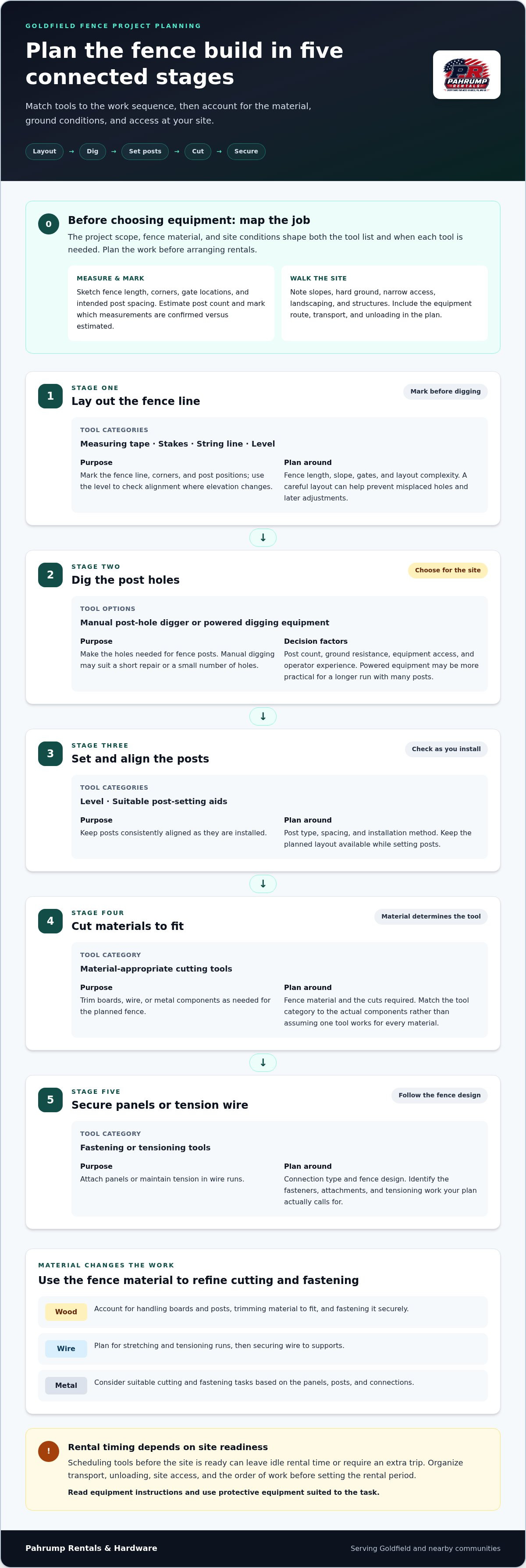
Sketch the planned fence line and record its approximate length, corners, gate locations, and intended post spacing. Use those measurements to estimate the number of posts and distinguish a short repair from a larger installation. Mark which measurements are confirmed and which are estimates, so you can adjust the equipment plan if the layout changes.
Walk the fence line and note slopes, hard ground, narrow access, and obstacles such as established landscaping or structures. These conditions affect how equipment reaches the work area and how practical it is to use there. A clear route may allow larger equipment, while a confined section may call for another approach. Include transport and unloading in your plan, especially when equipment must travel to the site.
How fence material changes the tool plan
Wood fencing involves handling boards and posts, so account for cutting material to fit and fastening it securely. Wire fencing puts more emphasis on stretching and tensioning runs and securing wire to supports. Metal fencing can involve different cutting and fastening tasks depending on the panels, posts, and connections. These are broad differences, not a prescription for a particular design. For an overview of different types of fences, Wikipedia provides a useful starting point.
Post type and spacing affect digging and post-setting tasks; the fence material determines what must be cut, attached, or tensioned. List those tasks separately before selecting tool categories. For example, a wire fence with frequent changes in direction may require a different fastening sequence from a straight run of wood panels. General rental planning principles can also help you organize the work; see this equipment rental guide.
Once you’ve mapped the project and site, match equipment to specific stages instead of renting a broad collection “just in case.” Next, compare tool categories with the work each one supports.
Which Fence Building Tools Should You Rent for Each Stage?
Build your tool list around the sequence of work, not a broad category like “power tools.” The table connects common fence-building stages with tool types to consider. Use it to identify the tasks your project requires, then plan the equipment and tools around your site, materials, and work sequence.
| Work stage | Tool category | Purpose | Decision factor |
|---|---|---|---|
| Layout | Measuring tape, stakes, string line, level | Mark the fence line, corners, and post positions | Length, slope, gates, and layout complexity |
| Digging | Manual post-hole digger or powered digging equipment | Make holes for fence posts | Post count, ground resistance, access, and operator experience |
| Post setting | Level and suitable post-setting aids | Keep posts aligned as they’re installed | Post type, spacing, and installation method |
| Cutting | Material-appropriate cutting tools | Trim boards, wire, or metal components as needed | Fence material and the cuts required |
| Securing | Fastening or tensioning tools | Attach panels or maintain tension in wire runs | Connection type and fence design |
Tools for marking lines and digging post holes
Use a measuring tape to lay out distances, stakes to mark corners and post locations, and a string line to keep each run straight. A level helps check alignment, including where the ground changes elevation. Careful layout can prevent misplaced holes and reduce adjustments later.
Manual digging may suit a short repair or a small number of holes. Powered equipment may be more practical for a longer run with many posts. The right digging tool depends on post count, access, and ground conditions. Consider soil resistance and whether equipment can reach the work area, along with the operator’s experience. Include the digging method in your equipment plan, choosing between manual tools and powered equipment based on the work involved.
Tools for setting, cutting, and securing fence materials
Use a level and other suitable setting aids to keep posts consistently aligned as you work. The material guides your next choices: wood may require tools for trimming boards and driving fasteners; wire needs a way to secure and tension runs; metal components may need suitable cutting and fastening tools. Match each category to the actual connections and cuts in your fence plan rather than assuming one tool covers every material.
Before operating equipment, read its instructions and use protective equipment suited to the task. Keep your task list handy as you plan equipment and tool rentals with Pahrump Rentals & Hardware.
Renting Fence Tools in Goldfield or Buying Them: Which Makes Sense?
For a one-time fence project, renting can make sense if specialized equipment would otherwise sit unused after the last post is set. Buying may be more practical if fence work is part of your regular maintenance or contracting work. Compare more than the purchase price: consider how often you’ll use the tools, where you’ll store them, who will maintain them, how they’ll get to the site, and how long the project will take.
Rental cost depends on the equipment selected, rental period, and project requirements, so a clear scope helps you compare options. For Goldfield projects, plan transport as well: equipment must travel to the worksite, and access at the property affects what’s practical to move and use. For a broader framework, see this tool rental project guide.
When renting fence-building tools is practical
Renting can suit a short-term job when you need a tool for one distinct stage but don’t expect to use it regularly afterward. It can also save you from finding long-term storage and managing upkeep for equipment that may sit idle. When planning fence building tools for rent in Goldfield, account for the rental period as well as the work: group compatible tasks together, prepare materials in advance, and sequence the stages to avoid leaving equipment unused between them.
Think through transport, unloading, and the route from the access point to the fence line before selecting equipment. A tool that suits the task on paper may be awkward to use in a restricted work area. Include setup and work-area preparation in your schedule, rather than treating the rental window as time spent building alone.
When ownership may suit repeated fence work
Buying may be a better fit if you regularly build or repair fences and have suitable storage space. Repeated use can make ready access valuable, and familiarity with your own tools may help you work more comfortably. Ownership also means taking responsibility for maintenance, safe storage, and keeping equipment in usable condition between jobs.
For homeowners, the decision may come down to whether another planned project is likely to use the same equipment. For contractors, consider actual use across jobs, not just the possibility of future work. If a tool has a clear role in recurring projects, ownership may be convenient. If you need it only for an occasional task, renting can avoid keeping specialized equipment on hand indefinitely. Choose based on realistic use, available storage, upkeep, and how efficiently you can schedule the work.
How to Prepare a Goldfield Fence Site Before Your Tool Rental
Site preparation helps you choose equipment that fits the work area and use the rental period productively. Before arranging fence building tools for rent in Goldfield, map the job from the vehicle access point to the fence line. Narrow gates, uneven paths, stored materials, and other obstacles can affect how tools are moved and where work can happen.
- Define the tasks. List the work in order, from marking the fence line and digging holes to setting posts, cutting materials, and fastening or tensioning the fence. Note which tasks require powered equipment and which can be handled with hand tools.
- Assess access. Measure gates, driveways, and other restricted points. Consider equipment dimensions and how it will travel from the vehicle to the work area. Check the route for turns, slopes, soft or uneven patches, and obstacles rather than assuming the work zone is easy to reach.
- Plan transport and handling. Decide how tools and materials will be loaded, unloaded, and moved around the site. Keep heavy or bulky items on a clear route, and separate tools from fencing materials so you can reach each without shifting the entire work area.
- Organize the work zone. Set aside clear areas for equipment, materials, and cutting or fastening tasks. Keep the fence line accessible as work progresses. This reduces unnecessary handling and helps prevent delays caused by searching for tools or moving stored items out of the way.
Plan access, transport, and equipment handling
For a rural worksite, include the journey and final approach in the equipment plan. A tool that suits the task still needs to fit through access points and be practical to move along the fence line. If the site has more than one work area, decide where to stage equipment so it doesn’t block access or need repeated relocation. For professional project coordination, the contractor equipment rental guide offers additional planning guidance.
Sequence the work and plan for safe operation
Keep the workflow in order: mark the line, dig, set posts, then cut and secure the fence materials. Prepare for the next stage before moving equipment so rental time is focused on useful work. Read each tool’s operating instructions before use and wear protective equipment suited to the task. If site conditions change, reassess the work area and tool plan instead of forcing equipment into an unsuitable setup.
Use your site measurements and task list to organize equipment and related hardware needs through Pahrump Rentals & Hardware’s rental and product resources.
Arrange Fence Building Tool Rentals for Your Goldfield Project
A well-planned rental starts with a clear scope. Before arranging fence building tools for rent in Goldfield, gather the details that shape what you need and when you’ll use it. That connects equipment choices to the actual work instead of leaving you with tools that have no defined task.
What project details to organize before arranging a rental
Prepare a short project brief with the fence type, approximate length, estimated post count, site access notes, and planned work dates. Include the main stages, such as layout, digging, post setting, cutting, and fastening. Mark any measurements that are still estimates so your plan can adapt if the layout changes.
Group tasks into a practical sequence. For example, complete layout and hole digging before scheduling work that depends on set posts. Include transport and staging in the timing, especially if equipment and materials need to pass through limited access. This helps you plan a rental period around active work and avoid unnecessary handling. Use your task list to identify the tool categories and equipment needed for each stage.
Browse Pahrump Rentals & Hardware’s equipment and tool rental listings as you turn the task list into an equipment plan. Factor related hardware and fasteners into project preparation, so equipment needs and material connections are considered together.
A local rental resource for homeowners and contractors
Pahrump Rentals & Hardware serves Goldfield and nearby communities with tool and industrial equipment rentals, hardware, and contractor rental support. Homeowners can use a defined task list to organize a project rental, while contractors can manage rental agreements and project needs through the contractor rental registration portal.
For contractors, keeping project details and rental arrangements organized can make it easier to coordinate equipment use across work stages. For homeowners, the same preparation helps make the rental plan easier to follow from the first layout marks through the final fastening tasks.
Set your scope, match tool categories to the work, and organize the rental period around the job sequence. Include both equipment and related hardware in your Goldfield fence project plan.
Plan Your Fence Project With Confidence
A successful fence project starts with a clear scope and a practical sequence. Measure the fence line, estimate the post count, and account for site access before choosing tool categories. Then group the work by stage so equipment is used when it’s needed, rather than sitting idle. Whether you’re weighing a short-term rental against ownership or preparing a rural worksite, planning helps keep the equipment list focused.
For fence building tools for rent in Goldfield, Pahrump Rentals & Hardware is a local independent resource serving Goldfield and nearby communities with equipment and tool rentals, hardware, and fasteners for project needs. Contractors can also use the contractor portal to manage rental agreements and project details.
Put your measurements and task sequence to work. Explore equipment and tool rentals and take the next step toward a well-organized fence project. Pahrump Rentals & Hardware also serves customers in Pahrump, Beaty, and Tonopah.
Frequently Asked Questions
What tools do I need to build a fence?
The tools you need depend on the fence material, post count, site access, and ground conditions. A basic plan may include a measuring tape, stakes, string line, and level for layout; a manual or powered option for digging; and suitable tools for setting posts, cutting materials, and fastening or tensioning the fence. Make a task list first, then match equipment to each stage instead of assuming every project needs the same tools.
Can I rent a post-hole digger for a fence project in Goldfield?
Fence projects often require a method for digging post holes, and Pahrump Rentals & Hardware provides tool and equipment rentals for Goldfield projects. Include your estimated post count, access conditions, and planned work dates in your equipment plan. Choose a manual or powered digging approach based on the ground, work area, and operator experience.
Is renting fence-building tools better than buying them?
Renting can be a practical choice for a one-time fence project, especially if specialized tools would otherwise sit unused and take up storage space. Buying may suit homeowners or contractors who expect to use the same equipment repeatedly and can manage its upkeep. Compare frequency of use, storage, maintenance, transport, and project duration. Organizing related tasks together can also help you plan the rental period around active work.
How do I choose the right tool for digging fence post holes?
Choose a digging method based on the number of posts, ground resistance, access to the fence line, and the operator’s experience. Manual digging may fit a small repair or a few holes; powered equipment may be worth considering for more extensive digging if the site can accommodate it. Measure access points and plan how equipment will reach the work area. Don’t choose based on fence length alone; both the site and the task matter.
How much does it cost to rent fence-building tools?
Rental cost depends on which equipment you need, how long you need it, and your project requirements. A plan that identifies the fence type and construction stages helps keep the list focused on tools with a clear job to do. Avoid assuming every project needs the same equipment or rental period. Review the rental listings as you organize your tasks, and consider how transport and site access may affect your schedule.
What should I prepare before renting fence tools for a Goldfield project?
Prepare the fence type, approximate length, estimated post count, access notes, and planned work dates. Measure gates and the route from the vehicle to the fence line, and note obstacles that could affect equipment handling. Separate confirmed measurements from estimates. Then sequence the work from layout and digging through post setting, cutting, and fastening. This information helps you plan equipment use and related hardware needs for a Goldfield-area project.
Can I use the same tools for wood and wire fencing?
Some layout and digging tools can support both wood and wire fence projects, but cutting and securing tools differ by material. Wood may call for tools to trim boards and drive fasteners. Wire fencing may require tools suited to attaching and tensioning wire runs. Start with the shared stages, then add equipment for the specific material and connections in your design. Pahrump Rentals & Hardware serves projects across Pahrump, Beaty, Goldfield, and Tonopah.


