
Desert miles leave little room for overlooked maintenance. Heat, dust, and long stretches between service stops can make a small concern harder to manage. This RV maintenance checklist for desert travel focuses on checks that matter in hot, dusty conditions and helps you decide what to inspect before departure.
If you’re unsure whether to start with tires, cooling systems, or dust-prone components, use a consistent routine. This guide organizes checks to complete before you leave, quick reviews to repeat along the way, and warning signs that call for a qualified RV technician rather than a do-it-yourself fix.
You’ll also find ways to keep useful supplies on hand and recognize when a repair concern shouldn’t wait. With a repeatable plan, you can prepare more confidently and make informed decisions if conditions change on the road.
Key Takeaways
- Use the RV maintenance checklist for desert travel to organize your inspection by system, with attention to tires, cooling, batteries, and seals.
- Check tire condition and cold inflation against your RV’s placard or manufacturer guidance before departure.
- Separate simple visual checks from work that requires diagnostic tools, specialist knowledge, or safe lifting.
- Use an ordered departure-day routine to check lights, fluids, cargo, access panels, and visible leaks.
- Repeat brief walk-arounds during the trip, and respond promptly to new warning lights, odors, leaks, or handling changes.
Why desert travel calls for a focused RV maintenance checklist
Heat, blowing dust, remote roads, and long distances between services can make RV travel through the desert less predictable. A focused RV maintenance checklist for desert travel turns those concerns into a repeatable inspection, helping you notice visible issues before they become harder to address far from assistance.
Desert conditions can put added demands on tires, engine cooling, batteries, seals, and air filtration. This checklist is an organized series of owner checks and service decisions, not a substitute for technical inspection. The term Recreational vehicle (RV) covers different vehicle types, so start with the manual for your specific RV and its components. Manufacturer instructions take priority for specifications, inspection procedures, and service intervals.
How desert heat and dust affect an RV
Heat is a reason to give tire condition, cooling-system indicators, and ventilation extra attention before a trip. Dust can collect on air-filter surfaces and exterior components. Grit around slide-outs may also affect seals as the room moves in and out. These are reasons to inspect and follow the relevant maintenance guidance, not evidence that a particular part will fail or needs replacement on a fixed schedule.
Conditions can change from one route or stop to another. Keep checks visual and within the limits of your manual. Don’t open hot systems or handle components if you’re unsure how to do so safely. Follow the vehicle and component manufacturers’ instructions rather than relying on a universal desert interval.
What this checklist covers, and what it cannot diagnose
This checklist helps you look for visible changes, such as tire damage, loose or dusty exterior parts, worn-looking seals, fluid on the ground, or an indicator that needs attention. It can help you decide what to monitor and what to raise with a technician. It can’t confirm the cause of a warning light, assess hidden damage, or replace mechanical testing and repair.
Use your RV and component manuals for tire inflation, fluid specifications, and inspection guidance. Take unusual smells, warning lights, leaks, or changes in handling seriously, and avoid continuing if the RV doesn’t feel safe to operate. When a check points to a problem beyond a visual inspection, consult a qualified RV repair provider. Pahrump Rentals & Hardware offers RV repair in Pahrump for local owners and travelers. Confirm the current service scope and appointment process before arranging work.
Inspect tires, cooling, batteries, and seals before desert travel
A system-by-system inspection makes it easier to spot changes before they affect a trip. Use this part of your RV maintenance checklist for desert travel to review tires and chassis first, then cooling, batteries, and weather-exposed areas. Stick to checks your owner’s manual identifies as safe, and arrange a professional assessment for damage or symptoms you can’t confidently evaluate.
Tires, brakes, and chassis
With the RV parked safely, look over each tire’s tread and sidewalls for visible damage. Check the valve stems and spare, too. Use a tire gauge to check inflation before travel, when tires are cold. Follow the RV’s tire placard and tire-maker guidance for the correct pressure. Don’t substitute a general rule or adjust pressure based only on a hot reading.
The vehicle placard and tire manufacturer’s instructions are the source for your RV’s tire-pressure specifications, so use them rather than a one-size-fits-all PSI target.
Pay attention to how the RV behaves on the road. Vibration, pulling, unusual brake sounds, or visible tire damage warrant professional assessment. Don’t try to diagnose a brake or chassis problem from appearance alone, and don’t work beneath an RV unless you have the proper equipment and training.
Cooling, batteries, and weather-exposed components
Check for visible coolant around the engine area, and note any temperature changes or warning lights during operation. Only inspect coolant when the system is cool and it’s safe to do so. Never open a hot, pressurized cooling system. If you see a leak or receive a temperature warning, consult the vehicle manual and seek qualified help rather than investigating a hot engine.
Look at battery condition and connections only as directed by the owner’s manual. Don’t touch damaged wiring or attempt work you’re not equipped to do safely. Outside, inspect roof and window seals, vents, and slide-out areas for visible cracks, lifted edges, dust, or debris. Follow the component maker’s guidance before cleaning or applying any seal treatment.
These are visual checks, not a diagnosis. If you find damage or an issue that needs repair, a local RV repair provider can help determine what attention is appropriate. Pahrump Rentals & Hardware serves Pahrump and nearby communities with RV repair. Confirm service scope and appointment details before arranging work. For trip-preparation items, check available RV supplies.
DIY RV checks or professional service: how to choose
An RV maintenance checklist for desert travel helps you identify what deserves attention, but it can’t confirm what’s happening inside a system. Use a simple rule: if a check is visual and your manual describes it as an owner task, it may be reasonable to do yourself. If it calls for diagnostic tools, specialist knowledge, or lifting the RV, refer it to a qualified technician. This is a decision aid, not a repair procedure.
Checks many owners can complete safely
From a safely parked RV, you can look for visible changes without taking components apart. Follow your owner’s manual, and don’t work beneath a vehicle that isn’t properly supported. If you’re unsure what a finding means, pause and ask a qualified RV technician.
- Look for visible tire damage and check that exterior lights are working.
- Inspect accessible seals for cracks, lifted edges, or debris.
- Look for fluid beneath the RV without touching unknown liquids or opening a system.
- Check stored supplies and note anything missing or damaged.
These checks can help you record a concern and explain it clearly. They don’t establish whether a tire, seal, electrical component, or fluid system is safe for continued travel.
Warning signs that call for professional attention
Persistent overheating warnings, fluid leaks, brake concerns, and electrical faults need more than a visual check. If steering, braking, or engine temperature changes unexpectedly, pull over somewhere safe and consult your vehicle manual. Don’t continue driving if the RV may be unsafe. A repeated symptom deserves attention even if it seems to disappear temporarily.
A slide-out that moves unevenly, won’t operate as expected, or shows visible damage also calls for caution. Avoid forcing it or attempting an unfamiliar repair. For more guidance on recognizing slide-out concerns, see this RV slide-out repair guide.
Pahrump Rentals & Hardware is a local RV repair resource for Pahrump and nearby communities, including Beaty, Goldfield, and Tonopah. If an inspection reveals a repair concern, confirm the provider’s current service scope and appointment process before making plans. When in doubt, a professional assessment is a safer next step than guessing.
Use this departure-day RV checklist for a desert trip
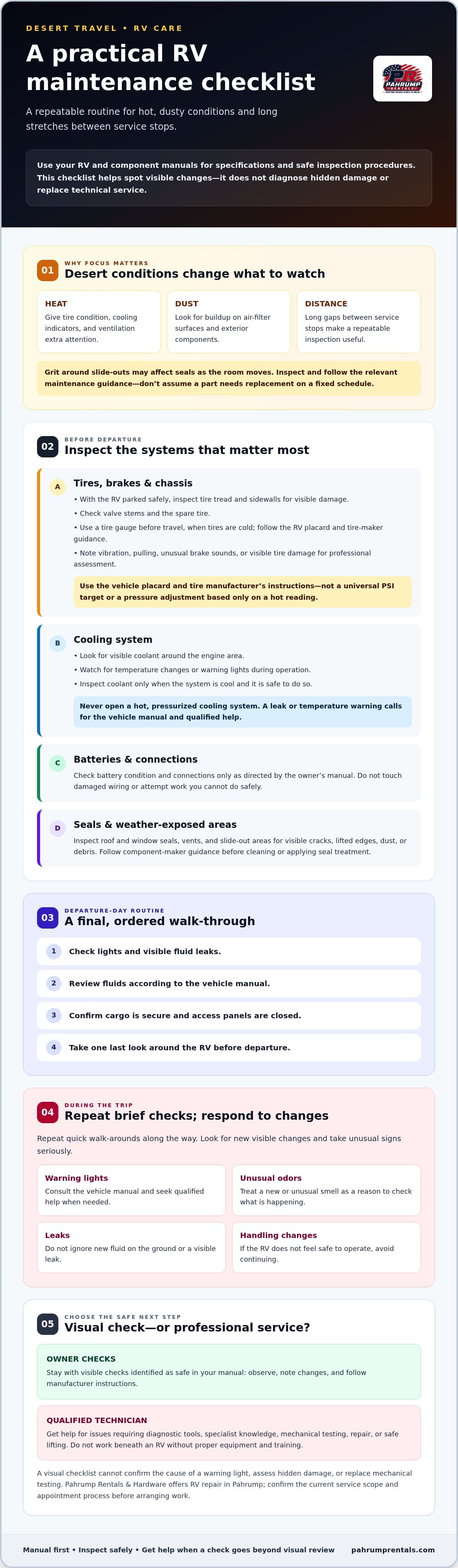
A two-stage routine helps catch issues while there’s still time to address them. Use the day-before inspection for a slower review, then make a brief final walk-around before moving. Follow your RV and component manuals for specifications and safe inspection steps. This RV maintenance checklist for desert travel is a reminder system, not a substitute for manufacturer guidance or professional diagnosis.
The day-before inspection
Park on a stable surface and work around the RV in a consistent direction. Record anything unusual instead of guessing at a repair. Check:
- Tires: Look for visible damage and check cold inflation against the RV placard and tire-maker guidance. Confirm the spare is accessible and appropriate for your RV.
- Lights and windows: Test exterior lights and check that windows are closed and secure.
- Storage and equipment: Inspect storage doors and access panels. Make sure roadside equipment is accessible and suitable for your vehicle.
- Roof and seals: From a safe vantage point, look for visible damage around the roof, windows, vents, and seals. Don’t climb onto the roof unless the manufacturer’s instructions and safe access allow it.
- Fluids and leaks: Check accessible fluid levels only as directed in the manual. Look beneath the parked RV for visible leaks, and don’t open a hot or pressurized system.
Then review the route, current weather forecast, planned stops, and vehicle-specific travel guidance. Confirm your fuel or charging plan, water needs, and how you’ll communicate along the route. On remote stretches, it can help to know where you plan to stop and what resources may be available before you set out.
The final walk-around
Before departure, check that compartments, doors, windows, and exterior equipment are secured. Make sure stored cargo can’t shift during travel. After starting the RV, confirm that you can see the dashboard instruments clearly and note any warning lights. Don’t ignore a new alert simply because the RV seems ready to go.
Check propane appliances and connections only as directed by the RV and appliance manufacturers. If you notice an unusual odor or suspect a leak, follow the manufacturer’s safety instructions and seek qualified help rather than trying an unfamiliar repair.
If you need trip-preparation items, review available RV supplies and confirm current stock before making plans. A careful final check gives you a clearer picture of your RV’s condition and a practical plan for the route ahead.
Repeat key checks on the road and get help when needed
A departure inspection is only a starting point. Dust, rough roads, and changing conditions can affect what you notice as the trip continues. Build brief walk-arounds into sensible stops, such as when you’re already parked for a break, and take another look after unusual road conditions. Follow your RV’s manual and use your judgment rather than relying on a fixed inspection interval.
A simple en-route inspection routine
Park in a safe location before checking anything outside the RV. Walk around and look for new tire damage, fresh fluid beneath the vehicle, or storage compartments and exterior equipment that may have shifted. While driving, pay attention to gauges and alerts without taking your eyes off the road. Never inspect the RV from an unsafe roadside location.
At each stop, compare what you see with what’s normal for your RV. A new stain, loose panel, or change in tire appearance may deserve a closer look once you’re safely parked. Use your owner’s manual for follow-up checks, and leave unfamiliar or potentially hazardous work to a qualified professional.
When a desert-trip issue should change your plan
Respond promptly to a new warning light, unusual odor, visible leak, or change in steering, braking, or handling. If the RV behaves unexpectedly or a warning suggests a safety concern, pull over somewhere safe and consult the vehicle manual. Don’t continue simply because the symptom goes away. Repeated or worsening signs need professional attention.
Make a note of the warning message, when it appeared, and what you noticed, such as a smell, sound, leak, or change in handling. This record can help a repair professional understand the issue. If your trip uses propane appliances, plan refills and review relevant guidance in this Pahrump propane refill guide. Follow your RV and appliance manufacturers’ instructions for propane systems.
If an inspection or an on-road check points to a repair or supply need, Pahrump Rentals & Hardware serves Pahrump, Beaty, Goldfield, and Tonopah with RV repair, RV supplies, and propane. Confirm current service scope, appointment details, or supply availability before making plans. You can review RV supplies for trip preparation.
Make your next desert trip a more confident one
A reliable desert trip starts with a repeatable routine. Use the RV maintenance checklist for desert travel to inspect tires, cooling, batteries, seals, and visible leaks before departure, then repeat brief walk-arounds at safe stops. Follow your RV and component manuals for specifications, and leave diagnosis or repairs that require specialized tools or knowledge to a qualified technician.
Pay attention to changes on the road. New warning lights, unusual odors, leaks, or changes in steering and braking are reasons to stop safely and reassess rather than press on. Keeping a clear record of symptoms can also help a repair professional understand what you’ve noticed.
Pahrump Rentals & Hardware serves Pahrump, Beaty, Goldfield, and Tonopah with RV repair, RV supplies, and propane services. If an inspection points to a repair or trip-preparation need, ask about RV repair and supplies, and confirm current service details or availability before making plans. With a careful check and a sensible plan, you can set out ready to adapt as conditions change.
Frequently Asked Questions
What should I check on my RV before desert travel?
Before a desert trip, check tires, exterior lights, visible fluid leaks, cooling-system indicators, battery condition, seals, and secure storage compartments. Confirm that your spare and roadside equipment are accessible, then review your route, forecast, fuel or charging plan, water needs, and communication options. Use the RV maintenance checklist for desert travel alongside your vehicle and component manuals, which provide specifications and safe inspection steps for your specific setup.
How often should I check my RV tires in hot weather?
Follow your RV and tire manufacturers’ guidance, and check inflation when the tires are cold before driving. There isn’t one inspection interval that fits every RV or route. Make visual tire checks during safe stops, especially after unusual road conditions, and look for visible damage or changes. If you notice a problem or aren’t sure how to interpret it, consult a qualified tire or RV professional before continuing.
Can desert heat cause an RV to overheat?
High temperatures can add demand to an RV’s cooling system, but heat alone doesn’t tell you whether a vehicle will overheat. Pay attention to the temperature gauge, warning lights, and any change from the vehicle’s normal behavior. Before travel, check for visible coolant leaks only when it’s safe and the system is cool. Follow your owner’s manual for inspection guidance, and ask a technician to assess concerns you can’t diagnose visually.
How do I protect my RV from desert dust?
Inspect air filters, exterior components, vents, and seals for visible dust or debris, and follow each component manufacturer’s instructions for cleaning or replacement. Check slide-out areas and seals for grit or damage before operating them. Avoid using unapproved cleaning products or methods that could harm a component. Dust levels vary by route and conditions, so monitor what you see rather than relying on an unsupported universal cleaning schedule.
What should I do if my RV overheats in the desert?
If the temperature rises unexpectedly or an overheating warning appears, pull over at a safe location and follow your vehicle manual. Don’t open a hot, pressurized cooling system. Note the warning message, temperature behavior, and any visible leak, then seek qualified help before driving again if the alert persists or the RV doesn’t seem safe to operate. A repair professional can use those details to assess the problem.
Which RV maintenance checks can I do myself?
Many owners can perform basic visual checks if their manual identifies them as safe. These may include looking for tire damage, testing exterior lights, checking accessible seals, securing storage doors, and noting visible leaks. Don’t work beneath an unsupported vehicle, open hot systems, or take apart components to investigate a concern. If a finding is unclear or involves brakes, steering, electrical faults, or persistent alerts, refer it to a qualified technician.
Should I have my RV inspected by a professional before a desert trip?
A professional inspection is a sensible choice if scheduled service is due, you’ve noticed a recurring warning or leak, or a system needs diagnostic testing. It’s also useful when you’re unsure whether an issue is safe to monitor on the road. Pahrump Rentals & Hardware offers RV repair and serves Pahrump, Beaty, Goldfield, and Tonopah. Confirm current service scope and appointment details before arranging an inspection.


