
The best boondocking kit isn’t the one with the most gear. It’s the one that matches your RV, travel plans, and time off-grid. Choosing the best RV supplies for boondocking can feel complicated when power, water, and waste options all involve trade-offs, and desert conditions add another layer of preparation.
You don’t need every upgrade to travel more confidently. You do need to know which basics support your trip length, comfort, and safety, and where a backup plan matters. In Nevada’s high desert, temperatures can swing by 40 degrees in a day, winds can be strong, and cell service may be limited.
This guide compares practical essentials for power, water, waste, and safety, then helps you build a kit for a short outing or a longer stay. You’ll also find ways to prepare for heat, dust, and remote travel, including why a physical map belongs in your planning. For local preparation, Pahrump Rentals & Hardware provides RV supplies, professional RV repair, and propane services for travelers in Pahrump, Beatty, Goldfield, and Tonopah.
Key Takeaways
- Choose supplies around your trip length, RV capacity, number of travelers, and planned appliance use.
- The best RV supplies for boondocking balance battery storage, solar charging, generator backup, and water needs to suit your travel style.
- Compare essential gear with optional upgrades by considering each item’s purpose, best-fit situation, and limitations.
- Use a pre-departure sequence to prepare your route, water, power, food, and vehicle for desert travel.
- Build an essentials-first kit, then use local RV supplies, repair services, and propane support to help prepare for your trip.
Best RV Supplies for Boondocking: Start With Your Trip and RV
Boondocking means camping in an RV without campground utility hookups, such as external power, water, or sewer connections. The term often describes staying in a dispersed or otherwise undeveloped spot, while “dry camping” can also mean an RV stay without hookups at a campground or another location. Wild camping is a related term for camping outside designated campgrounds, though local definitions and access rules vary.
A boondocking supply kit is gear matched to your trip demands and your RV’s limits, not a standard list of upgrades. Start with your expected stay, tank and battery capacity, number of travelers, weather, and planned appliance use. Then separate essentials for basic function and readiness from items that mainly add comfort or convenience. This helps you avoid buying equipment your RV doesn’t need.
Which supplies matter most for a first boondocking trip?
Start with the basics: a way to monitor power use, enough potable water for your planned stay, suitable food storage, dependable lighting, and a stocked first-aid kit. Check what your RV already includes, such as battery monitoring, interior lights, water tanks, and a refrigerator. Make a list of gaps rather than buying replacements for equipment you already have. A short overnight may fit within your existing capacity with modest power use; a longer stay calls for closer water planning, power management, and backup supplies.
Comfort upgrades can wait until you know what your first trip reveals. Extra charging capacity, specialized storage, or additional lighting may help, but they don’t replace the basics. Prioritize supplies that solve a specific limitation in your setup.
How should you plan around your RV and campsite?
Review your fresh-water and waste-tank capacities, battery setup, and the power demands of appliances you expect to run. Check how much storage space you have and how the gear you plan to carry fits your vehicle’s operating limits. These details help you decide what to bring and what to leave behind.
Next, account for the site. Shade affects solar placement, while temperatures, sun exposure, dust, terrain, and distance from services shape your preparation needs. Bring a physical map if cell coverage may be limited, and plan supplies around your route and stay instead of assuming services will be nearby. Before departure, check current land-use rules, access, fire restrictions, and site conditions with the responsible authority. Keep your first kit simple, then adjust it based on what you actually use.
Boondocking Power and Water Supplies: Match Capacity to Your Stay
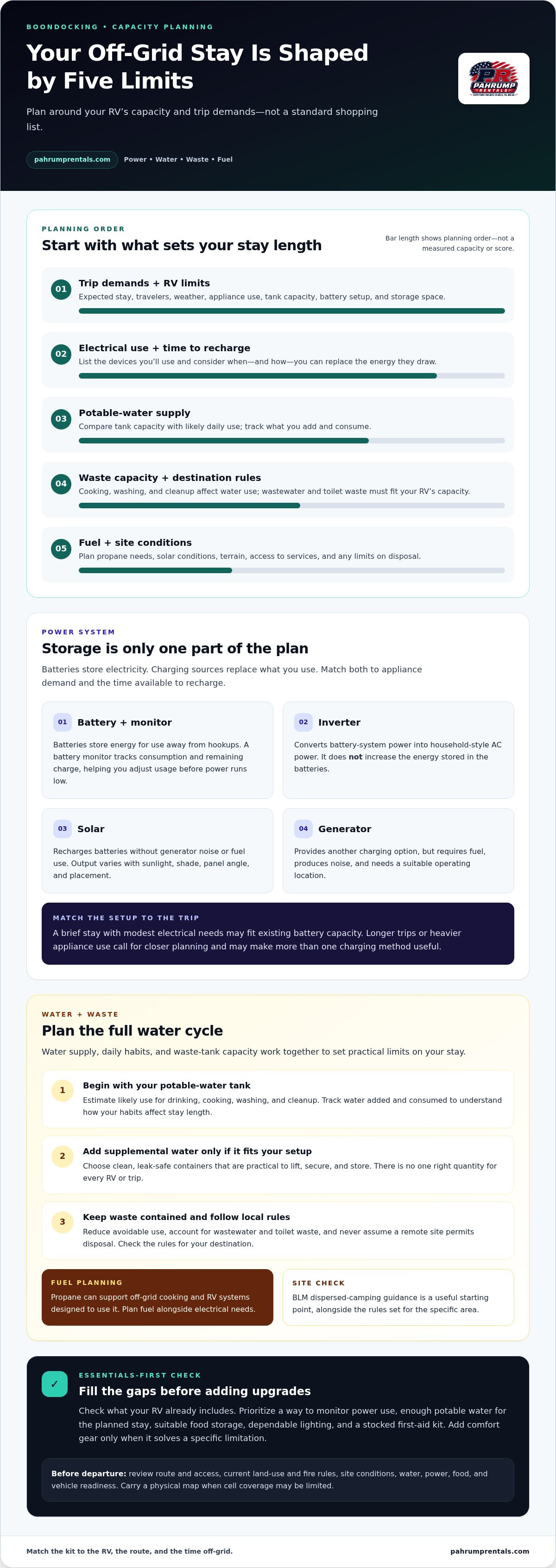
Off-grid capacity is a system, not a single purchase. Batteries store electricity, charging sources replace what you use, and water and waste tanks set practical limits on how long you can stay. The best RV supplies for boondocking depend on how these parts work together in your RV and the demands of your trip.
Power planning starts with appliance demand and the time available to recharge. List the electrical devices you expect to use, then consider when and how you can replenish the energy they draw. This makes it easier to decide whether your current setup is enough or an additional charging option would help.
Which off-grid power options should RVers compare?
Batteries store energy for use away from hookups. A battery monitor helps track consumption and remaining charge, so you can adjust your usage before power runs low. An inverter converts power from the RV’s battery system into household-style AC power, but it doesn’t increase the energy stored in the batteries.
Solar can recharge batteries without generator noise or fuel use, but output varies with sunlight, shade, panel angle, and placement. A generator offers another charging option, though it requires fuel, produces noise, and needs a suitable operating location. For a brief stay with modest electrical needs, existing battery capacity may be sufficient. Longer trips or heavier appliance use call for closer planning and may make more than one charging method useful.
What water and waste supplies support a longer stay?
Start with the RV’s potable-water tank capacity and your likely daily use. Track the water you add and consume to see how your habits affect the length of a stay. For supplemental water, choose clean, leak-safe containers that are practical to lift, secure, and store. There isn’t one right quantity for every RV or trip.
Tank capacity is only part of the calculation. Cooking, washing, drinking, and cleanup draw from your supply, while wastewater and toilet waste also need to fit within the RV’s capacity. Reduce avoidable use and keep waste contained. Never assume a remote site permits disposal: review the rules for your destination. The Bureau of Land Management’s guidance on dispersed camping on public lands is a useful starting point, alongside the rules set for the specific area.
Propane can support off-grid cooking and RV systems designed to use it, so plan for fuel alongside your electrical needs. For trip preparation near Pahrump, local RV supplies and propane support can help you organize the essentials for your setup.
Boondocking Gear Compared: Essentials, Upgrades, and Trade-Offs
You don’t need every off-grid upgrade before your first trip. Check what your RV already handles, then fill the gaps that affect safe, basic use. This essentials-first approach keeps the best RV supplies for boondocking tied to actual needs instead of a long shopping list.
What belongs in the essentials-first kit?
Prioritize safety, basic lighting, potable-water handling, food preparation, and simple maintenance. Make sure you can monitor power use, keep drinking water contained, prepare meals with your RV’s available setup, and handle minor routine issues. Address a weak or missing system before adding convenience gear. The right items depend on your RV and trip, so focus on what each item does rather than a brand or bundle.
| Gear category | Main purpose | Best-fit situation | Key limitation |
|---|---|---|---|
| Safety and first-aid supplies | Support basic preparedness | Every trip | Must suit the travelers and be kept ready to use |
| Portable lighting | Provide light where built-in fixtures don’t reach | Small or changing setups | Needs batteries or recharging |
| Water containers | Carry supplemental potable water | When onboard storage doesn’t match the planned stay | Take up storage space and need secure transport |
| Solar or battery upgrades | Extend available electrical capacity | Repeated trips reveal a power shortfall | Cost space, setup effort, or installation work |
| Generator | Provide another source of power | Higher demand or limited solar opportunity | Requires fuel and creates noise |
When are power and comfort upgrades worthwhile?
Consider solar or expanded battery capacity if your appliance use regularly exceeds what your current setup supports. A portable option can suit changing travel patterns or an RV where permanent installation isn’t practical. Installed equipment may suit a consistent layout, but it takes space and requires installation planning. A generator can provide backup, with fuel and noise to account for.
Use the same test for comfort upgrades. Connectivity equipment can take power and mounting space; cooking additions may need storage and fuel; hygiene upgrades can draw on water and create more waste to manage. Add an item when a trip identifies a recurring limitation, not just because it appears on a gear list. The Bureau of Land Management camping regulations are a useful reference when planning for public-land stays, where site rules can also affect what you bring. Browse RV supplies and products as you build a kit around your RV’s needs.
Prepare Your RV Supplies for Nevada Desert Boondocking
A desert trip is easier to manage when the route, RV, and supplies are planned together. Nevada’s high desert can see temperature swings of 40 degrees in a day, and strong winds are common. Build your checklist around the forecast and conditions at your destination, not just the gear you already own.
What should you check before leaving Pahrump?
- Review the route and site. Check directions, road and access conditions, the forecast, expected stay, and distance from services. Cell coverage can be limited, so save directions offline and carry a physical map.
- Confirm site rules. Check current access, land-use rules, fire restrictions, and campsite conditions with the responsible land-management authority. Rules can vary by area and change over time, so don’t rely on an old trip report for current guidance.
- Plan water and food. Match potable water and food storage to the length of the stay and the people traveling. Secure food and water containers for the drive, and plan how you’ll manage wastewater and toilet waste under the site’s rules.
- Review power and fuel. Check battery charge, power connections, and the charging options you intend to use. Plan fuel around your route and generator needs, and include propane for cooking or RV systems designed to use it.
- Inspect the vehicle and RV. Check tires, exterior storage, access doors, water systems, and essential safety supplies before departure. Secure loose items so they don’t shift during travel. If the RV needs attention, professional RV repair can be part of pre-trip readiness.
- Set a resupply or turnaround plan. Identify a practical point to replenish supplies or change plans before you leave populated areas. Don’t assume services will be available near a remote campsite.
How can you manage heat, dust, and limited services?
Use your RV’s design and destination conditions to plan shade and ventilation. Consider sun exposure when choosing where to park and how to arrange your living space. Protect food, water, and other stored supplies from dust, and secure loose outdoor gear before travel, especially when wind is in the forecast.
Keep the plan flexible. If access conditions, weather, or your RV’s readiness don’t suit the trip, use your planned turnaround option rather than pressing on toward a remote site. Build the best RV supplies for boondocking around those practical decisions, and prepare your RV with local supplies and repair support before heading out.
Get Boondocking-Ready With Local RV Supplies and Support
A dependable desert setup starts with an honest review of what your RV can handle. The best RV supplies for boondocking close a real gap in your trip plan, rather than simply adding more equipment. Use the checklist below to confirm the basics before you set out.
Which local support can help with RV trip preparation?
Address maintenance concerns before traveling off-grid. Professional RV repair can help prepare your vehicle when a system needs attention, so you’re not planning around an unresolved issue. Pahrump Rentals & Hardware serves RV owners and travelers in Pahrump and nearby communities, including Beatty, Goldfield, and Tonopah.
Include propane in your itinerary if your cooking setup or onboard systems use it. Plan around your equipment’s needs, and operate propane appliances according to their manufacturer instructions. For practical trip-planning details, see the Pahrump propane refill guide.
What should your final pre-trip checklist include?
- Supplies: Pack the safety, lighting, food-preparation, and maintenance items your trip requires.
- Water and waste: Confirm onboard capacity and plan how you’ll manage water use and waste for the expected stay.
- Power: Check your power plan and charging options against the appliances you intend to use.
- Propane: Account for cooking and any compatible RV systems that depend on it.
- Ready-to-travel gear: Make sure equipment is clean, charged where needed, secured for travel, and suitable for the route and conditions.
- Vehicle and safety: Review RV readiness and keep essential safety supplies accessible.
Keep it practical. If the checklist reveals a maintenance concern, arrange RV repair as part of your preparation. If a supply is missing, choose one that fits your RV and planned stay instead of adding an upgrade without a clear need.
Explore RV products and supplies or visit Pahrump Rentals & Hardware for local RV supplies, repair services, and propane support as you get ready for your next trip.
Build a Boondocking Kit That Fits Your Next Trip
The best RV supplies for boondocking depend on your RV’s limits, planned stay, and how you’ll use power and water. Start with essentials for safety, lighting, food, and basic maintenance. Then add upgrades only when your travel habits reveal a recurring need. A thoughtful plan also accounts for desert conditions, route access, and supplies you can carry securely.
Before leaving, review your water and waste capacity, charging options, propane needs, and RV readiness. Local support can make preparation more straightforward. Pahrump Rentals & Hardware serves Pahrump and nearby communities with RV supplies, professional RV repair, and propane services for RV owners and travelers.
Get ready for your next RV trip with local supplies and support. With a practical kit and a clear plan, you can head out prepared and enjoy the freedom of traveling off-grid.
Frequently Asked Questions
What supplies do you need for RV boondocking?
Start with supplies that support safety and basic function: a way to monitor battery use, potable water, food storage, lighting, first-aid supplies, and items for routine maintenance. Add charging or water-storage gear only if your RV’s built-in capacity doesn’t meet your trip needs. The best RV supplies for boondocking depend on your RV, the number of travelers, planned appliance use, expected conditions, and length of stay.
Can you boondock in an RV without solar panels?
Yes. You can boondock without solar panels if your battery capacity and other charging options support your power use. For a short stay with modest electrical needs, your existing setup may be enough. Track battery use and consider how you’ll recharge before departure. A generator or another compatible charging method may help for longer stays, but each option has its own setup, fuel, or noise considerations.
How much water should you bring when boondocking?
Bring enough potable water for your planned stay and the people traveling, based on your RV’s tank capacity and actual water habits. Account for drinking, cooking, washing, and cleanup, then consider whether secure supplemental containers make sense. There’s no single quantity that fits every RV or itinerary. Tracking water use on a shorter trip can help you estimate needs for a longer stay, while leaving capacity for managing wastewater responsibly.
How long can an RV boondock without hookups?
An RV can stay off-grid as long as its available water, power, food, and waste capacity support the trip and site rules allow. The practical limit varies with tank sizes, battery setup, charging opportunities, number of occupants, weather, and appliance use. A short overnight with low power demand may require less planning than a multi-day stay. Estimate consumption before leaving and have a resupply or turnaround plan.
Is a generator necessary for RV boondocking?
No, a generator isn’t necessary for every boondocking trip. An RV’s existing batteries may cover modest electrical needs, while solar or another charging method can help replenish them. A generator may suit heavier power use or trips where solar charging conditions are uncertain, but it requires fuel and produces noise. Choose based on your appliance demands, available charging time, RV setup, and the rules for your destination.
What is the difference between dry camping and boondocking?
Both terms describe RV camping without utility hookups, but their use can vary. Boondocking commonly refers to staying in a dispersed or undeveloped location, often away from campground services. Dry camping can also describe a no-hookup stay in a campground or other designated place. In either case, plan around your own water, power, and waste capacity, and follow the access and stay rules for your destination.
How do you prepare an RV for desert boondocking near Pahrump?
Before leaving Pahrump, review the route, site access, forecast, and current land-use and fire rules with the responsible authority. Desert conditions can include strong winds and temperature swings of 40 degrees in a day, so plan for sun exposure, ventilation, dust, and secure storage. Check tires, water and power systems, food, fuel, and propane. Pahrump Rentals & Hardware serves RV owners in Pahrump, Beatty, Goldfield, and Tonopah with RV supplies, professional repair, and propane services.


