
For mobile RV repair in Tonopah, NV, a service truck’s arrival time depends on the distance to your location, road access, the technician’s schedule, and the details of the repair. A campsite or home visit can make it easier to address an RV problem where the vehicle is parked, but the destination and issue shape the service plan. Tonopah sits above 6,000 feet, so sharing your location and road conditions helps set clear expectations.
When an RV problem interrupts a trip or daily routine, it’s natural to want a clear arrival estimate. To plan, describe the problem, where the RV is parked, and whether it affects power, water, or appliances.
This guide explains what can affect a service truck’s arrival, how inspections and routine maintenance help, and what to expect from on-site RV care at a campsite or home. You’ll learn how the repair, site access, and preparation can shape the visit, helping you make informed plans while the RV is assessed.
Key Takeaways
- Arrival timing depends on your location, road access, the technician’s schedule, and the repair details. Clear directions and a concise description of the problem help plan the visit.
- For electrical issues, note which lights, outlets, or systems are affected and whether the problem is constant or intermittent. These details help focus the diagnostic process.
- Routine inspections can help identify wear or developing problems before they disrupt a trip. Pay attention to changes in power, water, and appliance performance.
- Before an on-site visit, share where the RV is parked and make sure the work area is accessible. Campsite and home conditions can shape how repairs are carried out.
- Learn how to distinguish the repair support you need from practical equipment, tool, and hardware resources for your project.
How fast can a service truck reach me in Tonopah, NV?
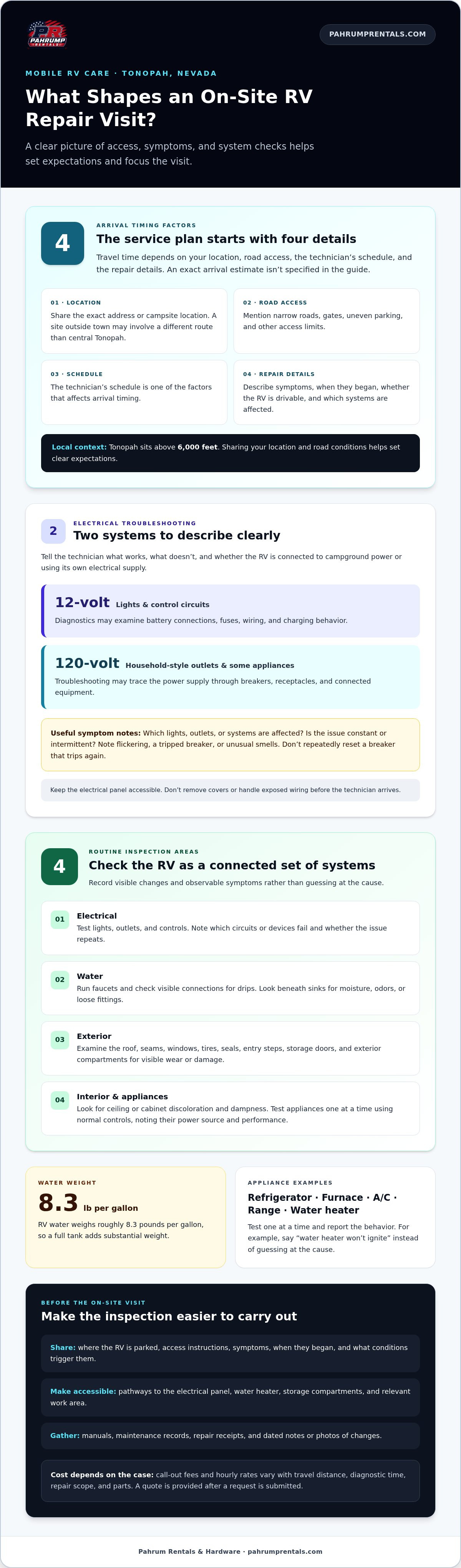
A service truck’s arrival depends on your location, road access, the technician’s schedule, and the repair details. Tonopah sits above 6,000 feet, and mobile coverage extends across Nye County and roads leading into town. A campsite outside town may involve a different route than an address near central Tonopah. Share your exact location and access instructions to help plan the visit.
Before arranging service, clearly describe the symptoms. Note whether the RV is drivable, which systems are affected, and when the problem began. For example, say whether interior lights dim when an appliance starts or an outlet stopped working after you plugged in equipment. Mention narrow roads, gates, uneven parking, or other access limits. These details help determine the tools and diagnostic steps the visit may require.
Call-out fees and hourly rates depend on travel distance, diagnostic time, repair scope, and parts. Pricing varies by case, and a quote is provided after you submit a request.
Mobile technicians can diagnose and repair many RV issues on-site, including electrical faults, appliance problems, water-system leaks, and some heating or cooling concerns. The repair depends on the fault, safe access to the system, and whether replacement parts are needed. Some jobs require additional work after the initial diagnosis.
Electrical troubleshooting begins by identifying the affected circuit and symptoms. A technician may inspect the power source, switches, wiring connections, breakers, and fuses. Describe what works and what doesn’t, including flickering, tripped breakers, or unusual smells. Don’t repeatedly reset a breaker that trips again. This pattern can help narrow the cause to an overload, damaged connection, or faulty component.
- 12-volt system: This powers items such as interior lights and control circuits. Diagnostics may examine battery connections, fuses, wiring, and charging behavior.
- 120-volt system: This serves household-style outlets and some appliances. Troubleshooting may trace the power supply through breakers, receptacles, and connected equipment.
- Both systems: Some appliances rely on different power sources for separate functions. Explain which mode fails and which still works.
Say whether the RV is connected to campground power or running on its own electrical supply. This helps narrow the initial diagnostic checks. Keep the area around the electrical panel accessible, and don’t remove covers or handle exposed wiring before the technician arrives.
Reviews and ratings vary by provider and platform, so there is no single Tonopah-wide score. Look for specific examples of communication, diagnosis, and follow-through rather than relying only on an average star rating.
Inspections and preventative maintenance
A systematic inspection checks how the RV’s major systems work together. Start with the roof, seams, windows, and exterior compartments. Look for cracks, soft spots, stains, or signs of water entry. Inside, check ceilings and cabinet corners for discoloration or dampness. A small stain near a window may indicate a leak that needs closer assessment. Record where it is and whether it changes after rain.
Test appliances one at a time, noting their power source and performance. Use the normal controls to check the refrigerator, furnace, air conditioner, range, and water heater. For example, a water heater that won’t ignite may have an ignition, fuel, or electrical issue. Describe the symptom instead of guessing at the cause. A clear record helps focus the inspection on observable problems and relevant system checks.
- Electrical: Test lights, outlets, and controls. Note which circuits or devices fail and whether the issue repeats.
- Water: Run faucets and inspect visible connections for drips. RV water weighs roughly 8.3 pounds per gallon, so a full tank adds substantial weight.
- Exterior: Examine tires, seals, entry steps, and storage doors for visible wear or damage.
- Interior: Open cabinets and look beneath sinks for moisture, odors, or loose fittings.
Preventive maintenance means addressing findings before they affect travel. Keep dated inspection notes and photos, then compare them during the next review. If a roof seam looks different, document the change and arrange an assessment. Clear debris from accessible areas and keep vents unobstructed. Avoid covering a symptom with a cosmetic fix, especially near a suspected leak. An accurate record helps distinguish ongoing wear from a new concern.
A pre-purchase inspection gives buyers a clearer picture of an RV’s condition before they commit. Ask for a systematic review of the roof, chassis, appliances, plumbing, and electrical systems. Request descriptions of concerns by location and observed behavior. For example, “water heater does not start” is more useful than “appliance problem.” Review the findings alongside service records and seller disclosures. An inspection can identify visible concerns, but it cannot reveal all hidden damage.
Before the appointment, make the RV accessible and gather its manuals, maintenance records, and repair receipts. Note recent symptoms, when they began, and what conditions trigger them. Clear pathways to the water heater, electrical panel, and storage compartments. These steps make it easier to inspect relevant components and explain the results in practical terms.
Technician certification and trustworthiness
Choosing an RV technician involves more than finding someone who can reach a campground. Look for clear explanations, careful troubleshooting, and repair notes that identify the work performed. Tim has over 30 years of hands-on RV repair experience, with electrical systems as a main area of expertise. Experience is useful context, but it doesn’t replace a precise diagnosis or a written description of the repair.
To verify licensing, insurance, and warranty terms, request the relevant documents and review the names, coverage, exclusions, and conditions. Confirm credentials with the issuing organization, and read warranty terms before authorizing work. The documents should explain what work is covered and how warranty claims are handled.
Factory-trained technicians receive instruction on particular manufacturers, systems, or equipment. That background can help with a model-specific appliance or control system, but it doesn’t necessarily cover every RV component. Ask which system the training covers and how it relates to the fault. A refrigerator control issue, for example, may require different knowledge than a damaged water line.
Certifications vary in scope, too. A credential may cover a specific technical area rather than every repair on a motorhome or trailer. Check the exact credential name, issuing body, and specialty, then compare that specialty with your problem. For an electrical fault, ask how the technician will isolate the affected circuit and explain the diagnosis. A clear process matters more than a broad claim of expertise.
- Before work begins: Write down the reported symptoms and the system involved.
- During diagnosis: Expect the technician to explain findings in plain language, such as identifying a damaged connection.
- Before approval: Review the repair scope, parts, and any warranty terms in writing.
- After service: Keep the invoice and diagnostic notes with the RV’s maintenance records.
Trust is also reflected in how a technician handles uncertainty. A sound diagnosis separates observed damage from a possible cause. For example, an appliance failure could stem from the appliance itself, its power supply, or a connection. The technician should explain what tests support the conclusion and what the proposed repair will address. That gives you a practical basis for deciding whether the work fits the problem.
For mobile RV repair in Tonopah, NV, prepare the RV’s make, model, and symptom history before the visit. Note recent changes, such as a new warning light or a system that stopped working after travel. Share relevant service records, then compare the findings with your original complaint. Clear records and straightforward explanations make it easier to understand the repair and maintain a useful service history.
Mobile RV repair and maintenance at campsites or homes
On-site RV service brings diagnosis and repair to the vehicle’s parking location. At a campsite, it can address a problem without moving a disabled RV. At home, it can make scheduled maintenance easier to coordinate with storage and trip preparation. The work area, access to the RV, and type of fault affect what can be completed during the visit.
Before arranging service, provide the location and a practical description of the problem. Include the campground name or home address, where the RV is parked, and any access directions. Explain whether the issue involves plumbing, an appliance, a slide, or another system. For a water leak, say where water appears and whether it happens only when a faucet or fixture is running. Specific symptoms help guide the initial assessment.
- At a campsite: Identify the site number, entry instructions, parking surface, and nearby obstacles such as low branches.
- At home: Clear a path to the RV and leave room to open storage bays, doors, and utility panels.
- At either location: Gather service records and note recent changes, such as a new leak or an appliance that stopped operating.
A mobile repair visit often starts with a discussion of symptoms, followed by an inspection of the affected system. For plumbing, that may involve tracing visible water to a fitting, faucet, or hose connection. The technician can then explain the findings and repair steps. If a component needs replacing, the work depends on the part, access, and condition of nearby connections. Keep the affected area clear so the inspection can proceed efficiently.
RV owners can also arrange an on-site visit for maintenance while the vehicle is parked. A home driveway can be a convenient place to review visible seals, appliances, doors, and plumbing connections before a trip. At a campsite, focus on a specific problem affecting your stay, such as a leaking sink drain. Keep notes of completed work and any remaining symptoms to give follow-up diagnosis a clear starting point.
Some jobs require more than a mobile visit. Extensive damage, difficult access, or a repair needing specialized equipment may affect how the work proceeds. A technician assesses the area and explains practical next steps. Mobile RV repair suits many on-site diagnostics and repairs, but the location and scope determine what can be done there.
Prepare the RV by securing pets, moving loose belongings, and making the affected system accessible. For a plumbing concern, clear the cabinet beneath the sink. For an appliance problem, leave its controls and nearby access panel unobstructed. At a campground, follow site rules for vehicle access and work. These steps create a safer, more organized work area and help the technician focus on the repair.
Which mobile RV repair services operate in Tonopah, Nevada?
Mobile RV repair in Tonopah covers Nye County and roads leading into town. This matters for travelers parked beyond the town center and residents keeping an RV at home. The service truck’s route depends on the exact location, road access, and requested repair. A campsite near town and a remote roadside location can involve different travel and access conditions.
For mobile RV repair in Tonopah, NV, describe where the RV is parked before arranging a visit. Provide the campsite name or street location, nearby road access, and directions from a recognizable landmark. Mention any gate or narrow access road. Accurate directions help the technician plan the route and find the vehicle.
Mobile service addresses repair needs where the RV is parked. The work depends on the system involved, the component’s condition, and access to the affected area. A visible plumbing leak, an appliance that won’t operate, and an electrical fault each require different diagnostic steps. Explain the symptom and when it occurs rather than guessing at the repair.
- Travelers: Share the campground or road location and whether the RV can move safely.
- Homeowners: Describe driveway access and where the RV is positioned on the property.
- Roadside situations: Give the nearest identifiable road or landmark and explain any access limitations.
- All service requests: Identify the affected system and the change you observed.
Tonopah has a population of 1,777 people, and coverage reaches beyond town into Nye County. That means location details are central to planning a mobile visit. Road conditions, distance from the technician’s starting point, and the time needed to understand the repair all shape the route and schedule. A concise description helps distinguish a straightforward access point from a location requiring extra directions.
Before service, keep the RV accessible and prepare the immediate work area. At a campsite, note the site number and any entry instructions. At home, clear the path to the RV and open the compartment related to the problem. For an electrical issue, make the panel accessible. These practical steps help the technician reach the relevant system and begin a focused inspection.
Use the repair scope to decide whether an on-site visit suits the problem. A technician can assess many faults at the RV’s location, while extensive damage or limited access may affect how repairs proceed. Share the symptoms, location, and access details together. This gives the service team a useful starting point for planning mobile RV care in Tonopah and Nye County.
Pahrump Rentals & Hardware: Industrial Equipment Rentals
Pahrump Rentals & Hardware offers equipment, tools, and hardware for RV-related projects. Once you’ve identified a repair or maintenance task, use Industrial Equipment Rentals or Tool Rentals for project equipment. Professional Hardware Solutions can support work that needs suitable hardware, and the Contractor Portal helps contractors manage their needs.
These resources complement repair planning but don’t replace diagnosis of an RV fault. Identify the task and the equipment or hardware it requires before choosing a resource. That keeps the next step focused on your project, whether you’re preparing a work area or organizing contractor requirements.
For equipment, tools, and hardware for your project, contact Pahrump Rentals & Hardware or visit Pahrump Rentals & Hardware online.
Make your next RV plan easier to manage
Turn your repair notes into a practical plan for your next trip. Keep service records together, track recurring symptoms, and address concerns before departure. For mobile RV repair in Tonopah, NV, clear information about the problem and the RV’s location makes the next service step more focused.
When your project also needs equipment or supplies, Pahrump Rentals & Hardware offers Industrial Equipment Rentals, Tool Rentals, and Professional Hardware Solutions. These resources can support related work, from preparing a project area to sourcing hardware for a repair task. Choose the resource that fits your project, and keep the RV repair focused on the diagnosed problem.
Contact Pahrump Rentals & Hardware to discuss the equipment, tools, or hardware resources that fit your project. Contact Pahrump Rentals & Hardware and take a clear next step toward getting your RV plans back on track.
Frequently Asked Questions
Do you cover the towns around Tonopah?
Mobile coverage extends across Nye County and roads leading into Tonopah, including places beyond the town center. Pahrump Rentals & Hardware also serves travelers and local RV owners in Pahrump, Beaty, and Goldfield. For a location outside Tonopah, include the town, road, and nearest recognizable landmark in your service request. These details help pinpoint the RV and explain what access the route requires.
How do I find a trustworthy RV mechanic in Tonopah?
Look for clear communication about the diagnosis, proposed repair, and work completed. Ask for an explanation tied to your RV’s symptoms, such as which component failed and what testing identified the fault. Keep the written estimate, repair notes, and invoice together. If the explanation doesn’t address the original problem, ask how the recommended work relates to that symptom before authorizing the repair.
Is this limited to the town itself?
No. Mobile repair coverage extends across Nye County and roads leading into Tonopah, not just within the town boundary. The RV’s exact location still matters for planning a visit. Provide the road or campground name, a nearby landmark, and any access instructions. If you’re outside Tonopah, naming a nearby community such as Goldfield or Beaty helps clarify your location.
Need Service Now?
If your RV needs attention, describe the problem and your location when contacting the repair service. Include the RV type, affected system, and whether the vehicle can move. At a campground, have the site name and entry details ready. These facts explain your request clearly. Don’t assume a same-day visit or around-the-clock response when arranging service.
What are the phone numbers and service areas for mobile RV repair near Tonopah?
Mobile coverage includes Tonopah, Nye County, and roads leading into town. The business also serves Pahrump, Beaty, and Goldfield. Use Pahrump Rentals & Hardware’s contact options on its website to reach the business, rather than relying on a potentially outdated directory number. Include your location and RV repair need in your message so your request reaches the right service channel.
Do Tonopah mobile RV technicians provide emergency or roadside service?
RV repair is offered, but that should not be read as a promise of 24/7 emergency dispatch or roadside response. If the RV is stopped beside traffic, focus first on getting occupants away from immediate danger when it’s safe to do so. Share whether the RV is at a campsite, residence, or roadside location, and describe the fault to clarify the repair request.
How far do mobile RV repair providers travel from Tonopah, and what mileage fees apply?
Mobile coverage reaches across Nye County and roads leading into Tonopah, while the RV’s exact location affects route planning. Mileage charges depend on the case and are provided after a quote request. Relevant factors include distance, road access, and repair details. Give the location and directions clearly so travel can be assessed alongside the work required.
What should I do if my RV breaks down on US-95 near Tonopah?
If it can be moved safely, take the RV out of the travel lane and park somewhere stable. Turn on the hazard lights and keep passengers away from passing traffic. Note your direction of travel, the nearest landmark or road junction, and the symptoms. Share those details when requesting repair service. Don’t attempt electrical or mechanical repairs beside moving traffic.


